


Sign In
By signing in or creating an account, you agree with Associated Broadcasting Company's Terms & Conditions and Privacy Policy.
By signing in or creating an account, you agree with Associated Broadcasting Company's Terms & Conditions and Privacy Policy.
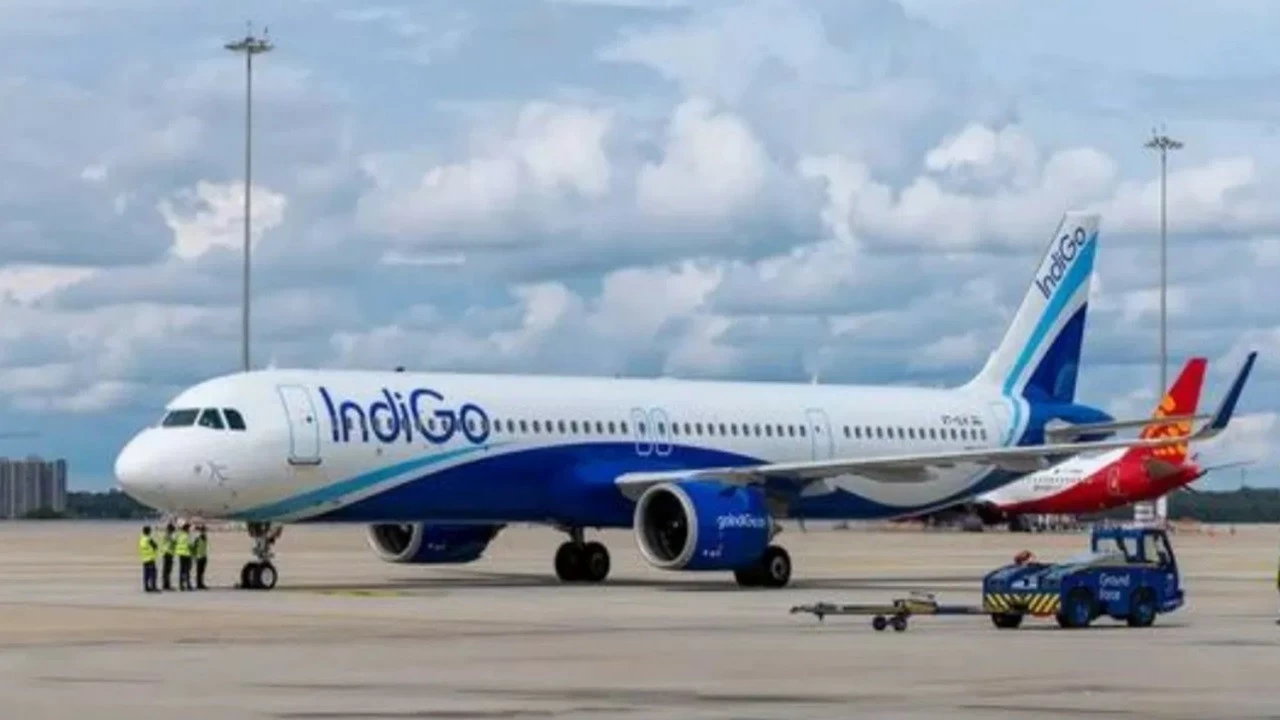


New Delhi: Effective from January 1, 2026, pilot allowances across duty types will go up, IndiGo has announced. The announcement comes less than a month after a critical change in roster norms badly disrupted the operations of India’s largest airline.
A crunch in pilots led to the cancellation of thousands of flights, badly sullying the airline’s reputation. Crew members flagged tight duty-time regulations (FDTL) and increasing workloads, pushing IndiGo to revise and improve its pay structure to prevent attrition.


Operated by InterGlobe Aviation Ltd, IndiGo has declared revised pilot salary for domestic layovers, deadhead, overnight flights and domestic transit.
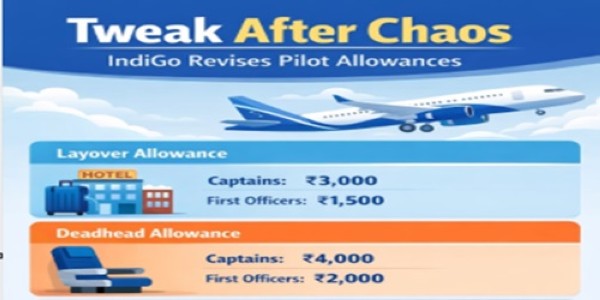
For 10:01 hours to 24 hours duration, the airline will increase layover allowances to Rs 3,000 from Rs 2,000 for Captains, and to Rs 1,500 from Rs 1,000 for First Officers. For every hour beyond 24 hours, the applicable allowance will be Rs 150 (earlier Rs 100) for Captains, while the revised additional allowance for First Officers stands at Rs 75 compared to the previous Rs 50.
Deadhead allowance refers to the compensation paid when airline crew travel as passengers to position themselves for future duty station or return home. While they are not operating the aircraft, they are positioning for work, and IndiGo compensates this time at a fixed rate per scheduled flight hour.
For every scheduled block hour, it will be raised to Rs 4,000 from Rs 3,000 for Captains, and to Rs 2,000 from Rs 1,500 for First Officers.
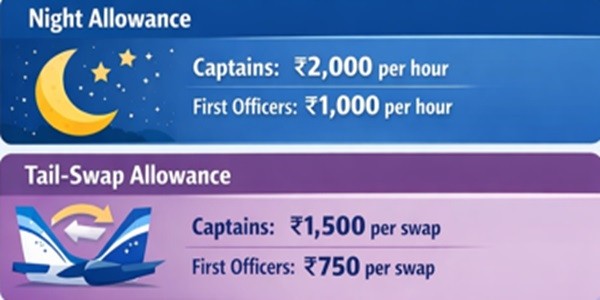
Night allowance is additional compensation for flight duties carried out after midnight to offset the physiological strain. Flights operated between 6 pm and 6 am. will now attract separate hourly charges, with Captains receiving Rs 2,000 per hour and First Officers Rs 1,000 per hour.
Tail-swap allowance will compensate pilots for the additional workload involved in switching aircraft, or “tails”, within a single duty period. It involves the physical effort of moving crew and baggage to another aircraft and completing fresh pre-flight checks, with IndiGo now paying a flat fee for each such occurrence.
According to the announcement, Captains will receive Rs 1,500 per tail-swap and First Officers Rs 750 per tail-swap.
Transit allowance is paid to pilots for time spent waiting on the ground between flights within a single duty period. At IndiGo, it is now calculated on an hourly basis for domestic halts longer than 90 minutes, compensating for idle time at the airport before the next flight segment.
The transit allowance is applicable on a pro-rata basis for all domestic halts beyond 90 minutes at all domestic stations irrespective of a lounge tie-up. If there's a delay of more than four hours, a hotel shall be provided.
For Captains, the meal allowance will be Rs 1000 per hour (if halt > 2 hrs). Earlier, it was Rs 500. For First Officers, the meal allowance will be Rs 500 per hour (if halt > 2 hrs).
The airline, which holds a 65% share of the domestic market, is under heightened regulatory scrutiny and facing a competition probe after cancelling around 4,500 flights earlier this month, stranding hundreds of thousands of passengers across India and plunging airports into chaos.

