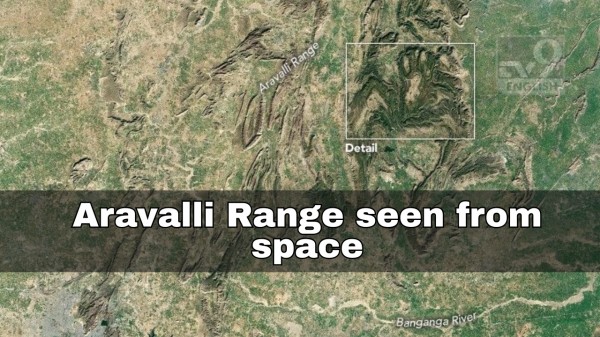
Sign In
By signing in or creating an account, you agree with Associated Broadcasting Company's Terms & Conditions and Privacy Policy.
By signing in or creating an account, you agree with Associated Broadcasting Company's Terms & Conditions and Privacy Policy.
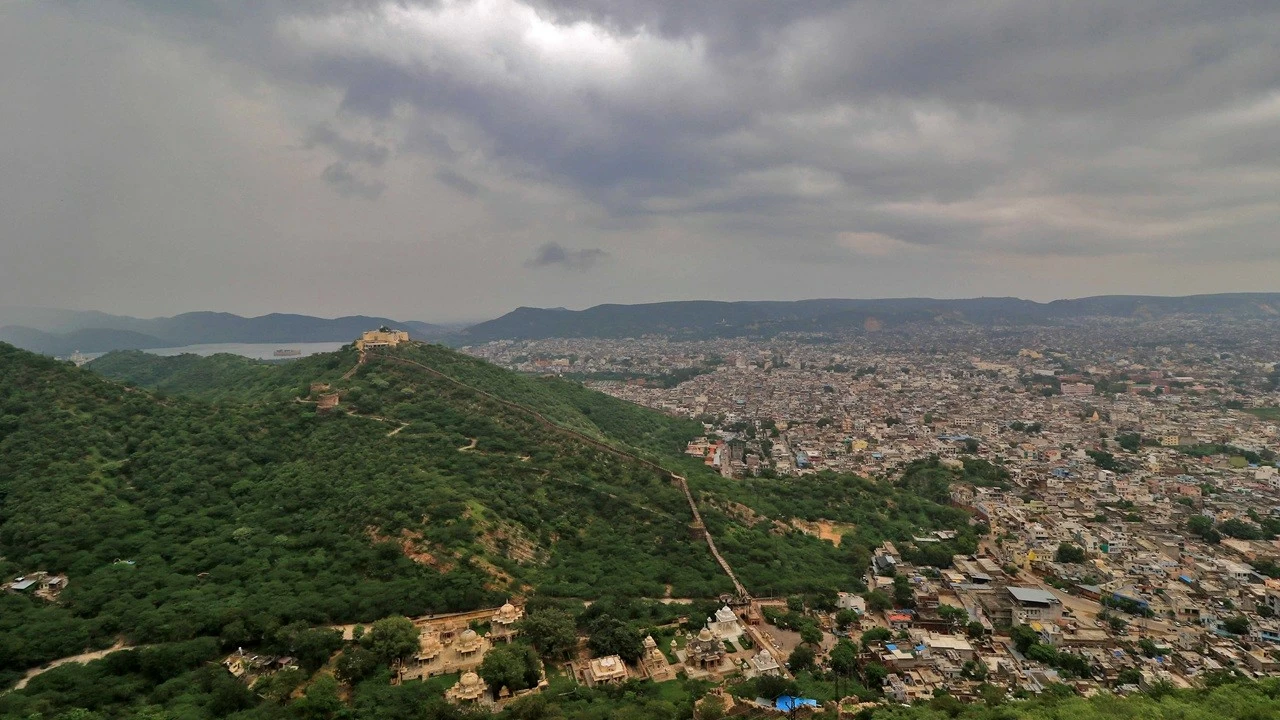

New Delhi: The Aravalli Hills, one of the world’s oldest mountain ranges and part of an important ecological system in India, is currently at the centre of a political and legal controversy. This comes after a new legal definition for the mountain chain was given by the Supreme Court. This was seen by many as a measure that could result in large-scale mining of the mountain chains and ensuing protests against the move have been set off across the country.
Amidst all this controversy, it is important to understand the Aravalli in terms of their geological makeup, history and significance. They are not isolated but part of a larger geological history of the continent.



The current controversy surrounding the Aravalli came after the Centre called for a technical clarification for defining the mountain chain which environmental activists saw as an ecological attack. The Supreme Court of India recently noted that over the years, inconsistent descriptions of the mountain chain had complicated environmental regulation, land-use planning, and enforcement against illegal mining.
The court further cited globally accepted geological standards, including the definition attributed to geologist Richard Murphy, which considers a landform with a rise of 100 metres from the surrounding ground as a hill or mountain. The application of this parameter to the Aravalli was seen as arbitrary and resulted in massive protests. Environmentalists have claimed that redefining hills purely based on height could leave several tracts to the mountains open to indiscriminate mining, severely damaging the ecology of the region.
The highest peak of the Aravalli Range is Guru Shikhar, located in the Arbuda Mountains near Mount Abu in Rajasthan. It reaches an elevation of 1,722 meters (5,650 feet). It is named after a cave at the summit dedicated to Guru Dattatreya, a Hindu deity, and offers panoramic views of the surrounding hills.
The peak of Guru Shikhar is thus an example that Aravallis does have high peaks, but what is of more interest, is that while this is the one of few such high peaks today, Aravallis through its existence had many such, even way higher, mountain peaks. It is an interplay of time and geological processes which have laid it to the small stature, in terms of height, that it suffers from today.
The Aravalli Range is one of the oldest mountain systems in the world, with its geological origins dating back to the early Proterozoic era, around 2.5 to 1.8 billion years ago. The mountain building process, termed orogenesis, which gave rise to the Aravallis took place more than a billion years ago. At that time, the peaks of Aravallis were high, and kept on increasing in height till the process of orogenesis was active. A current example of this is the Himalayas, where that process is still active, and as a result even the highest peak, Mount Everest, is still increasing in height.
Things took a turn when the process of orogenesis stopped. Orogenesis refers to when two pieces of the continental crust, which make up the upper surface of the Earth’s mass, collide with one another. As a result of the collision, a force develops which folds the rock mass that is part of the collision zone. This part is uplifted and forms mountains. When the collision stops and the resulting forces are no longer active, the process of mountain building stops.
Then comes the second part, which has what happened to the Aravalli, taking them from high Himalaya-like heights to its current state of subdued ridges and isolated hills. The process of erosion then occurs, that is natural elements like wind, water and air, acting on the exposed mountain mass and slowly breaking it down. With time, high mountains, no longer growing, are laid to rest, and eventually flatten out. This is the life cycle of a mountain, and is what occurred in the case of the Aravalli and is responsible for its current state.