Sign In
By signing in or creating an account, you agree with Associated Broadcasting Company's Terms & Conditions and Privacy Policy.
By signing in or creating an account, you agree with Associated Broadcasting Company's Terms & Conditions and Privacy Policy.
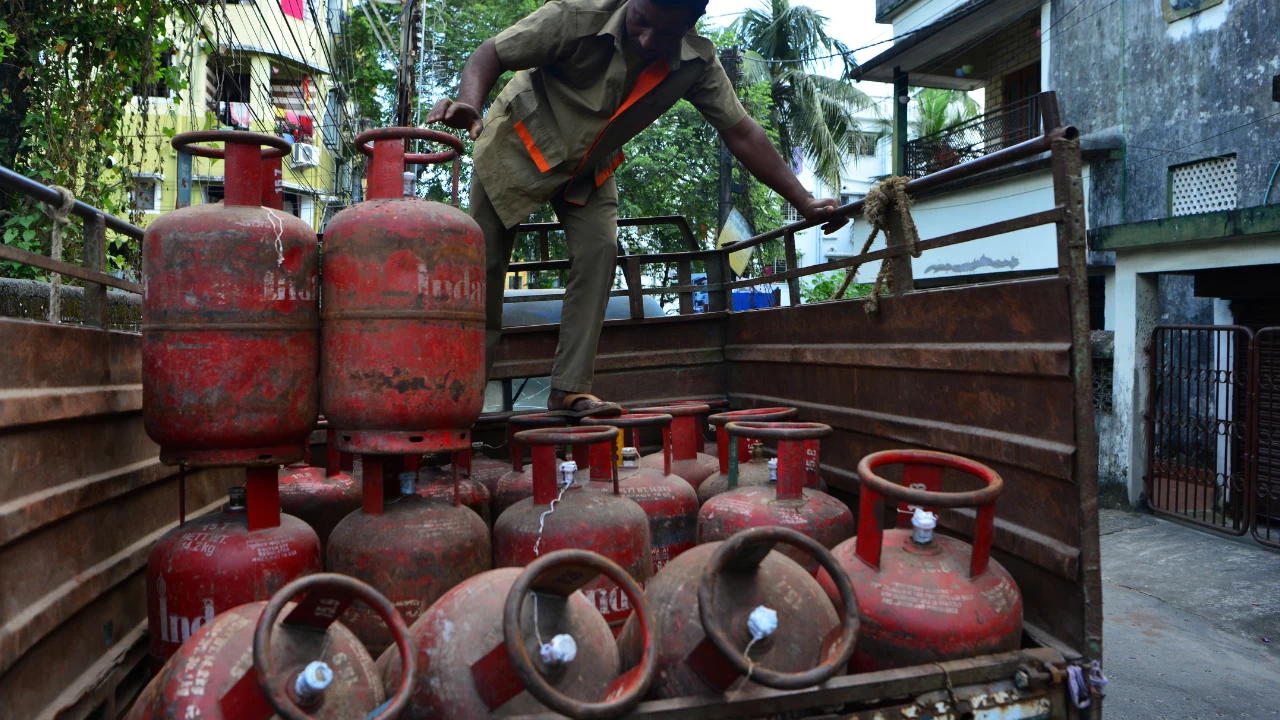


New Delhi: LPG, which was once limited to cities, has become common in the kitchens of villages and countryside. Crores of women in the country are now cooking in clean, safe environment with the help of LPG cylinders, thus helping them get rid of earthen stoves and wood-coal smoke. In the last two and a half decades. This big change is not only about introducing government schemes, but also of changing social thinking.
The prices of LPG cylinders have steadily increased. Twenty five years ago, the price at which gas cylinders were available has increased manifold today, thus increasing the burden on the common consumer. On the other hand, the government implemented several subsidies and welfare schemes from time to time to mitigate the impact of this rising expenditure. From the Ujjwala Yojana to Direct Bank Transfer (DBT), the facilities proved to be a milestone in providing relief to the poor and middle class and widening the reach of clean fuels.
In such a situation, the question arises, how much has LPG cylinder prices actually increased in the last 25 years? What steps did the government take to make LPG affordable and accessible and how did it affect the lives of common people? To understand these aspects, it is important that we take a look at statistics, policies and ground reality.
1989-2000: Price jumped from Rs 57.60 to Rs 232.25 per cylinder
If you go a little earlier than 25 years, according to the New Indian Express report, in the year 1989 the price of a 14.2 kg LPG cylinder was Rs 57.60. Years went by and the prices of LPG cylinders continued to increase. In the year 2000, it suddenly jumped and it increased from Rs 146 rupees to Rs 196.55 and at the end of 2000 this price reached Rs 232.25.
2001-2010: Price fluctuation
The next 10 years were very important in terms of LPG prices, because the prices rose to Rs 346.30 in 2009, however, it was reduced to Rs 279.70 in 2009, which gave a lot of relief to the citizens. However, this happiness did not last long because in 2010 the prices were raised again, reaching Rs 345.35.
2011 to 2025: LPG prices jumped
According to the data of Good Returns, the prices of LPG gas have increased rapidly since 2011. In 2014, the price skyrocketed to Rs 1241, but in 2015-16 it fell to Rs 606 due to subsidy adjustment. Rs 594 rupees by 2020, then with fluctuations after COVID, it stabilised at Rs 803-853 rupees in Delhi in 2024-25. Overall, it increased 4-5 times in 25 years, but the subsidy gave relief to the poor. At the same time, talking about the current rate, the price of a 14.2 kg LPG cylinder on good returns is Rs 852.50.
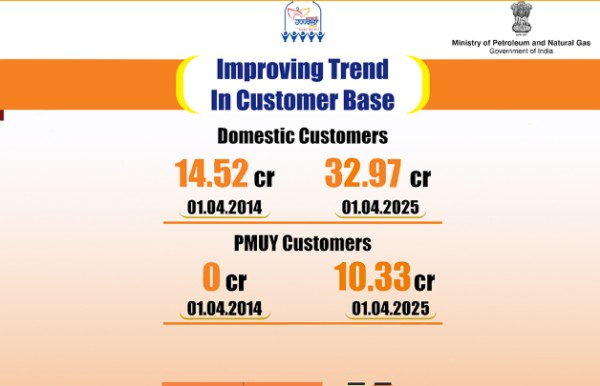
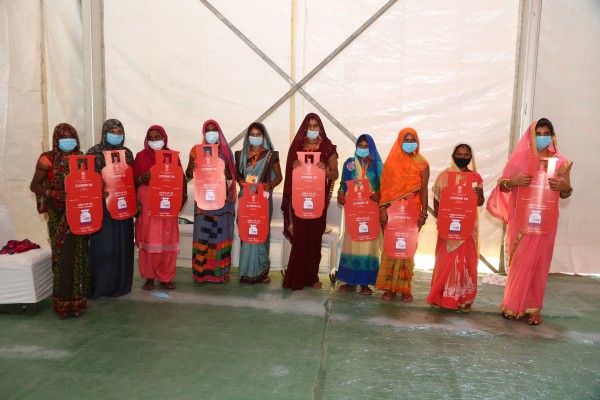
The government has taken several steps to make LPG accessible. The 'Give it Up' campaign started in 2015, in which more than 1 crore voluntarily gave up their subsidies, which benefited the poor. Also, the PAHAL-DBT scheme was launched in 2015, which transfers subsidies from Aadhaar directly to the bank account. This saved Rs 1.5 lakh crore. The Ujwala scheme has also played a big role in connecting other gas connections.
LPG subsidy policies evolved from Universal Subsidy to Direct Benefit Transfer (DBT) in the 2000s, with prevention of diversion and priority to the poor. Since 2012 there have been rapid reforms, such as subsidy capping and Aadhaar-linked payments. Subsidy was universal from 2000 to 2012, but diversion i.e. commercial use of domestic cylinders was common. In 2012, Kelkar recommended the committee, which decided to reduce the subsidy by 25%. Let's take a look at the changes in LPG subsidy policies over time. They understand them in detail.
The DBTL scheme started in 2013, the PAHAL DBT scheme, which was launched across the country in 2015. This is an initiative of the Ministry of Petroleum and Natural Gas to transfer LPG subsidy directly to the bank accounts of consumers. The objective of this scheme is to eliminate leakages, prevent duplicate connections and increase transparency in subsidy distribution.
LPG cylinders are sold at the market price and the subsidy amount is transferred directly to the bank accounts of the consumers. Consumers get subsidies in two ways. Aadhaar transfer compliant mode and bank transfer compliant mode i.e. subsidy is credited to the registered bank account without linking Aadhaar.
Its purpose is to eliminate middlemen and fake LPG connections, so that it can be ensured that the benefits are real.