Sign In
By signing in or creating an account, you agree with Associated Broadcasting Company's Terms & Conditions and Privacy Policy.
By signing in or creating an account, you agree with Associated Broadcasting Company's Terms & Conditions and Privacy Policy.
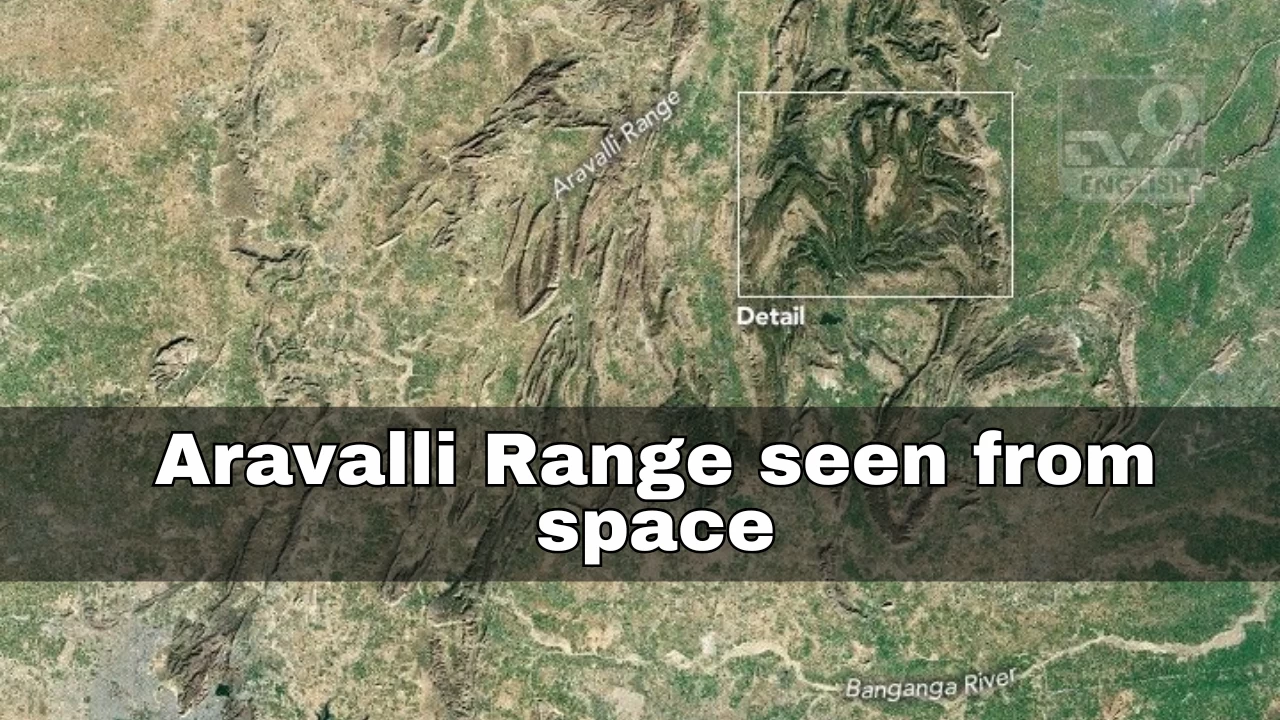

New Delhi: From space, the Aravalli Range looks like claw marks scratched across north India’s landscape. Scientists say this ancient mountain chain between Jaipur and Alwar is not just visually stunning, but also a living record of Earth’s deep geological past. Formed more than a billion years ago during the Proterozoic Eon, these rocks have survived erosion, climate change, and massive shifts in the planet’s crust.
Even today, the Aravalli hills stand as weathered remains of what was once a far taller mountain system, similar to how the Appalachian Mountains in the United States are the last reminders of an older range. In Rajasthan, these rugged hills rise nearly 600 metres above sea level, forming a natural barrier, shaping climate patterns, and influencing settlement across the region.
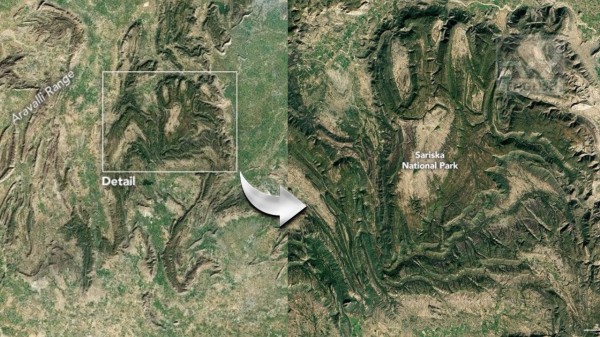
The Operational Land Imager on NASA’s Landsat 8 captured a clear image of this terrain on December 22, 2016. Jaipur appears on one side, Alwar on the other, with the ridges curling between them like giant geological fingerprints. Scientists say studying formations like the Aravalli helps understand how tectonic plates collided, how Earth’s crust behaved, and how landscapes age over millions of years.
The range has stood witness to human history too. Alwar dates back to around 1000 AD, while Jaipur was founded in 1726 by ruler Jai Singh II, who had a deep interest in astronomy.
Jai Singh II did something rare for his time. He built five astronomical observatories between 1724 and 1730 across north India to improve calendar accuracy and track celestial movement. The largest one in Jaipur houses the Samrat Yantra, a 22 metre tall stone sundial that can measure time with precision of up to two seconds. It remains one of the most fascinating examples of science meeting architecture.
Just northeast of Jaipur lies Sariska National Park, once a sad symbol of wildlife decline when its tiger population fell to zero in 2005 because of poaching. A government-led reintroduction effort later helped bring tigers back. The park now reports around 14 tigers, including cubs, showing how conservation science and policy can revive damaged ecosystems when handled seriously.
The Aravalli stretch is not just geography. It affects rainfall, heat movement, biodiversity, and even city growth. It tells India’s deep Earth story, carries scientific legacy from ancient astronomy to modern satellite imaging, and also shows how ecology can collapse and recover.
Standing between technology, history, and nature, the Aravalli Range reminds us that science is not always found in labs. Sometimes, it is quietly sitting in the rocks beneath our feet.