Sign In
By signing in or creating an account, you agree with Associated Broadcasting Company's Terms & Conditions and Privacy Policy.
By signing in or creating an account, you agree with Associated Broadcasting Company's Terms & Conditions and Privacy Policy.
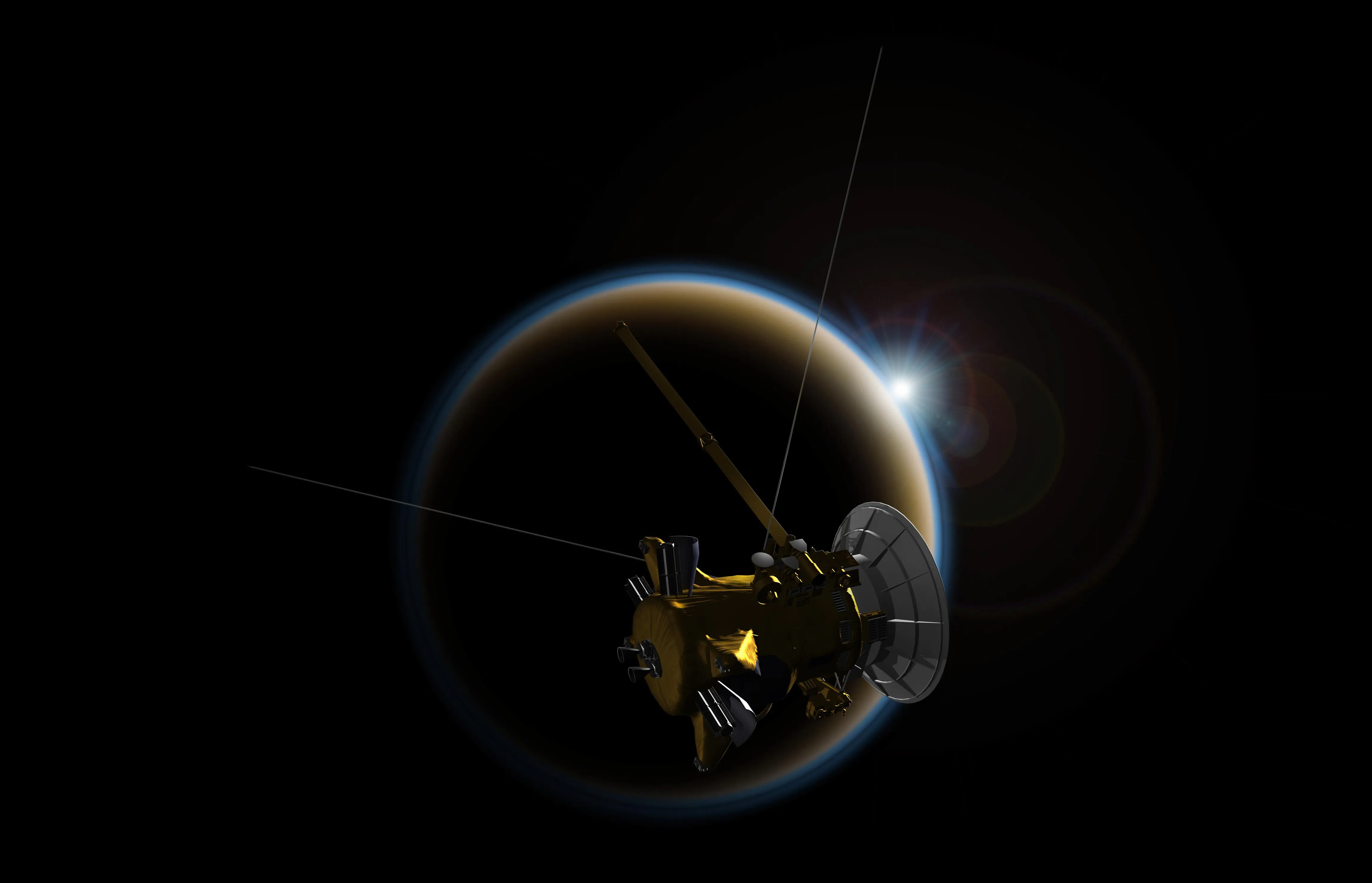

One of the important discoveries by NASA's retired Cassini mission to Titan, the largest moon of Saturn was that the ice world may harbour a global subsurface salt water ocean. The surface is rich in hydrocarbons. A closer examination of the data gathered by the spacecraft indicates that the interior of Titan is more complex, and is likely to be composed primarily of ice with layers of slush and small pockets of warm water close to its rocky core. A paper describing the research has been published in Science.
The primary way to probe the remote interiors of worlds is to use seismometers, with seismic waves painting a picture on the density changes within the world. While NASA's Dragonfly probe plans to take a seismometer to the ice moon, there isn't one there yet. Scientists used a more indirect, multilayered process, carefully examining the radio waves, looking for subtle shifts in gravity during a flyby, indicating uneven mass distribution in the interior of Titan. These variations alter the frequency of the radio waves going to and from the spacecraft, an effect known as Doppler shift. Careful measurement over time can reveal shifts in the shape of Titan.
The immense gravitational influence of Saturn is stretching and squeezing Titan through tidal flexing, depending on its position in the slightly elliptical orbit around Saturn. The periodic flexing heats up the interior. The observations revealed that Titan was flexing so much that it must contain a liquid interior. New research suggests another possibility for this pliability, that the interior is a slushy mixture of water and ice. The periodic heating of the water pockets in the interior can cause the rise of organic molecules towards the surface, and create unique environments. Even without the global subsurface liquid saltwater ocean, carbon based organisms living in the interior of the moon remain a possibility.