Sign In
By signing in or creating an account, you agree with Associated Broadcasting Company's Terms & Conditions and Privacy Policy.
By signing in or creating an account, you agree with Associated Broadcasting Company's Terms & Conditions and Privacy Policy.
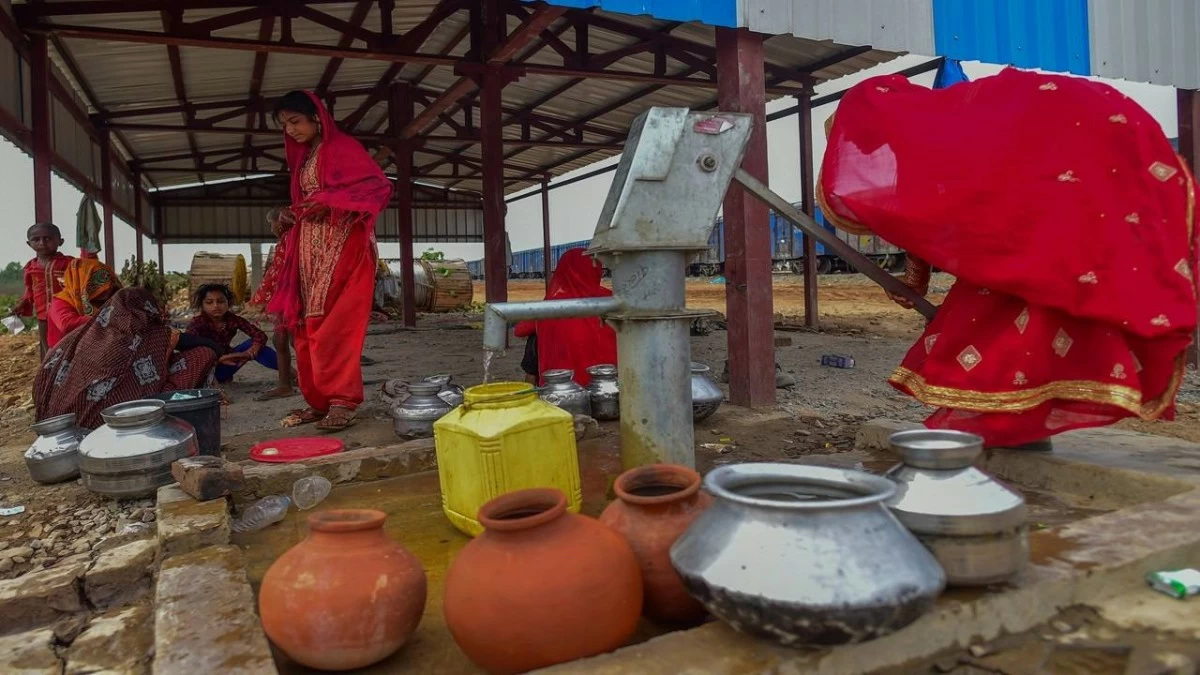


New Delhi: Around 60% of districts in India are experiencing a drop in groundwater levels, with states such as Punjab, Haryana, Uttar Pradesh, and Rajasthan being particularly hit, a 2020 report from the Central Ground Water Board (CGWB) pointed out.
In a grave warning, the 2018 NITI Aayog report projected that 21 major cities, including Delhi, Bengaluru, and Chennai, could run out of their groundwater supplies by 2030 if current trends continue.


Being the world's largest consumer of groundwater, India extracts approximately 25% of global groundwater. The reckless extraction is posing multiple risk and has spawned a severe water crisis. An Indian Institute of Remote Sensing (IIRS) study brought fore the fact that almost 50% of India's groundwater wells are showing signs of over-extraction, with many deep wells drying up, particularly in agricultural areas.
This is a cause for concern as 60 to 70 percent of water supply for irrigation in India are met by underground sources. Due to depleting groundwater levels, agricultural production in many regions have been impacted and farmers are the biggest victims. Farmers who depend on water-intensive crops like sugarcane and rice are unable to cope with the receding groundwater levels.
In Punjab alone, in the past five years, the groundwater table has dropped by an average of 0.16 meters per year. Out of Punjab's 153 administrative blocks, 115 have been classified as overexploited or in the dark zone. During 2023-24, a total of 28.95 billion cubic meters (BCM) of groundwater was extracted, creating a significant deficit of 11.32 BCM between recharge and withdrawal.
Overextraction is the primary reason. But overextraction actually happens because there is not enough recharge. The demand for water, particularly for irrigation, industry, and domestic use, continues to grow but the recharge is not enough. The demand-supply mismatch is causing the groundwater crisis.
Lopsided urbanisation, cutting down trees, and building concrete surfaces that don't allow water to soak in have reduced the natural replenishment of groundwater. As a result, there is no groundwater recharge. A 2019 report from the Central Ground Water Board revealed that many aquifers are not replenishing quickly enough to keep up with demand.
Inefficient water resource usage, insufficient water storage infrastructure, and poor management practices also result in excessive groundwater extraction. Another reason is industrial effluents, untreated sewage, and agricultural runoff that contaminate water sources, which renders the groundwater unsafe for consumption and this water can't be used.
It is imperative that the depletion patterns are closely studied. Only by studying the patterns can the government take corrective measures to prevent further drop.
Sustainable water management practices, such as rainwater harvesting, efficient irrigation methods, and improved water conservation policies, should be top priority. Recharge pits, small check dams, new ponds as well rainwater harvesting structures can arrest the decline to a large extent. It is equally important to prevent industrial waste, untreated sewage, and agricultural runoff from contaminating water sources to keep groundwater unpolluted and fit for use.
Apart from raising awareness about groundwater conservation among various communities, there should be effective enforcement of laws regulating extraction of groundwater. The government should penalise those who flout the groundwater extraction rules and offer incentives to those who follow water conservation methods.