Sign In
By signing in or creating an account, you agree with Associated Broadcasting Company's Terms & Conditions and Privacy Policy.
By signing in or creating an account, you agree with Associated Broadcasting Company's Terms & Conditions and Privacy Policy.
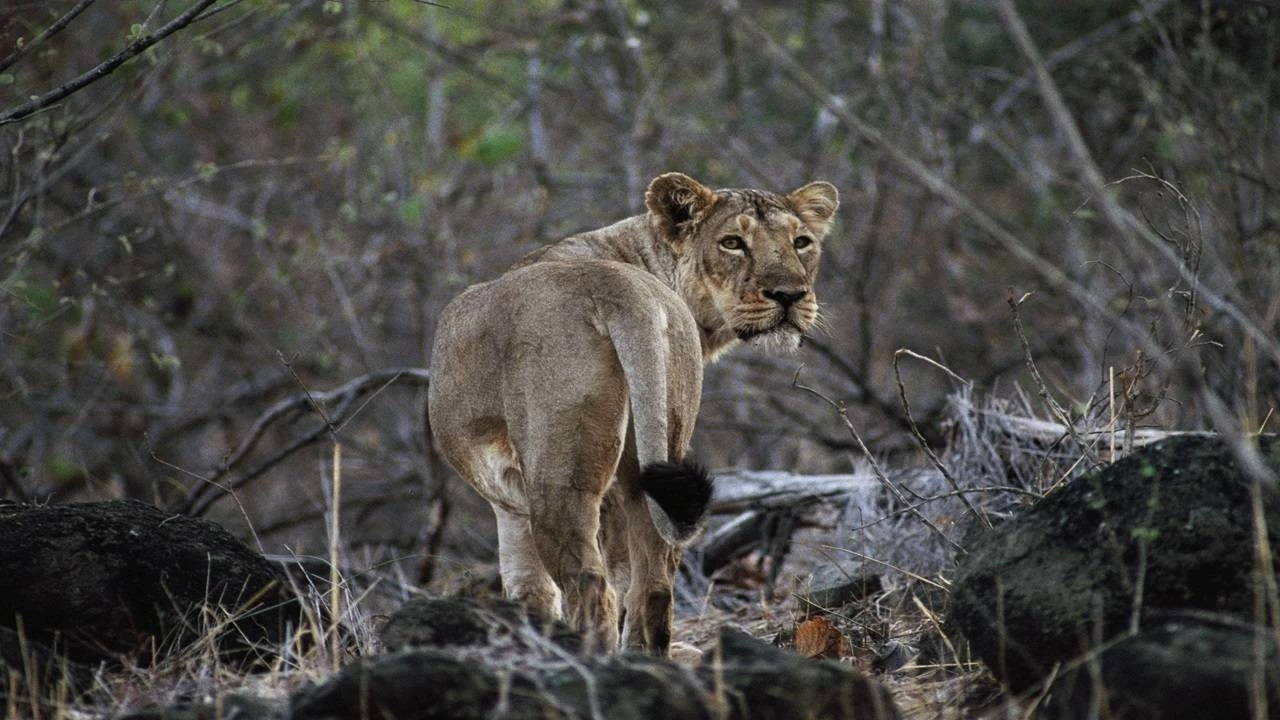


New Delhi: On Sunday, Union Environment Minister Bhupender Yadav announced that India’s Asiatic lion population has reached 891 in 2025, marking a 32.19% jump since 2020 and over 70% growth in the past decade. He made this announcement on World Lion Day celebrations at Barda Wildlife Sanctuary in Gujarat’s Devbhumi Dwarka district.
Yadav dubbed the rise as an “astounding success of conservation,” while crediting the achievement to Prime Minister Narendra Modi’s leadership.


“It is a matter of immense national pride that if the Asiatic lion exists anywhere in the world today, it is in Gir, Gujarat. Our relentless conservation efforts have doubled their population in the past decade, giving hope to global wildlife protection.” Yadav said.
As per the recently released 16th Lion Population Estimation report, the number of adult females has grown from 260 to 330 — a rise of almost 27%. This growth is crucial as it strengthens the species’ reproductive potential.
A total of 384 lions live inside protected forest and sanctuary areas. Lions in non-forested areas have risen from 340 in 2020 to 507 in 2025. Around 44% of the lion population now stays outside traditional protected habitats.
The 2025 census shows new satellite populations in Gujarat’s Barda Wildlife Sanctuary, Jetpur, Babra-Jasdan, and nearby areas. In all, 497 lions now inhabit nine satellite sites, with 22 lions documented for the first time in corridor zones.
Over the last 10 years, the lion population has risen by over 70%, and their range has expanded by nearly 60%. The distribution range has expanded from 30,000 sq km in 2020 to 35,000 sq km in 2025, marking an increase of 16.67%.
Amreli district leads with 339 lions: 82 adult males, 117 adult females, and 79 cubs. The census found 55.78% of the lions in forest areas and 44.22% in non-forest areas.
Mitiyala Wildlife Sanctuary and its surrounding areas recorded the quickest growth at 100%, followed by Bhavnagar Mainland at 84% and the South Eastern Coast at 40%. However, some regions saw a dip, with Girnar Wildlife Sanctuary down by 4% and the Bhavnagar Coast by 12%.
In Gujarat, a raft of measures have been undertaken for lion conservation, including boosting the security apparatus, using modern technology, involving local communities, and improving veterinary care. The objective of 'Project Lion' is to ensure the long-term and holistic conservation of Asiatic lions within the 'Greater Gir Lion Landscape'.
Project Lion, declared by PM Modi during his 2020 Independence Day address, is a 10-year, Rs 2,927.71 crore programme aimed at ensuring the long-term survival of Asiatic lions through habitat expansion, healthcare, and community participation. The project, underway in Gujarat’s Gir landscape, is aimed at improving habitats, employing advanced technologies like radio-collaring and camera traps for monitoring, and reducing human-animal conflict. However, there are still challenges that need to be addressed to ensure long-term survival of lions in its natural habitat.