Sign In
By signing in or creating an account, you agree with Associated Broadcasting Company's Terms & Conditions and Privacy Policy.
By signing in or creating an account, you agree with Associated Broadcasting Company's Terms & Conditions and Privacy Policy.
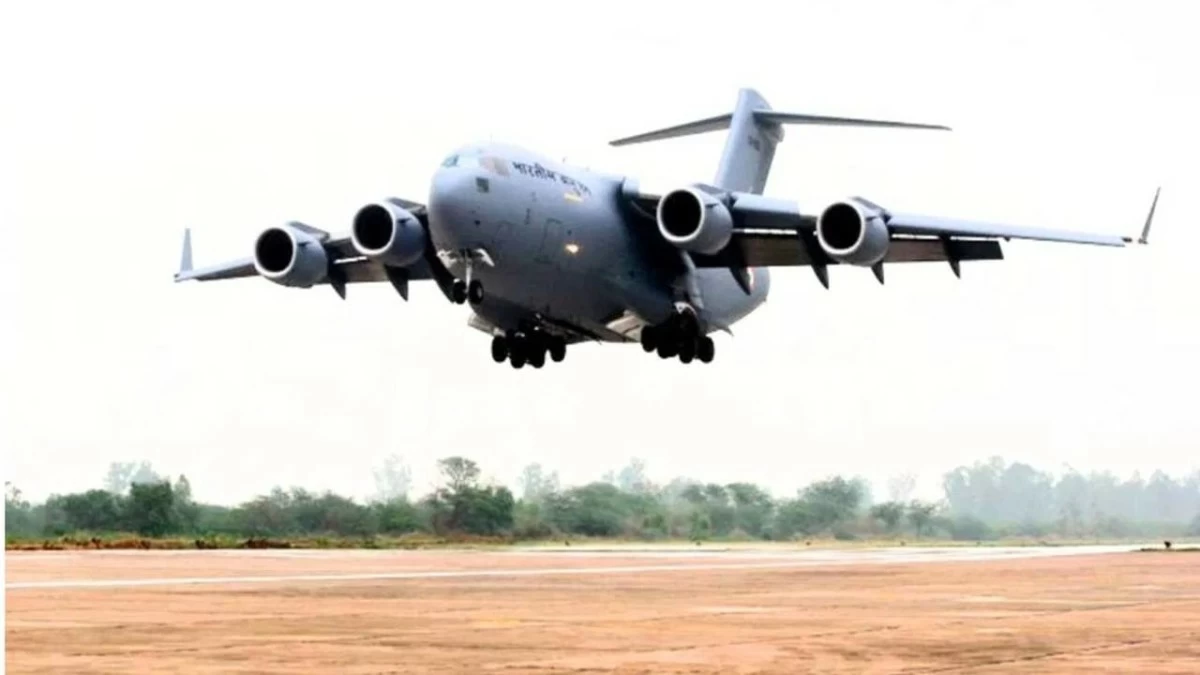


How IAF played crucial roles during wars
New Delhi: Over the years, the Indian Air Force (IAF) has played a very important role during the wars, helping the armed forces win crucial wars since independence. While the IAF role in 1962 war against China was mainly confined to lifting the bodies of martyred soldiers and the injured, it helped the army on the ground defeat Pakistani forces, be it in 1965, 1971 or Kargil war in 1999.


Notably, several experts have expressed their opinion that it could have been a different ball game for Indian armed forces had IAF taken part in the combat operations. However, only helicopters were used for supply duties, as well as for carrying injured or martyred soldiers. On the other hand, the Chinese PLA did its fighter jets against Indian armed forces.
The fighter jets of the IAF were, however, used in the 1965 war with Pakistan. At the beginning of the war, the Pakistan Air Force (PAF) boasted 120 F-86F Sabre fighter aircraft and 14 F-104 Starfighters. While Starfighters were more equipped, PAF was more reliant on Sabre aircraft due to its track record during the Korean War. India countered the Pakistani air offensive with Gnat aircraft. While it was initially believed that PAF had the upper hand due to Sabre, Indian fighter pilots soon came out with ways to tackle the aircraft with Gnat. During the war, Pakistani aircraft were finding it tough to spot small Gnat, mainly in the low level where the engagement mostly took place. Gnat planes shot down at least seven Sabres fighter planes during the war.
Apart from Gnatz, the IAF also used other aircraft in the 1965 war including Hawker Hunter, Mystere, Dssault Toofani and Vampire, apart from the bomber-interdictor Canberra. At the time, IAF also had a handful of third-generation supersonic MiG-21s, which were being acquired from Russia at the time.
Six years later in 1971, the tensions between India and Pakistan were once again between both countries due to tensions in East Pakistan (now Bangladesh). During the initial phase of the war, the IAF was looking to target the Pakistani fighter planes on the western front and support the armed forces fighting the ground.
One of the IAF’s most successful raids was conducted on December 8, 1971, when Indian fighter jets successfully raided West Pakistan. During this operation, the Hunter fighter aircraft launched a strike at a Murid-based Pakistani air base and destroyed five sabre jets. Importantly, during the battle of Longewala, the six Hunter aircraft of the IAF destroyed 52 Pakistani tanks alone.
On the eastern front, the Hunter aircraft shot down one Sombre aircraft in the first raid itself. The IAF used Hunters, MiG-21, and Canberra bombers to strike Pakistani airbases air bases. Apart from the combat fleet, the transport and helicopter fleets of the IAF also played important roles during the 1971 war.
Over the years, various new fleets of aircraft have been included in the IAF. During the Kargil War, the IAF launched Operation Safed Sagar, which was part of Operation Vijay. Under this Operation, the IAF deployed a mix of fighter jets, helicopters, and the transport fleet during the war. Among the fighter planes which were deployed included MiG-21s, MiG-23s, MiG-27s, and Mirage-2000 fighter aircraft.
During the Kargil war, the Mirage-2000s played an important role in striking down the enemy hideouts with advanced avionics and weaponry. At the time of the Kargil war, the aircraft were equipped with laser-guided bombs (LGBs), which helped in targeting and destroying well-fortified enemy positions and also disrupted supply lines. The Mi-17 chopper of the IAF also helped in troop transport, evacuation of casualty soldiers, and direct ground attack missions.
These helicopters helped in providing critical support in areas where fixed-wing aircraft were unable to reach due to terrain constraints. The IAF underwent a Suppression of Enemy Air Defence (SEAD) mission, which involved targeting and neutralizing Man-Portable Air-Defence Systems (MANPADS) and other anti-aircraft installations that threatened the aircraft.
One of the Mirage-2000 aircraft sighted a major enemy supply line during the war on June 16. The very next the aircraft hit the supply line using dumb bombs. This attack left more than 100 dead and 50 structures destroyed. The strike by the aircraft on this mission completely disrupted the enemy’s supply chain, which weakened the operational capabilities of the enemy. In recent times, the IAF has included various India-made weapons under the Government's Make-in-India initiative. Surface-to-air missile system), Agni (A ballistic missile), and Nag (An anti-tank missile), among others.