


Sign In
By signing in or creating an account, you agree with Associated Broadcasting Company's Terms & Conditions and Privacy Policy.
By signing in or creating an account, you agree with Associated Broadcasting Company's Terms & Conditions and Privacy Policy.
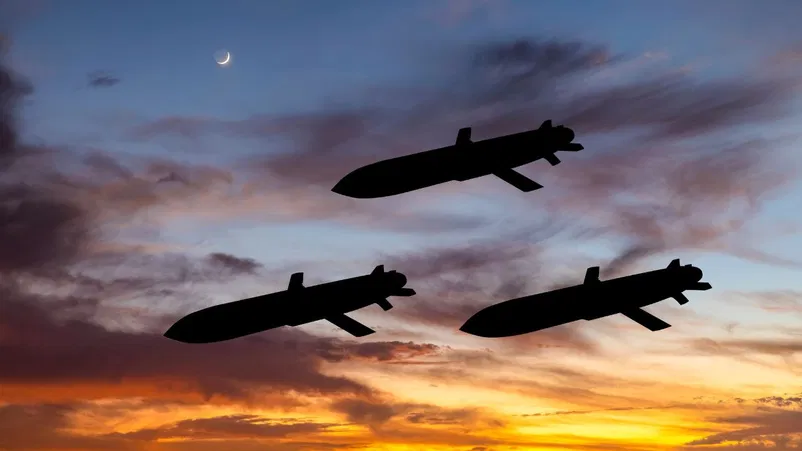


In a landmark move to bolster aerial security in the Delhi-National Capital Region (NCR), India is set to deploy an indigenous Integrated Air Defence Weapon System (IADWS) aimed at countering threats from missiles and drones. This strategic initiative, overseen by the Indian Air Force and developed in collaboration with the Defence Research and Development Organisation (DRDO), emphasises self-reliance in national defence.
The IADWS will utilise cutting-edge homegrown technology, including the Quick Reaction Surface to Air Missile (QRSAM) and Very Short Range Air Defence Systems (VSHORAD). This decision reflects a significant pivot from the previously considered acquisition of the US-made National Advanced Surface to Air Missile System-II (NASAMS-II), which was deemed prohibitively expensive.



While India continues to procure additional squadrons of the Russian S-400 missile system, discussions are also underway regarding further enhancements with the advanced S-500 air defence system.
IADWS to shield the national capital
The multilayered IADWS is strategically designed to shield the national capital from a spectrum of aerial threats, encompassing high-speed aircraft, incoming missiles, and unmanned aerial vehicles.
Defence sources indicate that the IADWS project is currently advancing through the defence ministry, following the recent 'Operation Sindoor' conducted in May.
DRDO focuses on long-range surface-to-air missiles
With a proven track record in air defence technology development, DRDO is well-equipped for this initiative, having already rolled out successful systems like the QRSAM and Medium Range Surface to Air Missile (SAM). Additionally, the organisation is making strides on Project Kusha, which focuses on long-range surface-to-air missile capabilities.

