


Sign In
By signing in or creating an account, you agree with Associated Broadcasting Company's Terms & Conditions and Privacy Policy.
By signing in or creating an account, you agree with Associated Broadcasting Company's Terms & Conditions and Privacy Policy.
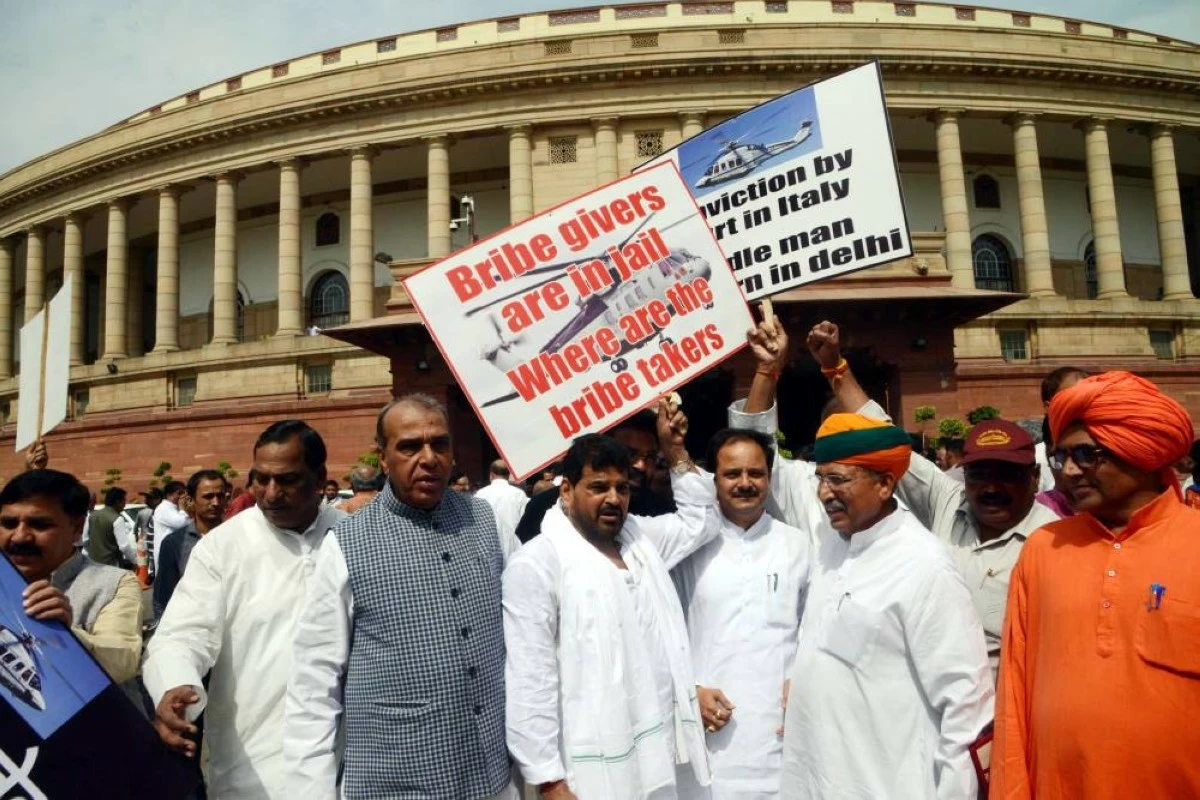


New Delhi: The Bofors scam, a chilling saga of alleged bribery and corruption, continues to resonate in India's political and judicial landscape decades after its initial eruption. It's a story of international intrigue, elusive middlemen, and a relentless pursuit of justice that underscores the enduring challenges in combating high-level corruption.
The drama unfolded on March 18, 1986 1986 with India's seemingly straightforward purchase of 400 Howitzer guns from Swedish arms manufacturer Bofors for a staggering Rs 1,437 crore. However, this deal was soon ensnared in a web of allegations. In 1987, a Swedish radio broadcast ignited a firestorm, alleging that Bofors had paid hefty bribes to top Indian politicians and defense officials to secure the contract. This accusation sent shockwaves through the then-ruling Rajiv Gandhi government in the late 1980s.


The Central Bureau of Investigation (CBI) launched an investigation, filing an FIR in 1990, naming several key players, including Bofors president Martin Ardbo, alleged middleman Win Chadda, the Hinduja brothers, and several Indian officials. The ensuing investigation dragged on for years, marked by the filing of charge sheets against Chadda, Ottavio Quattrocchi (another alleged middleman), then-defense secretary S K Bhatnagar, and others. The Hinduja brothers were added in a supplementary charge sheet on October 9, 2000.
The legal proceedings were far from straightforward. In 2004, a court exonerated the late Prime Minister Rajiv Gandhi from the charges, while a Delhi High Court decision in 2005 quashed the entire CBI case. The saga took another twist in 2011 when a special CBI court discharged Quattrocchi, citing the exorbitant cost of his extradition. Quattrocchi, having fled India in 1993, never faced trial; he passed away in 2013. The deaths of other key accused, Bhatnagar, Chadda, and Ardbo, further complicated the already-entangled legal proceedings.
Despite the seemingly conclusive court decisions, the Bofors scandal refused to be buried. In 2017, private investigator Michael Hershman, head of the Fairfax Group, visited India and made explosive claims. Hershman, who allegedly investigated the Bofors deal's financial irregularities in 1986 on behalf of the Indian Finance Ministry, asserted that the Congress government at the time had derailed the investigation.
His willingness to share his findings ignited renewed interest in the case. The CBI's efforts to retrieve relevant documentation from the Finance Ministry proved futile, with officials citing the age of the case as the reason for missing records. Repeated attempts to obtain information from US authorities through official channels and Interpol proved unsuccessful. Finally, after multiple failed attempts, in February 2025, the CBI secured permission to issue a Letter of Rogatory (LR) to the US, requesting Hershman's cooperation. This action marks a renewed commitment to uncovering the truth behind this long-dormant scandal.
The Bofors scandal remains an unresolved symphony of corruption allegations, legal battles, and political manoeuvring. While key figures involved have passed away, the pursuit of justice, even decades later, is far from over. The CBI's recent LR request to the US represents a determined, though possibly late, attempt to exhume the buried truths of this landmark case.

