New Delhi: The situation in India’s “cleanest city” has reached a troubling stage after the Indore health administration issued an official statement declaring a surge in disease cases as an epidemic amid the water contamination crisis in Bhagirathpura. The department made the declaration after confirming 10 deaths over the past few days. The development comes after years of alleged systemic neglect despite repeated complaints from residents in the area.
The declaration followed an assessment by a team of experts who found that the number of active cases had spread beyond the locality where the outbreak initially began. As a result, a special national team has been formed to monitor the situation and analyse survey data to identify the exact point of contamination and determine whether it is spreading through a single source or multiple sources.
Special team deployed to identify the root cause
To streamline the survey process, District Collector Shivam Verma chaired a high-level meeting on Sunday with a specialised task force. According to TOI, the team includes scientists Dr Pramit Ghosh and Dr Gautam Chaudhary from the ICMR–National Institute for Research in Bacterial Infections, Kolkata; Dr Anubhav from the National Centre for Disease Control; and epidemiology experts from the State Surveillance Team in Bhopal.
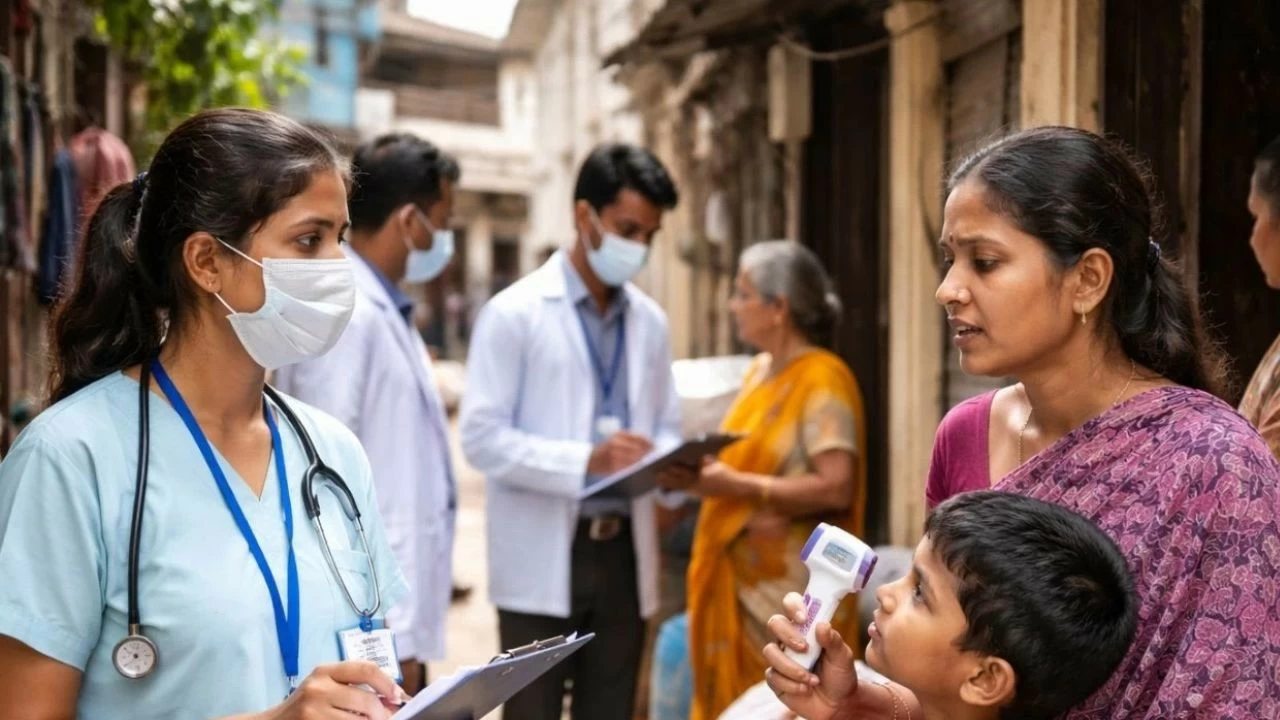
To get to the root of the crisis, the team has been collecting random samples using scientific methods to isolate the primary bacterial source in the water. To enhance the survey, the administration has divided the entire Bhagirathpura area into 32 separate beats. Collector Verma said dedicated teams in each beat are working directly with residents to enforce mandatory chlorination of all government and private borewells.
Narmada water supply blocked until further notice
Residents have been instructed to thoroughly drain and clean underground storage tanks, locally known as hoj, followed by professional chlorination before reuse. The Narmada water supply to the affected area remains suspended and will only be restored after the expert team certifies the pipeline network as fully decontaminated, Verma confirmed. As a temporary measure, the administration is supplying clean drinking water through tankers, while health workers are distributing liquid chlorine drops door-to-door.
Addressing public concerns, the Collector categorically dismissed rumours linking the outbreak to Guillain-Barré Syndrome (GBS), a neurological disorder. He stated that no cases of GBS had been identified in the city in connection with the current crisis. Verma also said that all affected patients are receiving free treatment, including necessary medications and injections, at various hospitals under the supervision of specialist doctors brought in from neighbouring districts.
The development has raised serious concerns about the safety and availability of basic amenities. The situation appears particularly ironic, as it has emerged in Indore—a city frequently lauded for its cleanliness drive.