Sign In
By signing in or creating an account, you agree with Associated Broadcasting Company's Terms & Conditions and Privacy Policy.
By signing in or creating an account, you agree with Associated Broadcasting Company's Terms & Conditions and Privacy Policy.
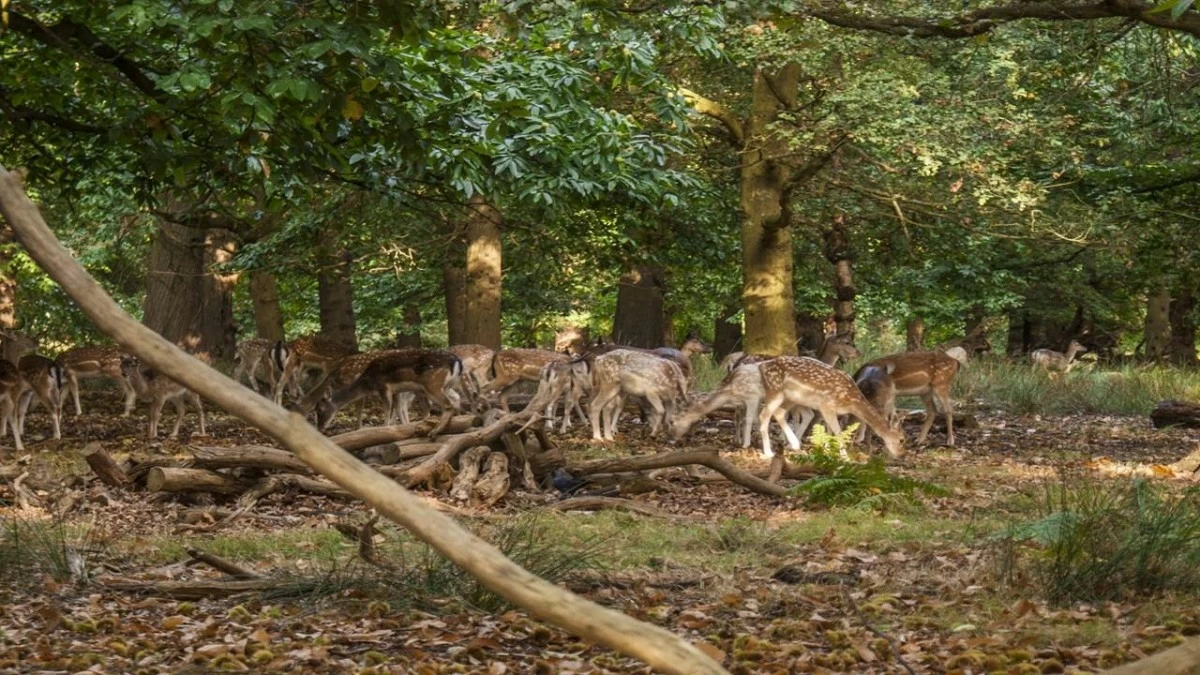


New Delhi: Madhya Pradesh houses the Kanha Tiger Reserve, also known as Kanha–Kisli National Park. It is the largest national park of the state of Madhya Pradesh and also one of the biggest tiger reserves in the country. The park boasts of Bengal tigers, Indian leopards, sloth bears, barasingha, and dholes. It is also the first tiger reserve in India to officially introduce a mascot, Bhoorsingh the Barasingha.
Kanha National Park is situated in the Maikal range of the Satpura Mountains in Madhya Pradesh, within the central Indian highlands. It is spread out in two districts Mandla and Balaghat.


The total area of the reserve is approximately 2051.791 square kilometres, with core area being 917.44 sq km, and buffer 1134.361 sq km. The landscapes, along with the big meadows, wooded areas, and dense forests, offer a exhilirating sightseeing experience for nature lovers. This beautiful landscape provided inspiration for renowned writer Rudyard Kipling to create his masterpiece, 'The Jungle Book'.
Kanha National Park has two primary entry points: Khatia and Mukki. The Khatia Entrance Gate is situated in Mandla district, while the Mukki Entrance Gate is located in Balaghat district. From Khatia, visitors can access the Kisli, Kanha, and Sarhi zones, while the Mukki Entrance Gate leads to the Mukki range. Khatia is well-connected to Jabalpur and Nagpur, while Mukki can be reached from Jabalpur, Raipur, and Nagpur.
The nearest railway stations for reaching Kanha National Park is Gondia and Jabalpur. The nearest airports to Kanha National Park are in Jabalpur (160 km), Raipur (250 km), and Nagpur (300 km).
Kanha Museum, Lapsi Kabar, Shravan Tal, and Sindoor Trees are some of the spots in the Park that one shouldn't miss.
In 1879, Kanha was declared a reserve forest and notified as a wildlife sanctuary in 1933. In the 1930s, Kanha was divided into two sanctuaries Hallon and Banjar, of 250 sq km and 300 sq km, respectively. It was upgraded to a national park in 1955. In 1973, Kanha was designated tiger reserve.
Kanha National Park gained immense recognition as a tiger reserve in 1973 following the launch of Project Tiger and is renowned for its conservation efforts, essentially in protecting the endangered Barasingha. In 1980, the park got featured in the National Geographic film 'Land of the Tigers'. In 2000, the park received the 'best tourism-friendly national park' award by the Department of Tourism, Government of India.
The lowland forests of Kanha Tiger Reserve have a mix of sal (Shorea robusta) and various mixed-forest trees. The park is home to a variety of tree species, including Sal, Saja, Lendia, Dhawa, Tendu, Palas, Bija, Mahua, Aonla, Achar, and Bamboo. Additionally, numerous species of climbers, forbs, and grasses can also be found throughout the area.
There are various species of trees like teak, mahua (Madhuca indica), and bamboo (Dendrocalamus strictus), that enhance the park's biodiversity. There are expansive meadows too. The highland forests are tropical moist, dry deciduous, featuring bamboo (Dendrocalamus strictus) on the slopes and Indian ghost trees (Sterculia urens). Bamboo flourishes on the slopes of the park, especially in the highland areas.
It is the exclusive habitat of the rare hard ground Barasingha, often called "the jewel of Kanha". Kanha is home to around 22 species of mammals, including Royal Bengal tigers, leopards, striped palm squirrels, common langurs, jackals, wild pigs, Chital, Barasingha (swamp deer), blackbuck, and sambar.
The Kanha Tiger Reserve is also home to around 300 species of birds, with some of the most commonly seen including the Black Ibis, Bee-eaters, Cattle Egret, Blossom-Headed Parakeets, Pond Heron, Drongos, Common Teal, Crested Serpent Eagle, Grey Hornbill, Indian Roller, Lesser Adjutant Stork, Little Grebes, Lesser Whistling Teal, Minivets, Pied Hornbill, Woodpecker, Pigeon, Paradise Flycatchers, Mynas, Peafowl, Red Jungle Fowl, Red Wattled Lapwing, Steppe Eagle, Tickell’s Flycatcher, White-eyed Buzzard, White-breasted Kingfisher, White-browed Fantail Flycatcher, Wood Shrikes, and Warblers, among many others. This incredible bird paradise draws thousands of birdwatchers and ornithologists.
Reptiles including Python, Indian Cobra, Russell’s Viper, Indian Krait, Common Rat Snake, Common Skink, Indian Monitor, Fan Throated Lizard and Indian Garden Lizard are also found here. Fishes like Giant Danio, Common Rasbora, Mud Perches, Brown Snakehead and Green Snakehead abound in the water bodies inside the park.
According to the latest estimates, Kanha Tiger Reserve is home to around 80 to 90 tigers, making it one of India's most successful tiger conservation zones. Project Tiger initiative and ongoing conservation programmes can be credited behind this success. As part of its efforts to preserve and restore tiger habitats, WWF-India has been creating corridors that support both tigers and their prey. This has gone a long way in helping stabilise the tiger population. However, illegal eviction of indigenous tribes from the core zone sparked controversy in 2010. The Forest Act must ensure that relocation from such areas and rehabilitation should be properly carried out.
The best way to experience the wildlife in the dense, green forests of Kanha National Park is through 4WD open jeep safaris. These open jeeps, which can accommodate both groups of tourists and individuals, are guided by an experienced naturalist and enter the park at specified times. The park has four distinct zones for jeep safaris: Kisli, Mukki, Kanha, and Sarhi.