Sign In
By signing in or creating an account, you agree with Associated Broadcasting Company's Terms & Conditions and Privacy Policy.
By signing in or creating an account, you agree with Associated Broadcasting Company's Terms & Conditions and Privacy Policy.
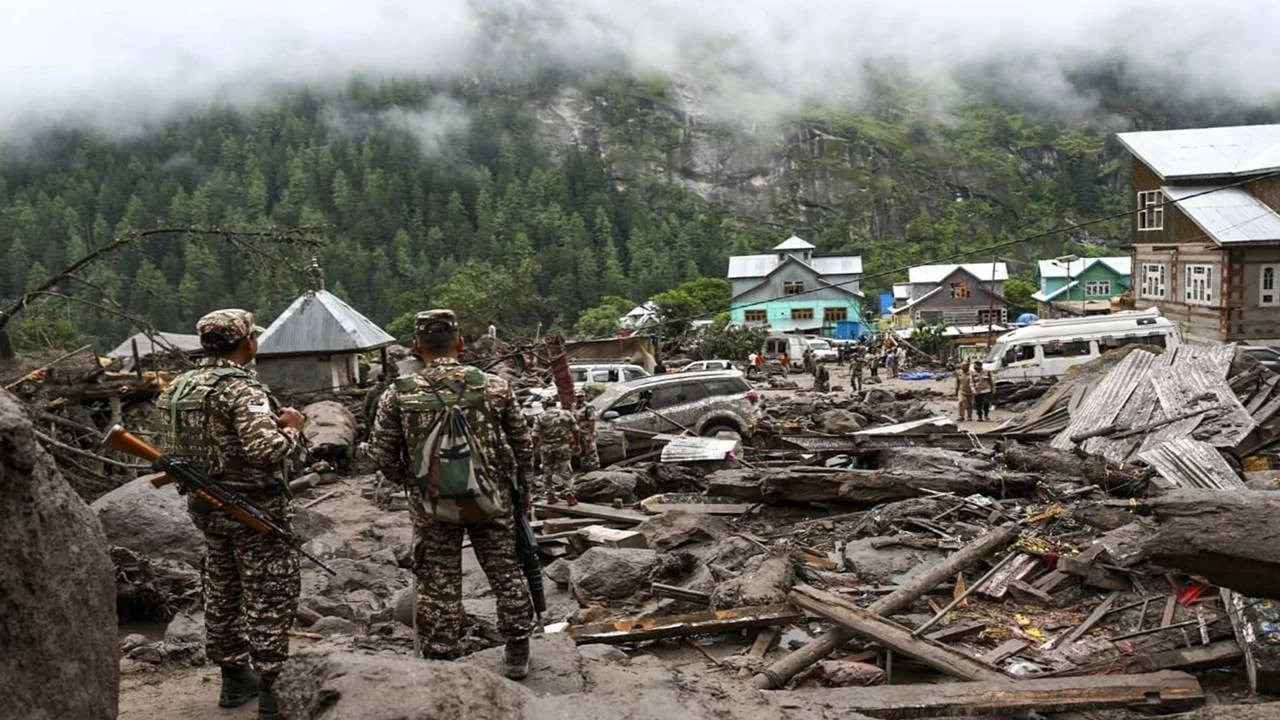


New Delhi: Days after the Uttarkashi and Himachal Pradesh disasters, 60 people were reportedly killed and over 100 injured following flash floods triggered by cloudburst in Jammu and Kashmir's Kishtwar region. The incident occurred in Chashoti, the last motorable village on the way to the Machail Mata temple, on Thursday.
A cloudburst in Chashoti village in J&K’s Kishtwar district claimed at least 60 lives, including those of two Central Industrial Security Force (CISF) personnel. Reports said that over 120 people have been rescued. Many of them are in critical condition.
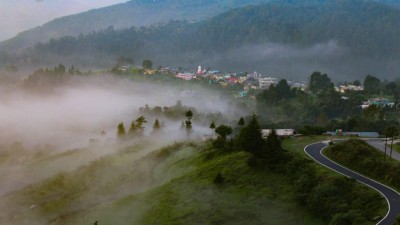


The cloudburst triggered flash floods and swept away many devotees who had assembled for the annual Machail Mata yatra. Flash floods washed away a number of structures, including shops and a security outpost, while a langar (community kitchen) set up for devotees was also impacted.
As the sudden flood caught residents and pilgrims off guard, the serenity of the area turned into chaos and tragedy. The waters inundated the entire area, and people -- including volunteers and pilgrims -- were left scurrying for safety.
The disaster has been dubbed as one of the deadliest in the region in recent years. It brings to fore the vulnerability of Jammu and Kashmir’s mountainous terrain to such extreme weather events.
In mountainous regions like Kishtwar, cloudbursts occur with alarming frequency. Their frequency becomes more pronounced during the monsoons. At higher altitudes, clouds laden with moisture can be held back from releasing rain when abnormally warm air currents rise and push them upwards. Due to the rising air current, raindrops are carried up and they mix with existing ones. This causes cloudburst. Kishtwar cloudburst also occurred because of this.
As per the IMD, a cloudburst is when an area of 30 sq km or less receives 100 mm or more of rain in one hour. During the monsoons, the Himalayan region faces a high risk of cloudbursts because of the greater frequency of extreme rainfall events.
Ruchit Kulkarni from the University of Melbourne reportedly told The Guardian that during the monsoon season, moisture from the Arabian Sea is carried towards the western hills, where it is forced upwards in a process known as orographic lift. This leads to the formation of cumulonimbus clouds in the hilly regions — storm clouds are formed with large water droplets.
The topography of Jammu and Kashmir is rugged and varied. This makes it susceptible to natural disasters like earthquakes, floods, landslides, avalanches, and snowstorms.
Even a moderate earthquake can wreak huge damage because of the region’s dense settlements located in fragile terrain. Extreme rainfall events expose the poor drainage systems in urban zones and often result in flash floods, as it did in 2014 in Srinagar. Landslides take place as the steep mountain slopes can't hold rainwater. Deforestation and road construction without adequate slope stabilisation further worsen the problem.
A Greater Kashmir report underlined that melting of glaciers have given rise to formation of glacial lakes across Kashmir’s mountain ranges.
The Jammu and Kashmir government is setting up an early warning system to boost the preparedness for any sudden breach of glacial lakes due to the climate change-induced rapid melting in the Himalayas. News agency PTI quoted officials as saying that there is an “imminent risk of sudden breach” of glacial lakes in the high-altitude regions, particularly in the Himalayas, and the government has adopted a proactive approach for mitigation and risk reduction to address the growing threat.