Sign In
By signing in or creating an account, you agree with Associated Broadcasting Company's Terms & Conditions and Privacy Policy.
By signing in or creating an account, you agree with Associated Broadcasting Company's Terms & Conditions and Privacy Policy.
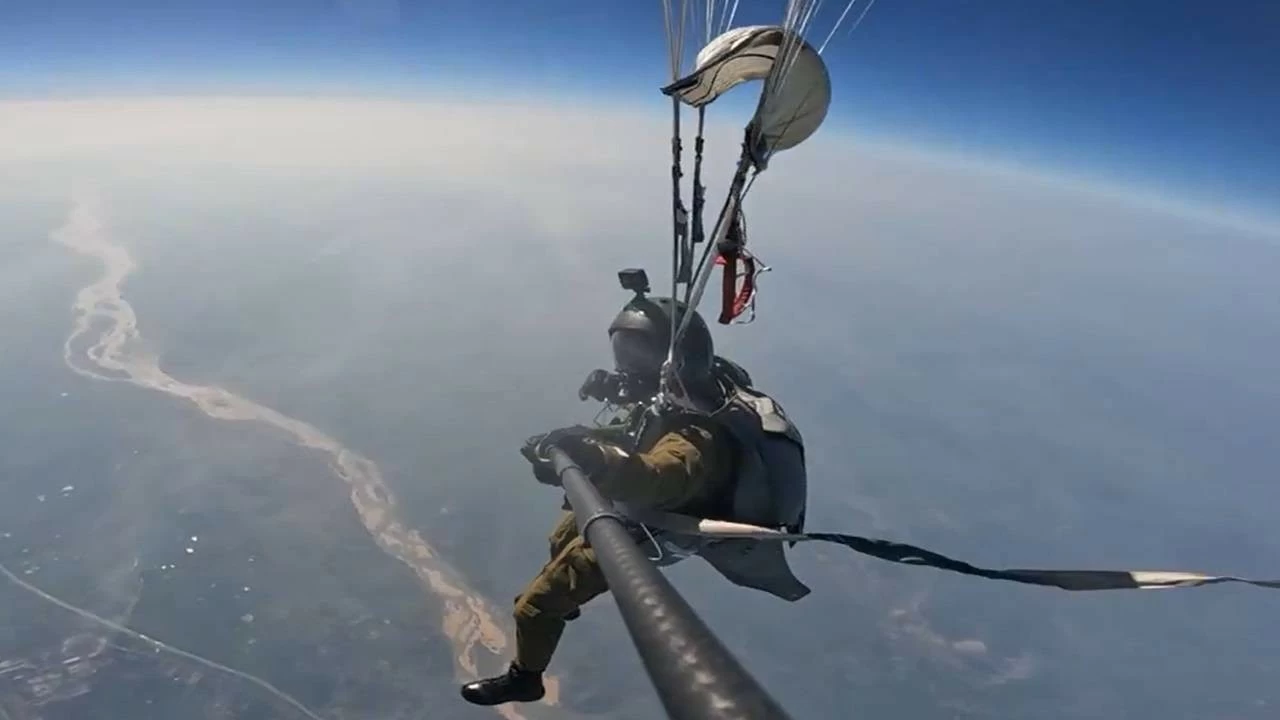


New Delhi: The indigenously developed Military Combat Parachute System (MCPS) has successfully undergone a combat freefall jump from 32,000 feet. The system has been developed by Defence Research and Development Organisation (DRDO). The test jump was carried out by the personnel of the Indian Air Force. It showcased the indigenous system’s efficiency, reliability, and advanced design.
With this test jump, the MCPS has become the only parachute system in operational use by the Indian Armed Forces capable of being deployed from altitudes above 25,000 feet.


The Defence Research and Development Organisation (DRDO) developed the MCPS. It was developed in DRDO laboratories - Aerial Delivery Research and Development Establishment, Agra and Defence Bioengineering and Electromedical Laboratory, Bengaluru.
The indigenous system features multiple advanced tactical enhancements, including a reduced rate of descent and better steering control. This allows paratroopers to safely exit aircraft. It also help them deploy their parachutes at set altitudes, navigate with precision, and land perfectly and precisely at designated zones.
The system is compatible with Navigation with Indian Constellation, allowing freedom of operation against any adversary and offering strong shield to interference by external forces or denial-of-service bids.
The system's success goes a long way in paving the path for the induction of fully indigenous parachute systems. It will ensure maximum operational efficiency and utility of parachute system, with least turnaround time for routine maintenance and repair compared to imported equipment. Besides, it will curb the dependence on other nations for servicing during conflicts or wars.
Defence minister Rajnath Singh has congratulated DRDO, Armed Forces and the Industry on the successful demonstration of the system. He dubbed it as a significant milestone for India’s indigenous defence capability.
Secretary, Department of Defence R&D and Chairman DRDO Dr Samir V Kamat has complimented the DRDO team associated with the demonstration. He described it a major step towards self-reliance in the field of aerial delivery systems.