‘Neither country is isolated’: How China views deepening New Delhi-Moscow equation
Russian President Putin's India visit highlights a deepening strategic partnership in defence, energy, and trade. Amidst the Ukraine war and Western sanctions, both nations demonstrate resilience, reinforcing their autonomous capabilities. China views this as a balancing act, underscoring a clear message: neither country is isolated, fostering global multi-polarisation against external pressure.
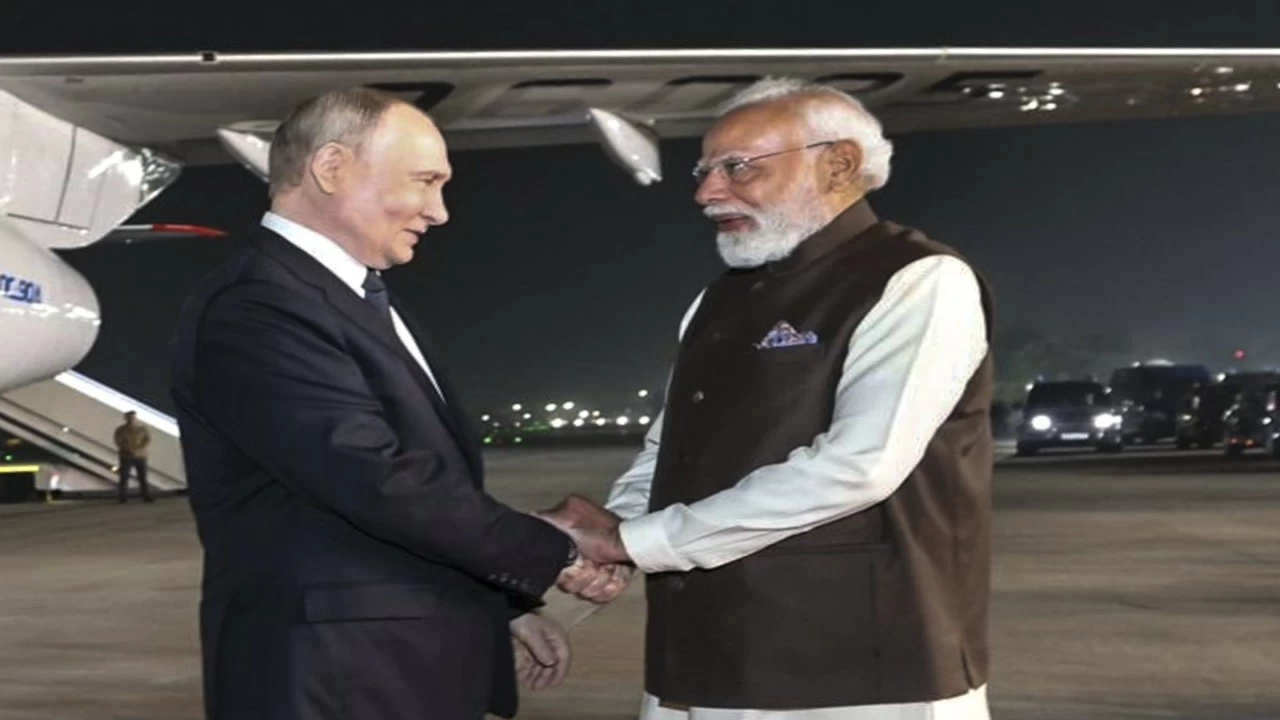
Prime Minister Narendra Modi receives Russian President Vladimir Putin upon latter's arrival in New Delhi. (@narendramodi/X via PTI Photo)
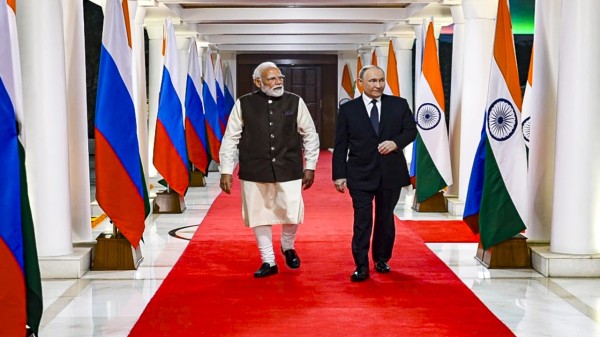
New Delhi: Russian President Vladimir Putin began his two-day visit to India on Thursday. It started with a private dinner hosted by Prime Minister Narendra Modi. This is Putin's first trip to India since the Ukraine war. His last visit was four years back on December 6, 2021.
While the global media has put its spotlight on New Delhi–Moscow dynamics, a report in the daily Global Times -- the Chinese Communist Party’s official mouthpiece -- has suggested that Beijing was keeping close tabs on the visit and it views it as a strategic balancing act by both the countries. Both India and Russia are seeking to deepen cooperation in defence, energy and trade amid the changing geopolitical landscape.
Li Haidong, a professor at China Foreign Affairs University, was quoted as saying by the Global Times that the India-Russia relationship is highly strategic in nature and extremely resilient to external pressure or interference.
His comment suggests that even though US President Donald Trump has imposed an additional 25% tariff on Indian goods, effectively doubling duties to 50%, India's trade with Russia won't be impacted.
According to Li, Russia and India’s coordination and cooperation reflect a clear purpose: both nations are intent on boosting their independent and autonomous capabilities.
Li pointed out: "Through Putin's visit, India and Russia have jointly sent a clear message to the outside world: neither country is isolated." He added: "On the contrary, the two sides enjoy extensive mutual support and strong complementarity… This means that sanctions and pressure from the US and the West against Russia and India is unlikely to succeed."
Putin’s visit to India comes after his meeting with US special envoy Steve Witkoff at the Kremlin on Tuesday. Before the meeting, Putin had reportedly said that Russia was prepared to fight a potential war if Europe pushed it, while alleging that European nations had sabotaged the US peace proposal to end Ukraine war.
'It shows Russia retains formidable strength and influence'
Li underlined that the close coordination and cooperation between India and Russia clearly shows to the US and Europe that Russia retains formidable strength and influence, and will not compromise its own interests and demands in the face of Western sanctions.
At the same time, India is also not likely to flinch or adopt a timid stance in its Russia policy out of fear of potential US sanctions, as New Delhi is seemingly expressing that they will continue to formulate its policy towards Russia guided solely by its own national interests, Li underlined. The expert pointed out that India–Russia ties will also help push the process of global multi-polarisation.