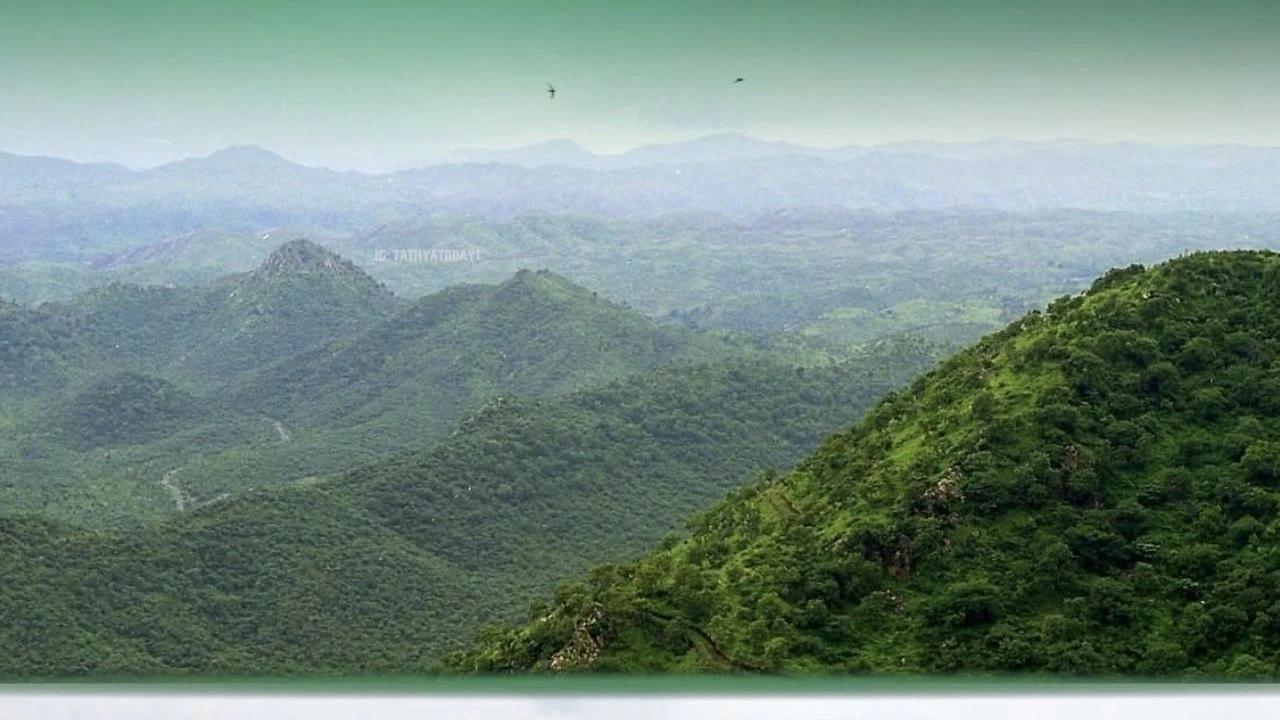
New Delhi: The Centre on Sunday rejected claims that the newly notified definition of the Aravalli range would allow large-scale mining, asserting that nearly 90 per cent of the Aravalli region will remain protected. It also cited a Supreme Court–mandated freeze on new mining leases in the region.
The government said a Supreme Court–approved framework strengthens the protection of the Aravalli mountain system and places a moratorium on new mining leases until a comprehensive Management Plan for Sustainable Mining is finalised.
'Only 0.19 per cent allotted for mining'
Environment Minister Bhupender Yadav said the court-approved definition would bring over 90 per cent of the Aravalli region under protected status. Speaking to mediapersons after a meeting on Project Elephant and the National Tiger Conservation Authority in the Sundarbans, West Bengal, Yadav stressed that “no relaxation has been granted” in safeguarding the Aravallis. “In the total area of 1.44 lakh sq km of the Aravalli, mining eligibility exists in only 0.19 per cent of the region. The rest is preserved and protected,” he said.
On November 20, the Supreme Court accepted the recommendations of a committee under the Ministry of Environment, Forest and Climate Change on defining Aravalli hills and ranges. The definition clarifies that mining restrictions apply to entire hill systems and enclosed landforms, not merely hill peaks or slopes, countering claims linked to the “100-metre” criterion.
The committee—constituted in May 2024—found that only Rajasthan had a standardised definition in place since 2006. Under it, landforms rising 100 metres or more above local relief are treated as hills, and mining is barred within the lowest bounding contour enclosing them. Hills within 500 metres of each other are treated as a single range.
SC restricts mining in core areas
The Supreme Court has also prohibited mining in core and inviolate areas, including protected areas, eco-sensitive zones, wetlands and tiger reserves, allowing limited exemptions only for critical and strategic minerals. Existing mines may operate only if they strictly comply with sustainable mining norms.
The government said the main threat to the Aravallis remains illegal and unregulated mining, and recommended stronger monitoring using technology such as drones and surveillance systems.