Sign In
By signing in or creating an account, you agree with Associated Broadcasting Company's Terms & Conditions and Privacy Policy.
By signing in or creating an account, you agree with Associated Broadcasting Company's Terms & Conditions and Privacy Policy.



New Delhi: India destroyed several terrorist bases in Pakistan and Pakistan-occupied territories in Operation Sindoor, severely damaging the neighbouring country's military strength and sending a message on its stance on terrorism.
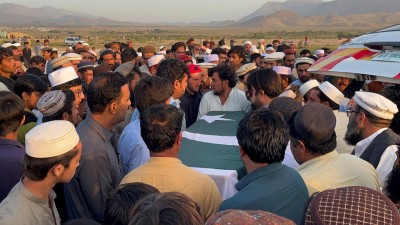
Now, Director General Military Operations Lt General Rajiv Ghai said on Tuesday that Pakistan had over 100 casualties along the Line of Control during India's deadly operation, as has been indicated by the "number of posthumous awards" given on August 14, its independence day.
He said, "Pakistanis possibly unwittingly let out their awards list last month on the 14th of August, and the number of posthumous awards that they awarded suggests to us now that their casualties on the LoC were also in excess of 100. Actions were carried out on the LoC, and we were prepared for this."
He took a dig at Asim Munir and said, "The fact that the Pakistan army and its chief were under duress at the time is known to everybody. There was a need for him to revive not only his image, but that of the Pak army itself. The best way and the only way that is known to them was to do what they did, as cowardly as it may have been."
Lt General Rajiv Ghai added, "This was a fusion of military precision and diplomatic agility, informational superiority and economic leverage. I'm speaking about the Indus Water Treaty of 1960 being put into abeyance the moment the terror attack was perpetrated at Pahalgam."
He further said, "Our military actions were targeted, controlled, non-escalatory, and we openly acknowledged them to maintain our credibility. We also made sure that we put into place critical and significant conventional measures to apply pressure."
Rajiv Ghai also spoke about the Pahalgam attack perpetrators and said, "It took us 96 days, but we did not let them rest. When these three were found and terminated clinically, it seemed as if they were exhausted from running, and they also seemed very malnourished. Often, people can turn around and ask us where they have vanished. But it is sometimes like searching for a needle in a haystack."