Sign In
By signing in or creating an account, you agree with Associated Broadcasting Company's Terms & Conditions and Privacy Policy.
By signing in or creating an account, you agree with Associated Broadcasting Company's Terms & Conditions and Privacy Policy.
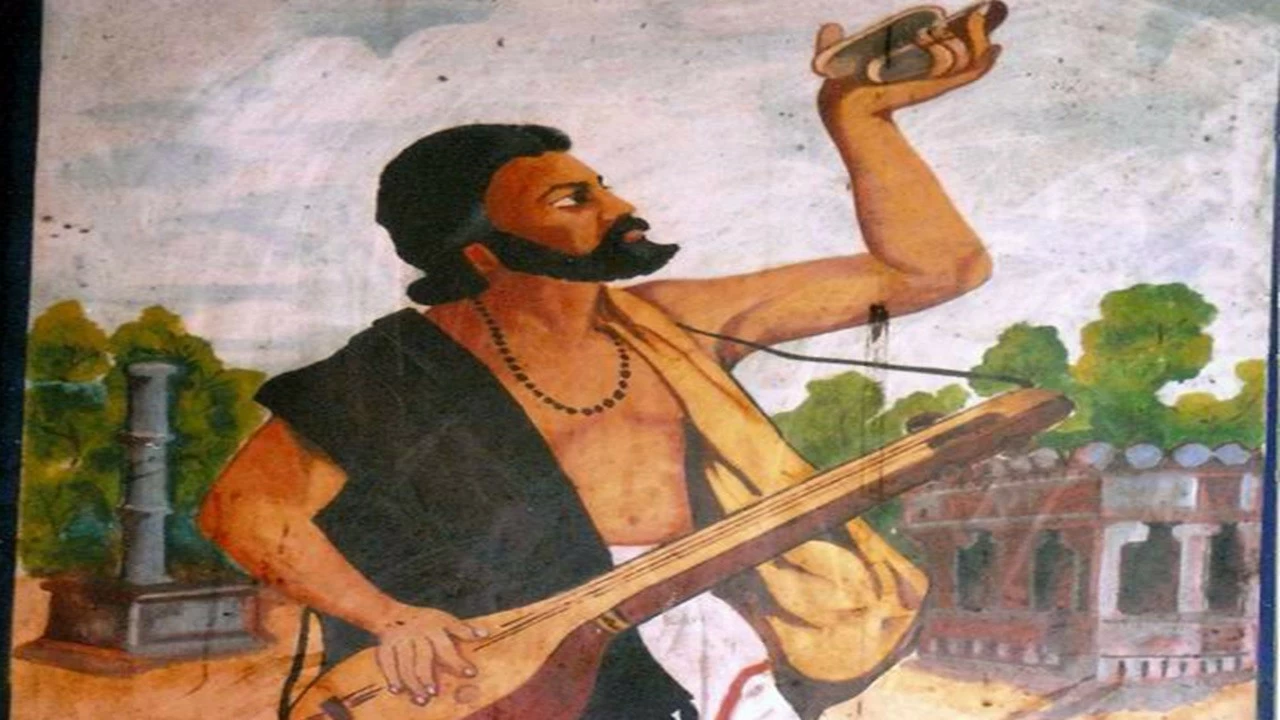


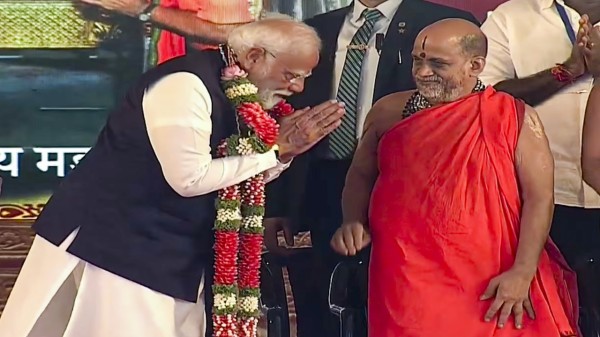
New Delhi: Prime Minister Narendra Modi offered floral tributes to Kirthanakar Kanakadasa, the 14th-15th century AD saint-philosopher, as he paid a visit to the historic Kanaka Mantap on Friday.
Kanakadasa is associated with the well-known episode in which the idol of Lord Krishna at the Udupi Sri Krishna Temple is said to have turned westward.
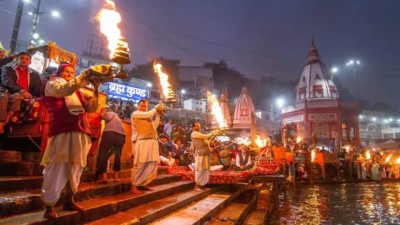
PM Modi also took part in the 'Laksha Geeta Pathana', a mass recitation in which over one lakh devotees chanted verses from the Bhagavad Gita. He was accompanied by Paryaya Puthige Math seer, Sugunendra Thirtha, Karnataka Governor Thawarchand Gehlot and others as he joined the mass recital and chanted the hymns.
The PM also spent time within the sanctum precincts Sri Krishna Temple complex and spoke out Kanakadasa’s devotion and the lasting cultural legacy linked to the temple.
Kanakadasa, popularly known as Daasashreshta Kanakadas, was a noted Haridasa saint, philosopher and musician. His role in shaping the Bhakti movement in Karnataka is well-recognised. His devotional Kannada compositions, known as Keertanas, still inspire and uplift society. His life is regarded as a personification to commitment, social reform, and literary brilliance.
Kanakadasa Jayanthi is marked every year on the 18th day of Kartik Month (according to the Hindu Lunar Calendar). It is observed to celebrate his life and legacy. It is celebrated as a public holiday in Karnataka and various cultural programmes are held in his honour. On his jayanti, Kanakadasa’s life and works are celebrated through bhajans and musical concerts, aimed at educating people about the great saint.
Born in 1509 in the village of Baada in Shiggaon taluk of present-day Karnataka, Kanakadasa hailed from a family of musicians. His father, Beerappa Nayaka, served as a court musician, while his mother, Beechamma, was a gifted vocalist. From an early age, Kanakadasa showed interest in music.
He came into contact with Saint Vyasaraja, the head of the Krishna Math in Udupi. And his association and teachings transformed him. Kanakadasa abandoned all worldly pursuits. He devoted his life to spiritual devotion. Kanakadasa also studied Hindu scriptures and philosophy. He contributed to Carnatic music by introducing new ragas. His over 300 Keertans are lyrical, insightful and melodious.
Kanakadasa was also a champion of social justice and equality and spoke against the caste system. He influenced the Bhakti movement by his compositions and philosophy. He considered Krishna as his Guru and the symbol of divine love. He also became an key member of the Dasakoota, a group of Haridasas (devotees of Lord Krishna).
Kanakadasa also wrote several philosophical works, among which the important ones include 'Nalacharita', a Kannada adaptation of the Mahabharata, and 'Mohana Tarangini', a literary exploration of illusion and spiritual freedom.
Kanakadasa's Keertans and songs continue to be cherished in the modern day for their brilliance. Students of Carnatic music across the world continue to study and learn from his works. His writings are still studied by scholars of Bhakti movement. His philosophy, including on social parity, are still relevant.