


Sign In
By signing in or creating an account, you agree with Associated Broadcasting Company's Terms & Conditions and Privacy Policy.
By signing in or creating an account, you agree with Associated Broadcasting Company's Terms & Conditions and Privacy Policy.
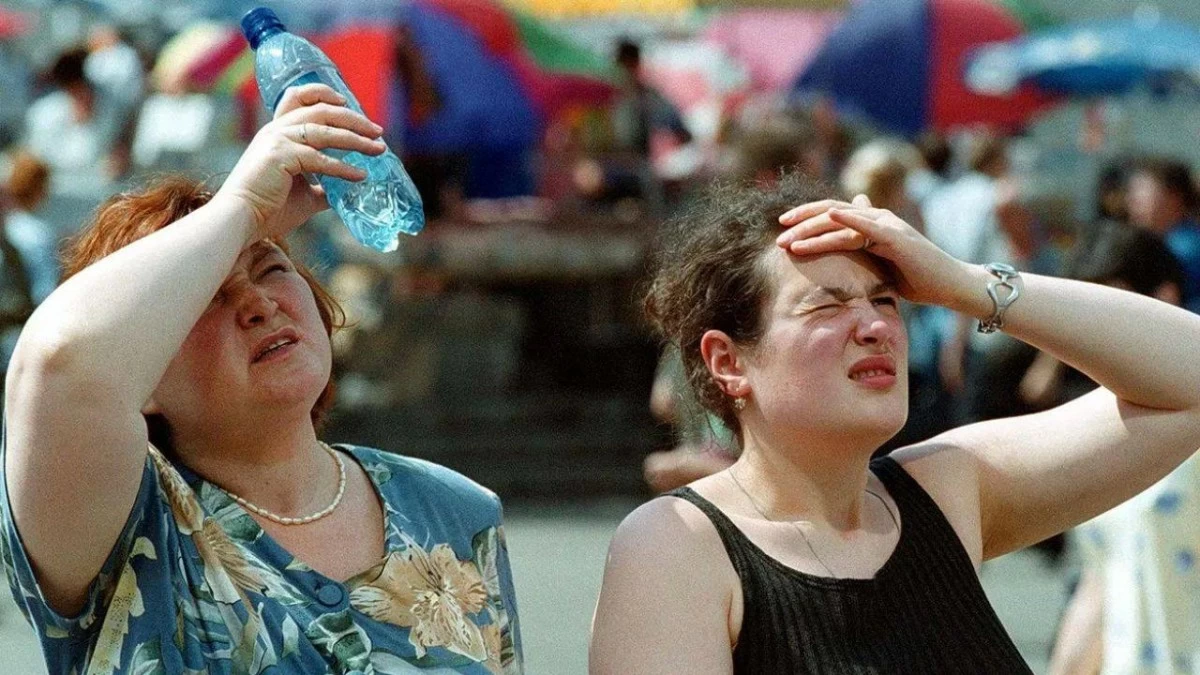


New Delhi: Southern Europe is in the grip of an intense and unprecedented heatwave, with Spain recording a new national June temperature record of 46°C in the town of El Granado on Saturday, according to the Spanish State Meteorological Agency (AEMET).
This surpasses the previous record of 45.2°C set in Seville in 1965 and marks one of the most extreme June temperature events ever recorded in the region. Multiple countries have issued red and amber warnings as temperatures climb above 40°C, triggering wildfire risks, health emergencies, and record energy demands.



Countries, including Portugal, Italy, Greece, France, and several Balkan nations, are experiencing similar conditions. Portugal recorded 43°C on Saturday, with forecasts warning of 42°C in Lisbon on Sunday.
In Italy, cities such as Naples, Palermo, and Florence faced temperatures between 39°C and 40°C. Hospitals have reported a rise in heatstroke cases, particularly among the elderly and vulnerable populations. Emergency climate shelters have been set up in Rome and Bologna, while outdoor work bans during peak hours are being enforced in regions such as Lazio and Tuscany.
Greece has been placed on high wildfire alert, with Athens recording 40°C and wildfires erupting south of the capital. In response, over 130 firefighters and multiple aircraft were deployed.
In southern France, Marseille reported 41.3°C. This prompted local authorities to open public swimming pools for free access.
The Balkans are also under extreme stress. Slovenia hit a new June record of 38.4°C, while Serbia recorded its highest-ever temperature since the 19th century. North Macedonia reported temperatures reaching 42°C on Friday.
The extreme conditions have led to serious health consequences. In Barcelona, a woman died after finishing a shift as a road sweeper during peak heat. Italy’s emergency departments reported a sharp rise in heat-related illnesses, and pharmacies in Lisbon noted an increase in heat strokes and burns.
The heatwave is pushing northward. Parts of France, Germany, Italy, and the UK are expected to see rising temperatures into the week. London could reach 35°C on Monday, with amber alerts issued across southern England.
Meteorologists attribute the event to a "heat dome" -- a high-pressure system that traps hot air -- combined with hot, dry winds from the Sahara. Experts say climate change has made such events significantly more likely and intense. A recent analysis estimates that this heatwave is 2.5–3.5°C hotter than it would have been in a pre-industrial climate.
The jet stream, which regulates weather systems, has also weakened due to global warming, allowing high-pressure systems to stall and prolong heatwaves.

