

Sign In
By signing in or creating an account, you agree with Associated Broadcasting Company's Terms & Conditions and Privacy Policy.
By signing in or creating an account, you agree with Associated Broadcasting Company's Terms & Conditions and Privacy Policy.
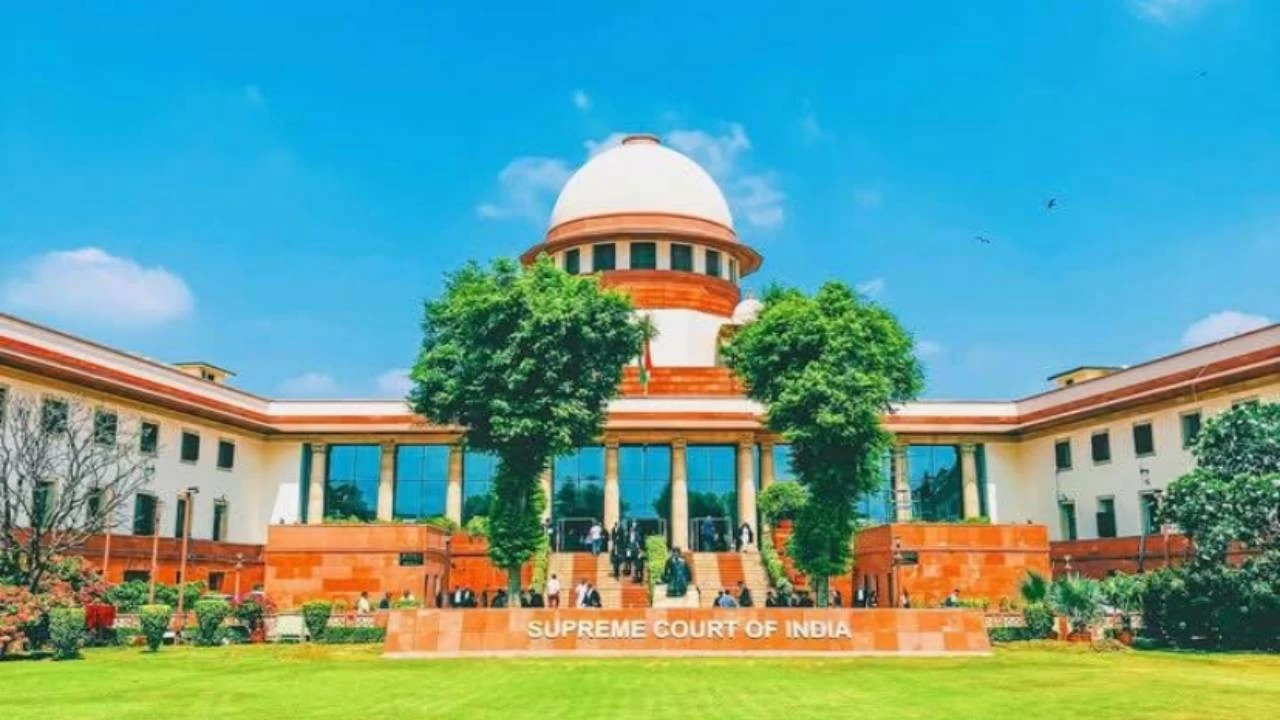


New Delhi: Concerning the constitutional future of Jammu and Kashmir, the Supreme Court on Friday issued a directive to the Central government, demanding a comprehensive response within four weeks on the restoration of statehood to the region.
A bench comprising Chief Justice of India BR Gavai and Justice K Vinod Chandran recorded the arguments of Solicitor General (SG) Tushar Mehta and other legal counsel on this matter.


The court's mandate came during its hearing of a batch of applications that are pressing for a time-bound restoration of statehood for Jammu and Kashmir, arguing that its continued designation as a Union Territory undermines fundamental rights and federal principles.
Senior Advocate Guruswamy highlighted that even the Jammu and Kashmir Cabinet had passed a resolution a year ago, urging the central government to consider granting statehood, pointing towards the local demand for its original status.
Solicitor General Tushar Mehta, representing the Centre, maintained that the government is actively consulting with the local administration, describing this as the "correct approach." He painted a positive picture of the region, asserting that Jammu and Kashmir has "progressed, and everyone is happy. 99.99 per cent of the people there consider the Government of India their government," and urged the court not to "completely doubt" his statements.
However, Senior Advocate Gopal Sankaranarayanan countered, reminding the bench that similar requests for more time had been granted previously. He emphasised that "propriety demands that five judges hear the matter and a time limit be set," suggesting a referral to a larger Constitution Bench.
CJI Gavai directly asked Mehta, "So you want a reference to five judges?" to which the SG firmly replied, "No, I don't. I'll file my reply here."
Sankaranarayanan further pressed that "When clarifications are sought in Constitution Bench cases, such applications go before the same quorum."
This current hearing follows an earlier session on August 14, during which the CJI Gavai-led bench referred to the "ground realities" and specifically cited the Pahalgam terror attack, initially agreeing to list the matter after eight weeks. At that time, the bench had told applicants seeking an earlier hearing, "You will also have to take into consideration the ground realities. You cannot ignore what has happened in Pahalgam."
The applicants have consistently argued that the prolonged delay in restoring statehood is "gravely affecting the rights of the citizens of Jammu and Kashmir and also violating the idea of federalism." They contended that the failure to establish a defined timeframe for restoration constitutes a breach of federal principles, which are an integral part of the Constitution’s basic structure.
Sankaranarayanan pointed out the extended duration since the landmark judgment on Article 370, noting, "It has been 21 months since the Article 370 judgment. There has been no movement towards the restoration of statehood." He also reminded the court that the original Constitution Bench had explicitly relied on assurances from the Union government that statehood would eventually be restored.
During the previous hearing, the SG had initially questioned the maintainability of the current applications and sought an eight-week deferral, citing the "peculiar position" in Jammu and Kashmir. "I don't know why, at this stage, this issue is agitated, but list it after eight weeks. I will take instructions. My prayer is for eight weeks because this particular stage is not the correct stage to muddy the water," Mehta had said.
The crucial Article 370 verdict, delivered by a five-judge Constitution Bench headed by then CJI D.Y. Chandrachud, had intentionally left open the constitutional question of whether Parliament possesses the power to alter a state’s status by converting it into one or more Union Territories. This verdict heavily depended on an oral assurance from the Centre that full statehood would eventually be restored to Jammu and Kashmir, although the Union Home Ministry's law officer had then noted that an exact timeframe could not be provided, stating that restoration would take "some time."