

Sign In
By signing in or creating an account, you agree with Associated Broadcasting Company's Terms & Conditions and Privacy Policy.
By signing in or creating an account, you agree with Associated Broadcasting Company's Terms & Conditions and Privacy Policy.
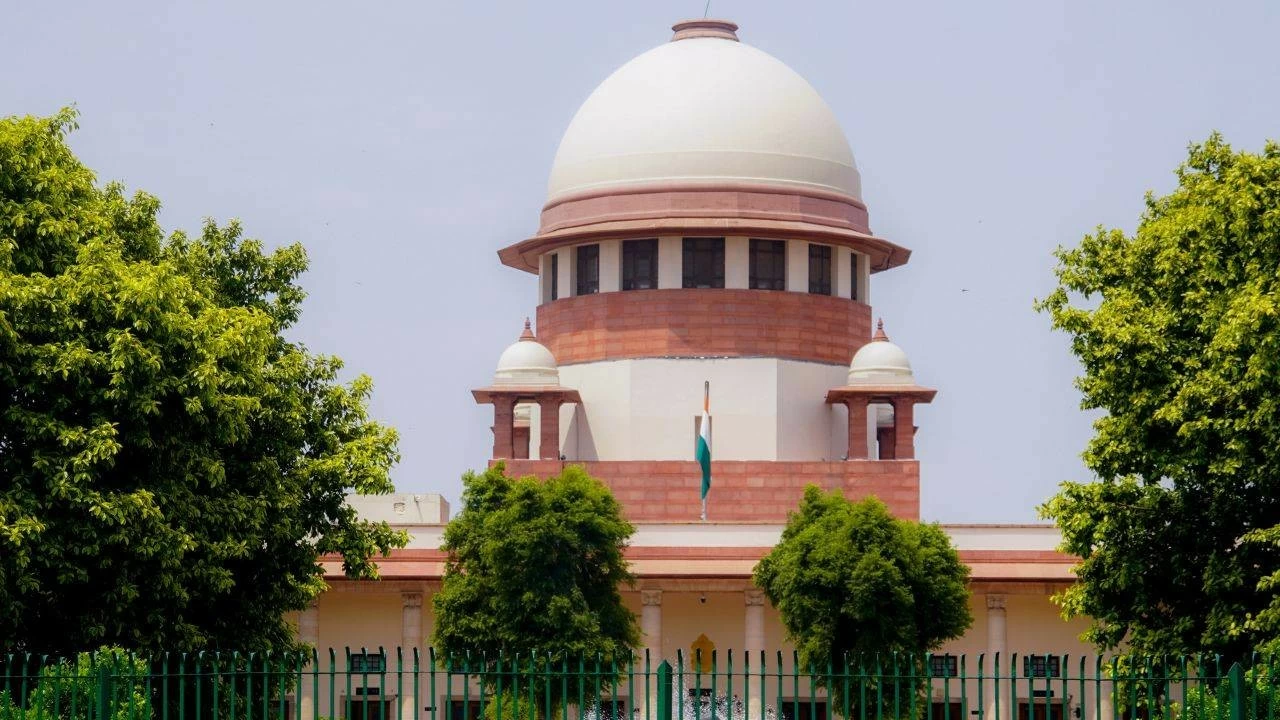


New Delhi: The Supreme Court of India on Monday remarked that it is "time to decriminalise all this," referring to criminal defamation cases, as it heard a plea challenging a Magistrate's court summons issued to a journalist and a media portal in connection with an online article about Jawaharlal Nehru University (JNU).
The bench, comprising Justices MM Sundresh and SC. Sharma, was hearing an appeal filed by the Foundation for Independent Journalism, which runs the portal, and its journalist Ajoy Ashirwad Mahaprastha. They are seeking to quash the summons issued to them over a 2016 article titled "Dossier Call JNU 'Den of Organised Sex Racket'; Students, Professors Allege Hate Campaign."



The article had allegedly damaged the reputation of complainant Singh, who claimed the write-up indicated that she had prepared a dossier which was the basis of the report. A Delhi Metropolitan Magistrate's court had initially summoned the portal editor and the journalist on January 7, 2017.
Notably, a bench presided over by Justice Sundresh had in July 2024 reversed a Delhi High Court order that had previously quashed the first summons in this case. During Monday's hearing, Senior Advocate Kapil Sibal, appearing for the petitioners, drew the bench's attention to similar appeals filed by Congress leader Rahul Gandhi challenging summons in other criminal defamation cases, raising comparable legal questions. The bench has since issued notice on the Foundation's plea.
The path to the Supreme Court has been a circuitous one. After the initial summons, the Delhi High Court quashed them in 2023. However, on an appeal by Singh, a Supreme Court bench led by Justices Sundresh and Arvind Kumar on July 24, 2024, set aside the High Court's judgment. The Supreme Court had then stated that the High Court had exceeded its jurisdiction, emphasising that the Magistrate, upon entertaining a private complaint, has to proceed by issuing a summons if sufficient grounds exist. The apex court had set aside the High Court's order, remitting the issue of summons back to the Magistrate after ensuring they duly considered the publication.
Following this directive, the trial court again summoned the duo. Their subsequent challenge in the High Court was unsuccessful, prompting them to approach the Supreme Court once more.
The Supreme Court's oral remark regarding decriminalizing defamation echoes its previous stance. In May 2016, a two-judge bench had upheld the constitutional validity of Sections 499 (defamation) and 500 (punishment for defamation) of the Indian Penal Code, and Section 199 of the Code of Criminal Procedure. At that time, the Court had observed that while freedom of speech and expression is a cherished right, it is subject to reasonable restrictions. The Court had reasoned that criminal defamation, as a penal provision, does not disproportionately curtail free speech, especially when an individual's reputation is considered a fundamental element of Article 21 of the Constitution.