Sign In
By signing in or creating an account, you agree with Associated Broadcasting Company's Terms & Conditions and Privacy Policy.
By signing in or creating an account, you agree with Associated Broadcasting Company's Terms & Conditions and Privacy Policy.
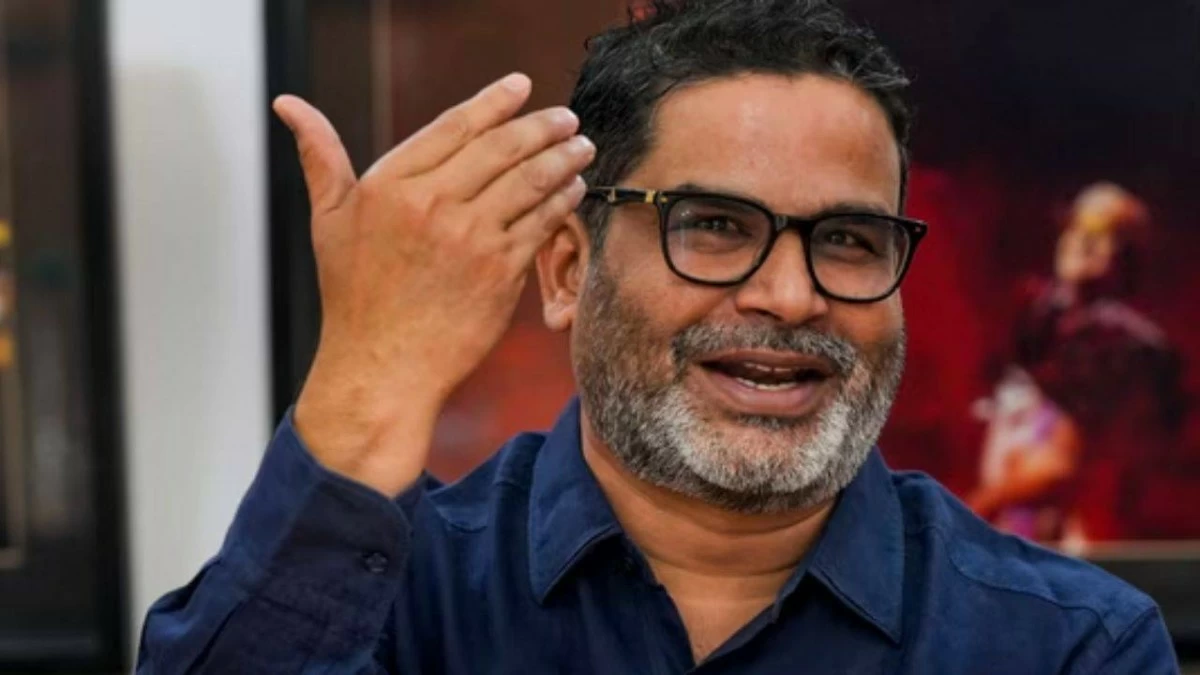


New Delhi: Political strategist-turned-politician Prashant Kishor, in a very short span of time has become a recognisable name in the political circles. Having worked with almost all the major political parties in the country as their strategist, he has recently forayed into active politics by launching his own political party in Bihar--Jan Suraaj. He is all set to give a fight to the BJP-JD(U) alliance and RJD-BJP combine in the assembly elections, scheduled for late 2025. His rise has been marked by his ability to craft winning campaigns for the parties he and his team represented. His use of data to formulate winning strategies was a first in the country. Also, his narratives resonated with the electorate.
An alumnus of the Indian Institute of Technology (IIT), Kishor started his professional journey in public health before transitioning to political strategy. He got his first major breakthrough in 2012 when he played an important role in Narendra Modi’s campaign in Gujarat. Kishor, along with his team worked tirelessly in shaping Modi’s image as a leader focused on development and governance. The innovative "Chai Pe Charcha" campaign and the heavy use of digital media in outreach marked a major departure from traditional electioneering in the country.


His success catapulted him to the national stage, where he became the architect of BJP’s 2014 Lok Sabha campaign. The “Ab Ki Baar, Modi Sarkar” slogan and the campaign’s targeted messaging helped the BJP secure a historic victory. After serving three terms as Gujarat chief minister Modi became prime minister after the results were announced, BJP was able to win a majority on its own--a first for a political party in decades.
Unlike traditional political operatives who remain loyal to a single party, Prashant Kishor worked with different political groups across the spectrum.
Bihar 2015: Kishor switched sides after 2014 and helped the Mahagathbandhan--Nitish Kumar's JD(U), Lalu Prasad Yadav's RJD and the Congress--form government in Bihar in the 2015 assembly elections. This despite a high-octane BJP campaign led from the front by PM Modi and then BJP chief Amit Shah.
Punjab 2017: In 2017 Kishor aligned with Congress in Punjab and helped the party defeat SAD, which was in power for 10 years. Kishor's campaign, focused on the "Punjab Da Captain" slogan and extensive outreach, helped Amrinder Singh become CM again.
Andhra Pradesh 2019: After the shock loss in 2014 assembly elections to TDP, YS Jagan Mohan Reddy hired Kishor to manage his campaign strategy in Andhra Pradesh. Jagan's YSRCP result swept the polls on the promise of welfare schemes and a corruption-free government, a strategy fine-tuned by Kishor and his team.
West Bengal 2021: In what was perhaps his most challenging campaign, Kishor worked with Mamata Banerjee’s TMC to counter the BJP’s aggressive push into Bengal. His campaign strategy and a focus on regional identity played a major role in TMC’s victory.
Having masterminded these high-profile victories, Kishor announced his intention to enter active politics. He chose Bihar, his home state, as the battleground and launched Jan Suraaj in October 2024. His plans to contest all 243 assembly seats in the upcoming polls. Before launching his own outfit, Kishor was also with JD(U) for some time and there were also strong rumours of him joining Congress.
In the caste-riddled politics of Bihar, Kishor plans to offer a vision which is different from what traditional parties offer. His focus is on governance, economic upliftment, and a break from political stagnation. To build a grassroot support and connect directly with the masses, Kishor undertook a 5,000km padayatra in this state.
While Kishor’s political entry has generated a lot of buzz in the political circles and masses, he faces major challenges to unseat the traditional political parties in a state where people vote according to their caste rather than party allegiance:
1. Breaking the bipolar political order: Carving out a space in Bihar’s politics, long been dominated by two major alliances—the BJP-JD(U) and the RJD-Congress, will be an uphill task for Jan Suraaj and Kishor.
2. Caste equations in Bihar: Bihar’s elections are deeply influenced by caste dynamics. While Kishor aims to transcend this by offering governance-focused politics, caste-based loyalties remain a formidable obstacle.
3. Funding allegations and political attacks: Jan Suraaj has come under scrutiny over its funding sources. JD(U) has sought a probe into alleged financial irregularities, raising questions about the origins of Kishor’s political financing.
4. Failure in initial electoral test: Jan Suraaj contested four byelections in November 2024 but failed to win any seat.