
Sign In
By signing in or creating an account, you agree with Associated Broadcasting Company's Terms & Conditions and Privacy Policy.
By signing in or creating an account, you agree with Associated Broadcasting Company's Terms & Conditions and Privacy Policy.
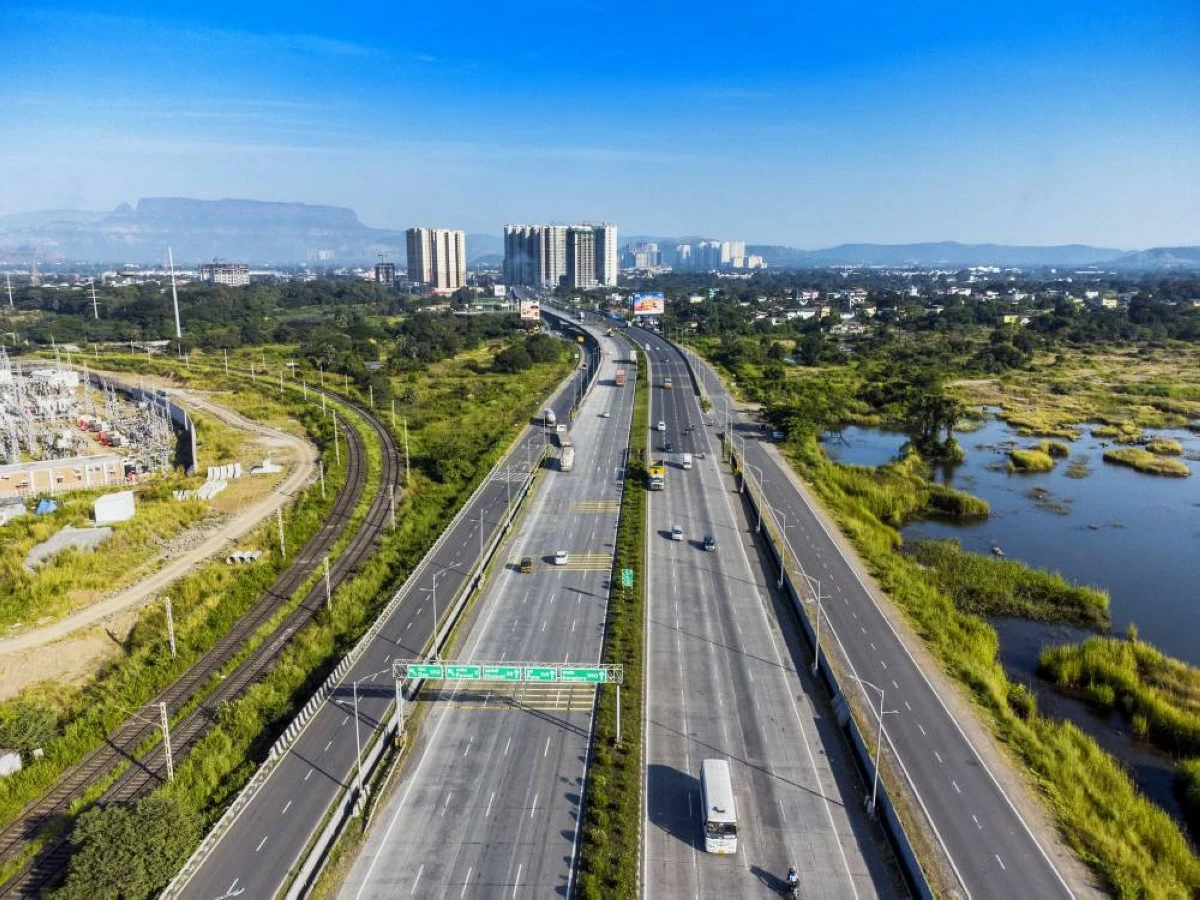


Expressways in India have significantly transformed the country's road infrastructure. They enhance connectivity, enabling smoother travel over long distances. Expressways promote tourism and support the country's infrastructure by fostering development and accessibility. India boasts one of the largest road networks globally, ranking second only to the United States.
The Indian government is actively working to improve the road infrastructure. It has launched the Bharatmala Project, an integrated initiative for road development that encompasses tunnels, bridges, flyovers, bypasses, ring roads, and other infrastructure. The project aims to provide the shortest and most efficient connectivity to various locations. It is a centrally sponsored and funded project. The target under this Yojana is to construct 83,677 km of new highways and expressways.
This article highlights the upcoming expressways in India, including the Delhi-Mumbai Expressway, the Ganga Expressway, and the Surat-Chennai Expressway, which are set to become fully operational soon.
Expressways represent the highest class of roads in India. They are designed for the movement of high-speed vehicles and heavy traffic. Access to expressways is provided only through grade-separated interchanges. By 2024-2025, the total length of expressways in India is expected to reach 6,059 km. In recent years, India has witnessed the opening of numerous new expressways, some of which have been inaugurated partially or in full. In 2025 and beyond, many more expressways will be available to the public.
Delhi-Mumbai Expressway: This is one of the most important expressways in India. According to several media reports, the expressway will be fully operational by 2025-2026. The Delhi-Mumbai Expressway is a 1,350 km-long and 8-lane under-construction expressway that will connect India's capital, Delhi, to the financial capital of India - Mumbai. It is the only expressway that can be expanded to 12 lanes. This partially opened expressway will pass through Delhi, Haryana, Rajasthan, Madhya Pradesh, Gujarat, and Maharashtra.
Delhi-Dehradun Expressway: One of the most-awaited expressways will be fully operational soon. A major part - a 3.5 km section from Daat Kali to Asharodi - is open to the public. The expressway aims to reduce traffic and make journeys smoother. This expressway is called National Highway 709B (NH 709B). It is 210 km long and is a 6-12 lane access-controlled expressway. It will connect Delhi with Uttarakhand's capital - Dehradun. It will connect Delhi, Uttar Pradesh and Uttarakhand. A wildlife protection corridor is constructed on this expressway, the second expressway in India.
Ganga Expressway: As per the official report, 75 per cent of work on the Ganga Expressway has been completed. It is a greenfield expressway which is 1,047 km long and is 6-lane (expandable to 8). It is an expressway which will be one of the longest in Uttar Pradesh. It is being constructed in two phases. Phase I will connect Bijauli village on NH-334 in Meerut with Judapur Dandu Village on NH-19 in Prayagraj via Sarai Katiyan village on NH-27 in Kanpur. Phase II will see the extension of both sides of the expressway from Prayagraj to Ballia and from Meerut to Haridwar. This expressway is being implemented by the Uttar Pradesh Expressways Industrial Development Authority (UPEIDA).
Dwarka Expressway: Prime Minister Narendra Modi inaugurated the Haryana section of the Dwaraka Expressway last year. This stretch is 18.9 km long and includes packages 1, 2 and 3, which run from the Bijwasan Rail Underbridge to Kherki Daula. Two tunnels in Delhi are part of the remaining sections. These are package 1, from Bijwasan to the Shiv Murti Tunnel, and package 5, from Shiv Murti to the T3 Tunnel. Both tunnels will be completed soon. The Dwaraka Expressway will be 27.6 km long and have 8 lanes for traffic and 8 for service roads, making a total of 16 lanes. This elevated expressway will connect Dwarka in Delhi to Kherki Daula Toll Plaza in Gurgaon, Haryana.
Mumbai-Nagpur Expressway (Samruddhi Expressway): The Mumbai-Nagpur Expressway, also called Samruddhi Mahamarg or officially Hindu Hrudaysamrat Balasaheb Thackeray Maharashtra Samruddhi Mahamarg, is a partially opened, 6-lane wide road that can expand to 8 lanes. It is 701 kilometres long and is designed as a controlled-access expressway in Maharashtra, India. This road project is one of the longest of its kind in the country. It will connect Mumbai with Nagpur. The Maharashtra State Road Development Corporation (MSRDC) is in charge of it, and the project follows the Engineering, Procurement, and Construction (EPC) model.
Delhi-Amritsar-Katra Expressway: This 670 km long, 4-lane expressway can be expanded to 8 lanes. It will connect the Bahadurgarh border near Delhi to Katra in Jammu and Kashmir, passing through Haryana and Punjab. A spur road will also connect Nakodar to Sri Guru Ram Das Ji International Airport in Raja Sansi, Amritsar. The main part of the expressway, the 397.7 km section, is called the Delhi–Katra Expressway and is known as National Expressway 5 (NE-5). Once the expressway is finished, it will cut the distance between Delhi and Katra from 727 km to 588 km and reduce travel time from 14 to 6 hours. It will also shorten the distance between Delhi and Amritsar to 405 km and decrease travel time from 8 to 4 hours.
Ahmedabad-Dholera Expressway: This 109-km expressway is being built in Gujarat. It will have four lanes but can be expanded to eight lanes. This expressway will connect the Sardar Patel Ring Road near Sarkhej in Ahmedabad to Adhelai village in Bhavnagar district. It will pass through the Dholera Special Investment Region (DSIR). The planned Dholera International Airport, located about 20 km from Dholera SIR, will also be along this route. This expressway is part of the Delhi–Mumbai Industrial Corridor (DMIC).
Bangalore-Chennai Expressway: This expressway is also known as National Expressway 7. It is a 258-km-long, partially operational expressway with a four-lane—which can be expanded to eight lanes—wide access-controlled expressway. It will connect two states: Bengaluru (the capital of Karnataka) and Chennai (the capital of Tamil Nadu). The Karnataka section of the expressway was opened in December 2024. The expressway will pass through three states: Karnataka, Andhra Pradesh, and Tamil Nadu.
Gorakhpur Link Expressway: The Gorakhpur Link Expressway is a 91-km long and 4-lane wide road that can be expanded to 6 lanes. It is under construction in Uttar Pradesh and will connect Jaitpur village on NH-27 in Gorakhpur district to Salarpur village on the Purvanchal Expressway in Azamgarh district. Salarpur village is near the Kalwari Bagh interchange (NH-135A). The project was launched in 2018 by Chief Minister Yogi Adityanath, with land acquisition starting in February 2019. The total cost for the Gorakhpur Link Expressway, including land acquisition, is over Rs 7,000 crore. According to UPEIDA, 98 per cent of the work on this expressway has been completed.
DND–KMP Expressway: Formally known as NH-148NA, this expressway is 59 km long and is a 6-lane expressway in the Delhi NCR region. It connects the DND Flyway and Ring Road at Maharani Bagh in Delhi with the KMP Expressway near Khalilpur in Haryana. This expressway is part of the larger Delhi–Mumbai Expressway project. There will also be a 31 km stretch from Sector-65 in Faridabad to Jewar Airport. The 26 km section from Sector 65 to Sohna in Faridabad opened for traffic in 2023. The 24-km stretch from Jaitpur/Mithapur in Delhi to Sector-65 in Faridabad opened publicly on November 12, 2024. The last 9 km segment from Mithapur to DND is expected to be ready soon.
Raipur–Visakhapatnam Expressway: This expressway is also known as NH-130CD and is part of the Raipur–Visakhapatnam Economic Corridor. A new expressway is being built. It will be 464 km long, with six lanes, and will connect the states of Chhattisgarh, Odisha, and Andhra Pradesh. The expressway starts at Abhanpur in Raipur district and will link Raipur to Dhamtari, Kanker, Kondagaon, Koraput, and Sabbavaram before ending at Visakhapatnam Port. This project is part of the Bharatmala Project and will connect to the East Coast Economic Corridor, which runs from Kolkata to Kanyakumari at Vizianagaram.
Awadh Expressway (Lucknow-Kanpur Expressway): The Kanpur-Lucknow Expressway will connect the two major cities of Lucknow and Kanpur in the Awadh Region of Uttar Pradesh. It is currently being built and will be 63 kilometres long (39 miles) with six lanes, which can be expanded to eight. The Government of India has designated it National Expressway 6 (NE 6). However, India's smallest expressway is also one of the most advanced. The expressway will include three major bridges, 28 minor bridges, 38 underpasses, and six flyovers.
Gorakhpur Shamli Expressway: This expressway will cover 700 km and pass through 22 districts of Uttar Pradesh, covering east UP to west UP. It will be a 6-lane greenfield expressway, and the National Highway Authority of India (NHAI) will manage this project. It will allow people to travel seamlessly to Delhi, Haryana, and Uttar Pradesh. Work is expected to begin soon on this expressway. The cost of the project is likely to be over Rs 30,000 crore.
Konkan Expressway: This expressway will boost the infrastructure in Maharashtra. Once operational, it will cut the time between Goa and Mumbai by just 6 hours. The expressway is 498 km long, of which 376 km will span along the Konkan coastline. It will have 41 tunnels and 21 bridges. It is a proposed 6-lane expressway.
Patna Purnia Expressway: A proposed 6-lane greenfield expressway will be 282 km long. It aims to improve connectivity between Patna and Purnia, reduce travel time, promote economic growth, and enhance transport efficiency in Bihar. The expressway will have 21 large bridges, 140 small bridges, 11 railway overbridges, 21 interchanges, and more than 300 underpasses. The expressway is expected to be completed in three years. The travel time between Patna and Purnia will be reduced to four from approximately eight to 10 hours.
Nagpur-Goa Shaktipeeth Expressway: The Shaktipeeth Expressway is a new 802-km-long, six-lane expressway connecting Nagpur, the third-largest city in Maharashtra, to Goa. This expressway will pass through 12 Maharashtra districts and one Goa district. It will reduce travel time from 18–20 to 7–8 hours and distance from 1,110 km to 802 km. The cost of building the expressway is over Rs 83,000 crore. This expressway will be the longest one in Maharashtra.
Indore-Hyderabad Expressway: The Indore-Hyderabad Expressway is currently being built. It will connect Hyderabad, the capital of Telangana, to Indore in Madhya Pradesh. The expressway will be 713 kilometres long and is expected to be finished by 2025. It will run through Telangana, Maharashtra, and Madhya Pradesh. This expressway will improve access to various towns, cities, and tourist attractions along the route.
Raxaul Haldia Expressway: This expressway is a planned 650 km road in West Bengal, Jharkhand, and Bihar. It will connect Raxaul to Haldia port. This new expressway is part of the Bharatmala Pariyojna (BMP) Phase 2 project. Its goal is to improve freight movement and boost exports from Nepal, Bihar, and Jharkhand.
Kharagpur Visakhapatnam Expressway: This new expressway is 783 km long and will connect the states of West Bengal, Odisha, and Andhra Pradesh. It is part of the central government's Gati Shakti Framework and is expected to be finished by late 2026. The expressway aims to reduce travel time by 40 per cent, boost economic growth, and enhance real estate opportunities.
Surat–Chennai Expressway: The Surat–Chennai Expressway is a new 1,271 km long highway under construction in India. It will connect Surat, the second largest city in Gujarat, with Chennai, the capital of Tamil Nadu. The expressway will go through six states: Gujarat, Maharashtra, Karnataka, Telangana, Andhra Pradesh, and Tamil Nadu. The National Highways Authority of India (NHAI) will operate and maintain it. Once completed, this expressway will greatly reduce travel time and distance. It will cut the trip from about 35 hours to just 16 hours, from approximately 1,570 km to 1,271 km. The project is estimated to cost over Rs 40,000 crore. It will be the second-longest expressway in India, following the Delhi–Mumbai Expressway.
| Sno | Name of the Expressway | Year of Opening |
|---|---|---|
| 1 | Delhi-Mumbai Expressway | 2025 |
| 2 | Delhi-Dehradun Expressway | 2025 |
| 3 | Ganga Expressway | 2025 |
| 4 | Dwarka Expressway | 2025-2026 |
| 5 | Mumbai-Nagpur Expressway (Samruddhi Expressway) | 2025 |
| 6 | Delhi-Amritsar-Katra Expressway | 2025 |
| 7 | Ahmedabad-Dholera Expressway | 2025 |
| 8 | Bangalore-Chennai Expressway | 2025 |
| 9 | Gorakhpur Link Expressway | 2025 |
| 10 | DND–KMP Expressway | Partially opened in 2025; remaining to open in May 2025 |
| 11 | Raipur–Visakhapatnam Expressway | 2025 |
| 12 | Awadh Expressway (Lucknow-Kanpur Expressway) | 2025 |
| 13 | Gorakhpur Shamli Expressway | 2025 |
| 14 | Konkan Expressway | 2025 |
| 15 | Patna Purnia Expressway | 2028 |
| 16 | Nagpur-Goa Shaktipeeth Expressway | 2025 |
| 17 | Indore-Hyderabad Expressway | 2025 |
| 18 | Raxaul Haldia Expressway | |
| 19 | Kharagpur Visakhapatnam Expressway | 2028 |
| 20 | Surat–Chennai Expressway | 2026 |
Total length of the expressways in India since 2013-2014
| Year | Total length |
|---|---|
| 2024–2025 (Preliminary) | 6059 |
| 2023–2024 | 5145 |
| 2022–2023 | 3629 |
| 2021–2022 | 2501 |
| 2020–2021 | 2002 |
| 2019–2020 | 1989 |
| 2018–2019 | 1762 |
| 2017–2018 | 1323 |
| 2016–2017 | 1021 |
| 2015–2016 | 1021 |
| 2014–2015 | 1021 |
| 2013–2014 | 1004 |
Highways are the strength of the road infrastructure which connects every corner of the country. It consists of two or more than four lanes and is built by charcoal and a few by cement concrete.
Expressways are the highest-class roads in India and can be expanded to eight to 12 lanes. They are high-quality and have modern features like access ramps, grade separation, elevated sections, and more. Expressways also have several smart and intelligent features.
The main difference between a highway and an expressway is how access is controlled. Expressways have limited entry points, allowing vehicles to enter only at specific places. There are no other roads that merge with or cross the expressway, which makes accidents less likely.
On the other hand, highways connect important cities and towns and usually have multiple roads that merge with or cross them at various spots. The term "highway" is general for roads that handle fast-moving traffic, often with four lanes.
An expressway with minimal access is designed for high speeds and includes features like access ramps and lane dividers.
| Features | Expressway | Highway |
|---|---|---|
| Access control | They have controlled entry and exit points | They have multiple entry and exit points |
| Purpose | There is high-speed traffic movement | It has access to homes, farms and businesses |
| Speed limit | Usually 120 km/h | Usually 100 km/h |
| Design | Divided carriageway, grade separations, and fencing | Often has multiple roads merging with it |