Sign In
By signing in or creating an account, you agree with Associated Broadcasting Company's Terms & Conditions and Privacy Policy.
By signing in or creating an account, you agree with Associated Broadcasting Company's Terms & Conditions and Privacy Policy.
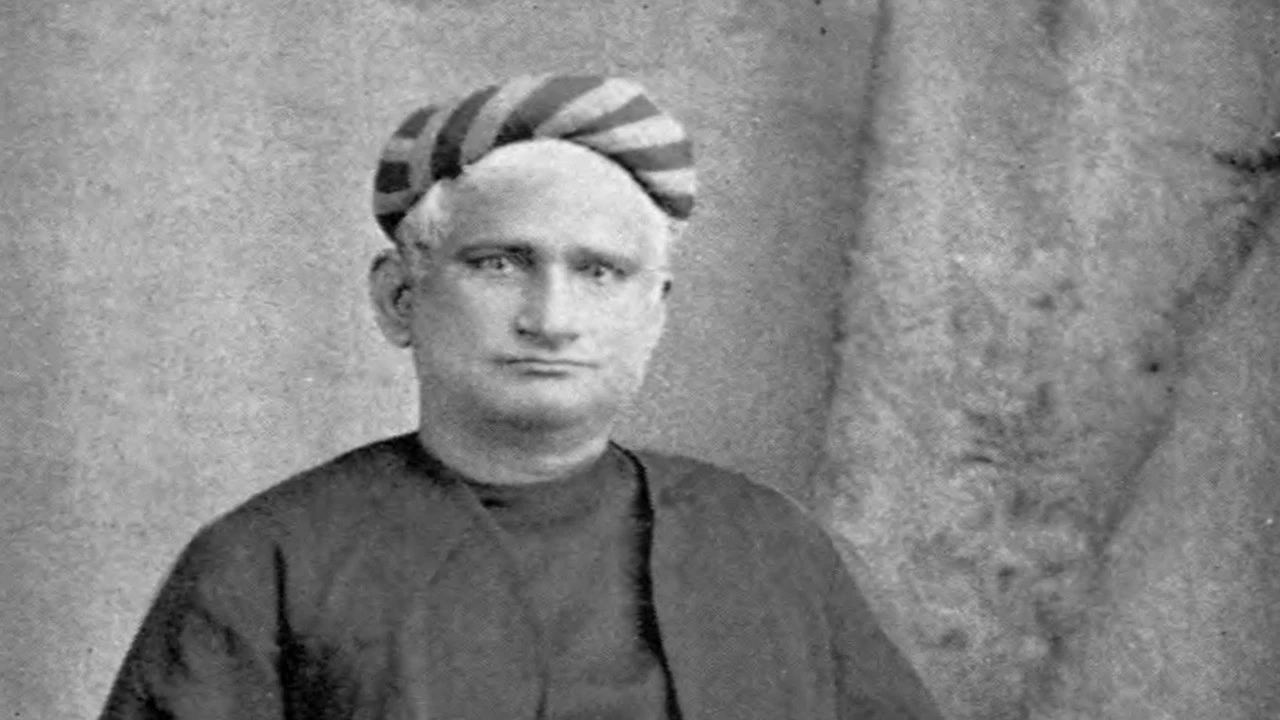


New Delhi: When Prime Minister Narendra Modi referred to Bankim Chandra Chatterjee as 'Bankim Dada', hackles were raised TMC MP Saugata Roy. Roy said: "It should be "Bankim Babu". Modi paused for a moment, thanked him and immediately rephrased it as “Bankim babu”. He turned to Roy and said, “Thank you, Dada, thank you. Aapko toh Dada keh sakta hoon na?”
On Monday, the 150 years of Vande Mataram was commemorated in the Parliament, with a special session on it. During the debate in Lok Sabha, PM Modi hit out at Congress and alleged that the former prime minister Jawaharlal Nehru echoed Muhammad Ali Jinnah’s opposition to the national song. He accused him of “pandering to communal concerns”.



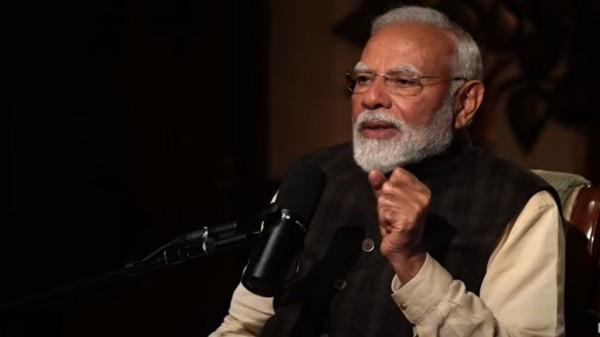
Dubbing Vande Mataram as the mantra that “energised and inspired India’s freedom movement”, PM Modi underlined that even when the British banned its printing and propagation, the song “stood like a rock” against oppression. He said that it inspired generations of freedom fighters. PM Modi noted that Bankim composed 'Vande Mataram' in 1875, swayed by memories of the 1857 revolt and the growing repression under British rule.
The BJP has criticised the Congress for its 1937 decision to allow only the first two stanzas of the song to be sung at national events. The issue has been raked up again, and the song has triggered a political standoff. In a sharp reaction, the Congress underlined that the 1937 decision was not meant to be divisive, but it was a sensitive accommodation recommended by a Working Committee that included Mahatma Gandhi, Jawaharlal Nehru, Sardar Patel, Subhas Chandra Bose, Rajendra Prasad, Abul Kalam Azad, Sarojini Naidu, and other noted leaders.
At the centre of the raging controversy is the national song and hence, the focus has returned to its creator.
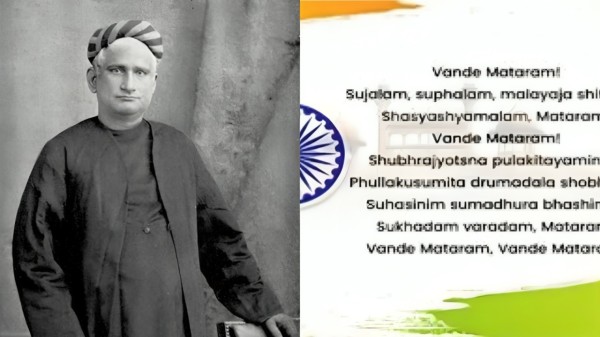
The focus has returned to the man behind the national song Bankim Chandra Chatterjee — a civil servant–turned–writer whose work sparked a cultural awakening even before the freedom movement took an organised form.
Bankim Chandra was born on June 27, 1838, in North 24 Parganas. Bankim's father was a deputy collector in Midnapur. Bankim took on that role after a brilliant academic journey. In 1858, young Bankim became one of the first two graduates of the newly established Calcutta University. He pursued degrees in both arts and law before joining the colonial administration.
Bankim had to tie the nuptial tie at 11. After his first wife died, he remarried Rajlakshmi Devi. The couple had three daughters together.
Bankim worked as a deputy collector in Jessore. He saw the realities of British rule unfolding before his eyes. These experiences helped him shape the sense of nationalism that would later find voice in his writings. He started his literary career as a writer of poems before turning to fiction.
His first fiction to be published was the English novel 'Rajmohan's Wife'. In 1865, 'Durgeshnandini', his first Bengali romance and the first ever novel in Bengali, was published. He followed it up with Kapalkundala (1866). Anandamath -- which features 'Vande Mataram' -- came out in 1882. It is a political novel which depicts a Sannyasi army waging a war against a British force. The song 'Vande Mataram' inspired freedom fighters and showcased a clarion call for freedom during the Swadeshi movement.
Bankim's commentary on the Bhagavad Gita was published eight years after his passing away on April 8, 1894. Bankim had a very friendly relation with Ramakrishna. Rabindranath Tagore wrote: "Bankim Chandra had equal strength in both his hands. With one hand, he created literary works of excellence; and with the other, he guided young and aspiring authors. With one hand, he ignited the light of literary enlightenment; and with the other, he blew away the smoke and ash of ignorance and ill conceived notions." Sri Aurobindo said: "The earlier Bankim was only a poet and stylist, the later Bankim was a seer and nation-builder."
As the controversy over 'Vande Mataram' rages, we must remember that Bankim personified India as Bharat Mata (Mother Goddess), and bowed to the Mother. He saw the country as a sacred entity that united people. For Bankim, the song was meant to evoke unflinching pride, deep respect and love for the motherland.