Sign In
By signing in or creating an account, you agree with Associated Broadcasting Company's Terms & Conditions and Privacy Policy.
By signing in or creating an account, you agree with Associated Broadcasting Company's Terms & Conditions and Privacy Policy.
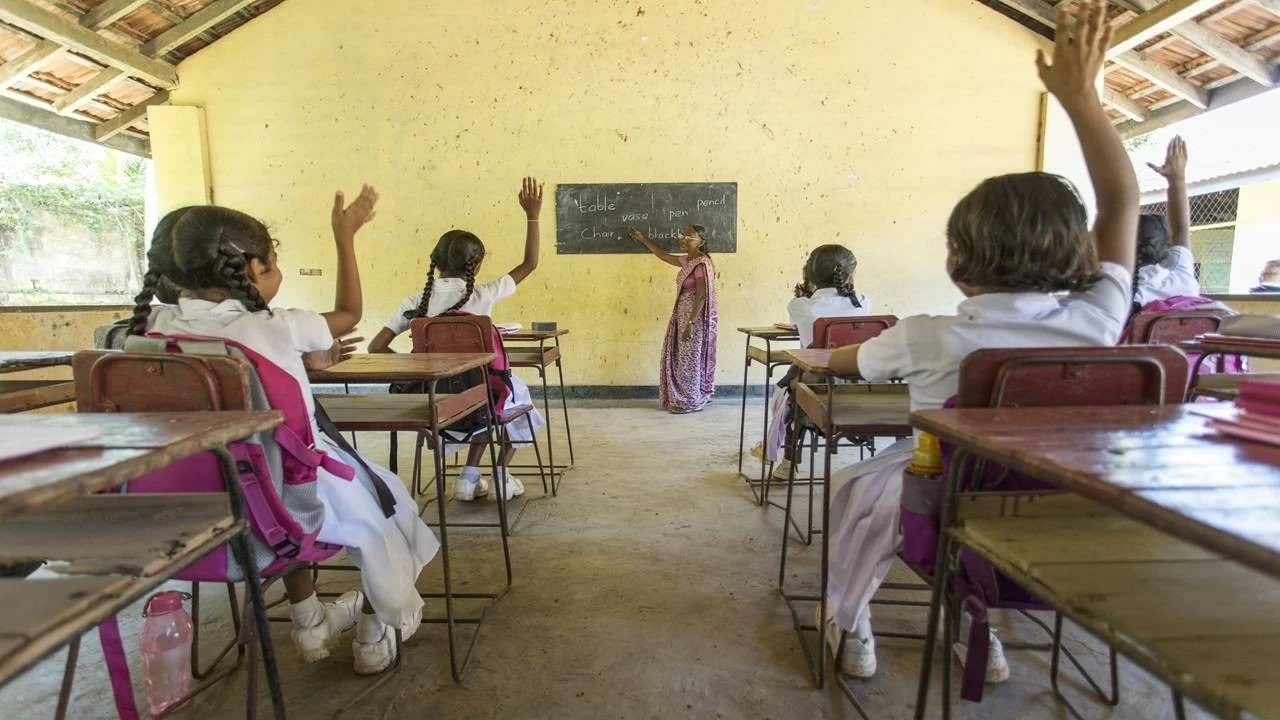


New Delhi: The Uttar Pradesh government’s decision to merge schools with fewer than 50 students into nearby institutions has sparked protests across the state, with teacher associations leading from the front. The controversial move has also turned into a major political flashpoint. The issue was discussed in the state assembly recently, where exchanges became heated.
Announced in June by the Yogi Adityanath government, the policy aims to consolidate over 10,000 primary and upper primary schools with less than 50 students into nearby institutions.



Officials believe consolidating smaller schools will go a long way in optimising resources, boost infrastructure, improve teacher strength and foster a more inclusive and collaborative learning environment, with students having a bigger peer group. The state government points out that it is in line with the National Education Policy (NEP) 2020 and will enhance the quality of education.
Issuing the directive to district magistrates, Deepak Kumar, the additional chief secretary for basic education, said in a letter: “In the context of the National Education Policy-2020 and the NCF for Foundational Stage (2022), it is essential to promote collaboration, coordination, and shared use of resources among schools so that every student can have an experience of quality, inclusive, and joyful learning.”
The policy comes following a steep decline in government school enrolments after the Covid pandemic. While enrolments were 1.92 crore in 2022-23, they have fallen to just over one crore in the current academic session. The initiative is based on models adopted in Himachal Pradesh and Gujarat.
However, the policy has drawn flak. A number of teacher associations and the Opposition are up in arms against the directive.
Educators have intensified their protest against the policy, submitting memorandums to local MLAs and district officials. They are demanding the rollback of the plan. According to some reports, representatives from districts such as Lucknow and Bareilly have already submitted written petitions warning that the policy would make educational inequality worse and increase dropout rates, particularly among girls. They also aver that instead of shutting down schools, the government should provide additional resources and teachers to under-enrolled institutions.
On the other hand, the Opposition leaders have branded the move as “anti-poor and detrimental to education policy”. The Opposition has dubbed the plan as "a disguised closure" of government schools that will drive marginalised and rural children out of the education system.
The decision has triggered a political war. It generated heated discussions in the Monsoon Session. Samajwadi Party supremo Akhilesh Yadav said it was "deep-rooted conspiracy" to deprive PDA (Backward classes, Dalits, and minorities) of education. Amid the raging row, State Basic Education Minister Sandeep Singh and other BJP leaders, have held press conferences and issued clarifications. They stress that no school is being permanently closed and that the mergers apply only to institutions with fewer than 50 students.
Bahujan Samaj Party (BSP) chief Mayawati has also hit out at the merger plan, calling it an injustice to millions of poor children who rely on nearby government primary and upper primary schools for accessible and affordable education.
Sanjay Singh, Rajya Sabha MP and state in-charge of AAP, has claimed that the merger of schools will affect the appointments of approximately 1.35 lakh assistant teachers, 27,000 headmasters and thousands of education workers.
CM Yogi Adityanath has rubbished the "closure" charge of the Opposition and contended that formulating the policy is a part of a broader education modernisation drive. "Before 2017, government schools lacked basic infrastructure, and dropout rates were among the highest in the country," he said. "Today, we are integrating campuses to maintain a 22:1 student-teacher ratio and provide better facilities. This is strengthening education, not weakening it," he asserted.
Some parents pointed out that many of the new schools are located far from the existing ones, making it hard for students from economically weaker families to cover the distance. Citing safety issues for girls, they underlined that the government should provide adequate transportation facilities before implementing the plan. However, some others highlighted the potential benefits of improved facilities and larger peer groups, which can shape a student's personality.
Teachers, in rural areas, warn that the increased distance will impede their ability to increase attendance through personal outreach. "Once schools are far away, that connection is lost," a teacher was quoted as saying to PTI. But director general of school education, Kanchan Verma, counters it, saying that the merging of schools provides children with exposure to a wider range of teachers and classmates, which can aid their holistic growth.
And with panchayat and Assembly elections round the corner, the issue is set to remain a key political flashpoint. The way the government responds to these concerns could impact not only the future of education but also the course of the upcoming electoral battle.