Sign In
By signing in or creating an account, you agree with Associated Broadcasting Company's Terms & Conditions and Privacy Policy.
By signing in or creating an account, you agree with Associated Broadcasting Company's Terms & Conditions and Privacy Policy.
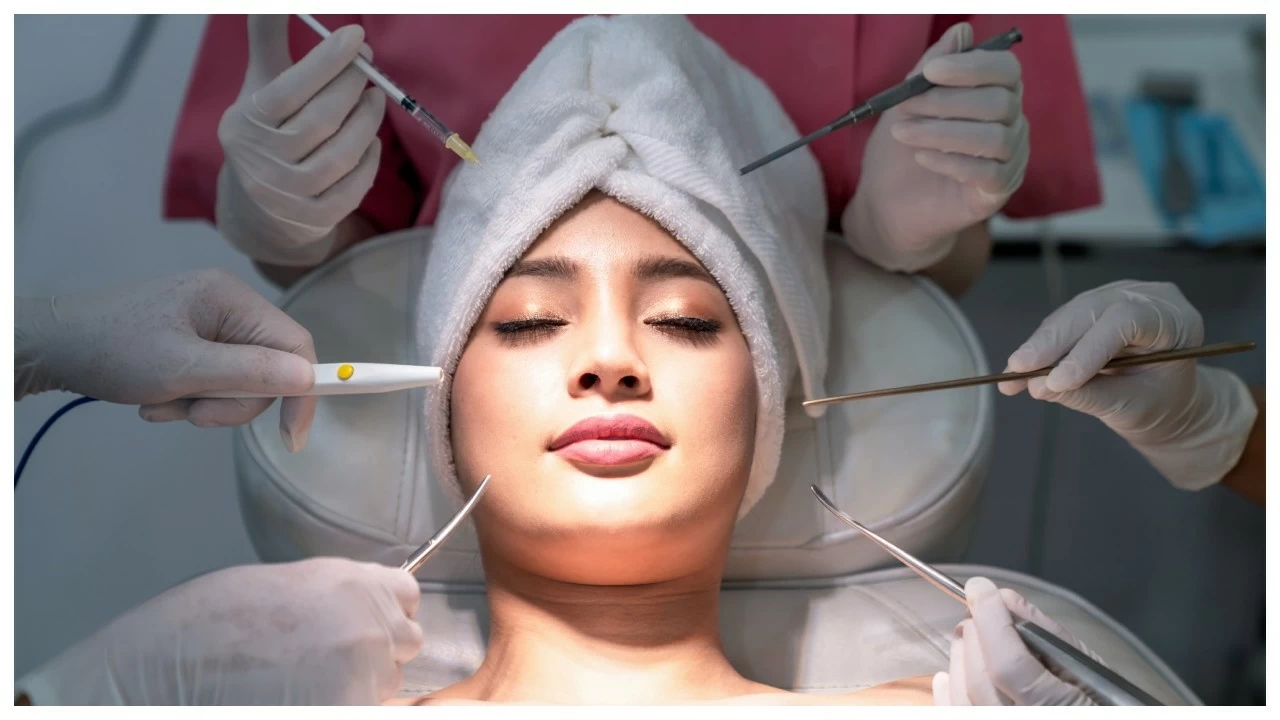


New Delhi: Cosmetic medicine is a sector of healthcare that has frequently faced controversy. Be it self-image issues or any other, aesthetic surgery often faces ethical and medical debate. But now, plastic surgeons in the US are experimenting with a new fad which involves harvesting fat from deceased donors and using it as filler for cosmetic procedures like facial contouring, breast enhancement, and buttock augmentation. Known as alloClae, the product is derived from donated human fat tissue.
alloClae is manufactured by biomedical giant Tiger Aesthetics, and unlike traditional body contouring, it uses fat from deceased patients to restore volume where it has been lost. Conventional contouring, however, relies on silicone implants or fat from other parts of the body. The process is now gaining traction among patients looking for less invasive procedures.
According to surgeons familiar with the technique, alloClae does not require general anaesthesia and is associated with shorter recovery times. These factors are increasingly attractive in a market driven by convenience and minimal downtime.
“People are paying for the ease of the procedure,” said Sachin Shridharani, a New York–based plastic surgeon, in comments reported by Business Insider. He noted a surge in interest from patients who have experienced significant weight loss after using GLP-1 agonist drugs such as Ozempic. Rapid weight reduction can leave individuals with sagging skin and volume loss, particularly in the face and lower body.
In practical terms, the process begins after organ donation protocols are completed. Tissue banks collect fat from specific areas of deceased donors, typically the abdomen. Tiger Aesthetics then processes tissue into alloClae, thereby preserving the structure of non-living fat cells and their growth characteristics.
Darren Smith, a board-certified plastic surgeon in New York City, explained that the inclusion of intact fat cells enables the filler to provide immediate volume while gradually integrating into the patient’s tissue. “Once incorporated, it behaves much like the patient’s own fat,” he said.
Not everyone, however, is comfortable with the idea. Some patients remain uneasy about the concept of receiving donor tissue, with surgeons acknowledging that the emotional barrier can be significant. “For some, the idea still feels macabre,” said Troy Pittman, a plastic surgeon with practices in Washington, DC, and New York. He added that framing the procedure as a natural alternative to synthetic implants often helps patients weigh their options more objectively.
Cost remains another limiting factor. Prices reportedly range from 10,000 dollars to well over 100,000 dollars, depending on the amount of filler required and the complexity of the procedure. Despite this, Tiger Aesthetics anticipates a rise in demand. The company’s president, Caroline Van Hove, has said production is being scaled up to meet growing interest.
As cosmetic medicine continues to evolve, procedures like alloClae highlight how scientific innovation, patient demand, and ethical questions are increasingly intersecting. Whether donor-derived fat becomes a mainstream option or remains a niche offering will depend not only on outcomes, but also on how comfortable patients are with redefining what “natural” enhancement means.