Sign In
By signing in or creating an account, you agree with Associated Broadcasting Company's Terms & Conditions and Privacy Policy.
By signing in or creating an account, you agree with Associated Broadcasting Company's Terms & Conditions and Privacy Policy.
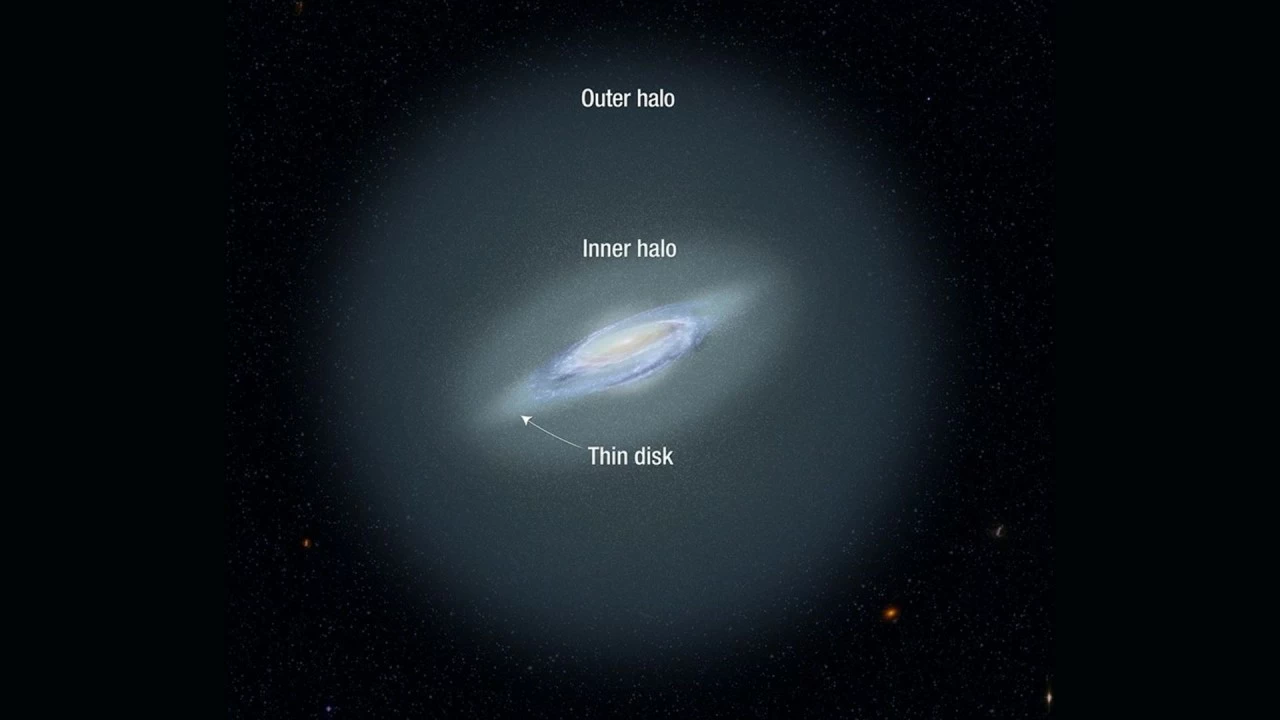


Researchers from the Raman Research Institute have uncovered a deep flaw in the method used to measure the haloes of galaxies. Galaxies are surrounded by wispy envelopes of gas and dark matter, extending between 10 and 20 times the visible size of the galaxy itself. These halos contain most of the mass in the galaxies, allowing them to maintain their shapes, and preventing the constituent stars from flying off in all directions. The gaseous components of the galaxy haloes is called the circumgalactic medium.

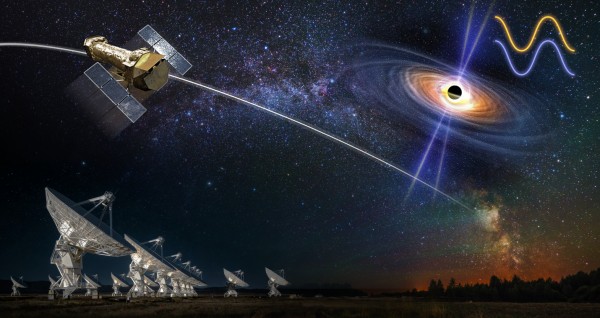
The oxygen from the entire line of sight is picked up. (Image Credit: RRI/PIB).
The conventional method for estimating the mass of the circumgalactic medium (CGM) is an indirect method, using ionised oxygen as a proxy. When a distant galaxy travels behind a foreground galaxy, the light from the distant background source is absorbed by the elements in the foreground galaxy. The amount of ionised oxygen is then used as a proxy to determine the total mass of the galaxy haloes. The researchers have revealed that this method is problematic, as the light is absorbed by the oxygen in the entire intergalactic distance along the line of sight.
A paper describing the research has been published in The Astrophysical Journal. One of the authors of the study, Kartick Sarkar explains, "We are challenging the notion that the entire ionized oxygen belongs to CGM. We’re suggesting that a relatively small fraction of the ionized oxygen is coming from CGM and that there’s a blanket of IGM around CGM which is contributing to the observed oxygen. For high mass galaxies like our Milky Way, the CGM may contribute just 50 per cent of the ionised oxygen, with the rest coming from the IGM. For lower mass galaxies, it can go down to 30 per cent". The scientists are now working towards quantifying the discrepancy.