Sign In
By signing in or creating an account, you agree with Associated Broadcasting Company's Terms & Conditions and Privacy Policy.
By signing in or creating an account, you agree with Associated Broadcasting Company's Terms & Conditions and Privacy Policy.
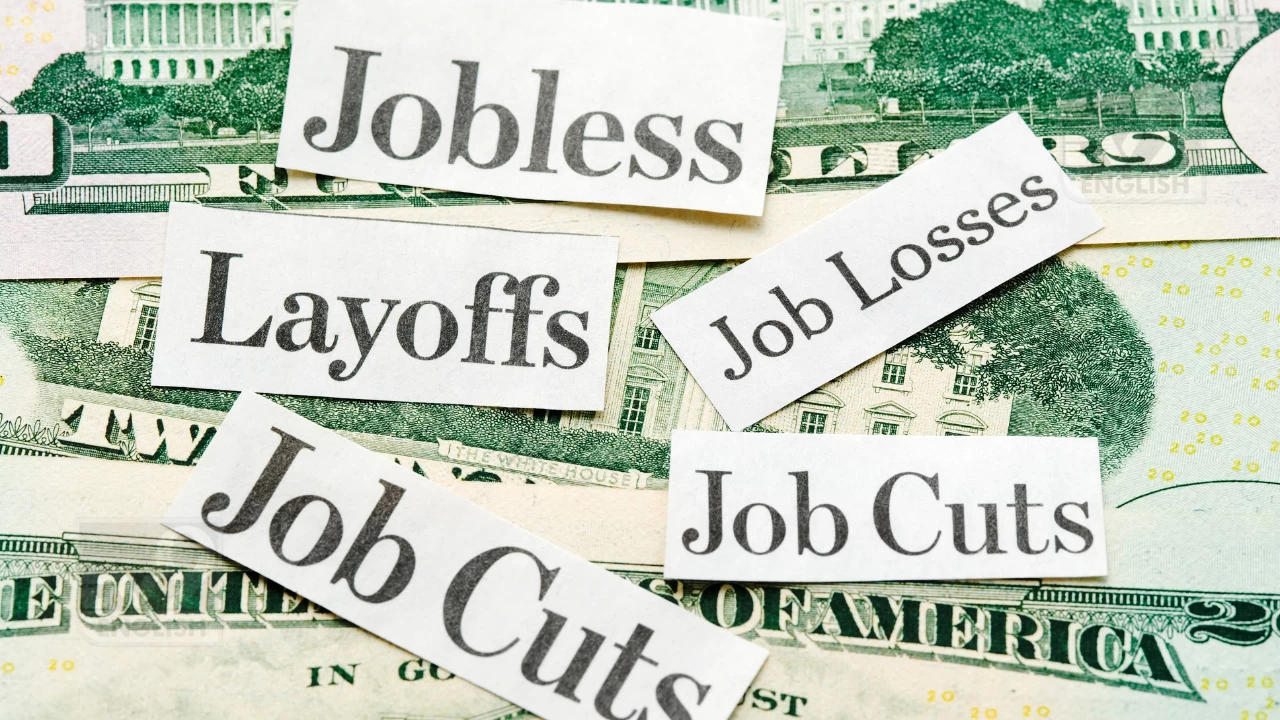
New Delhi: Mass layoffs are sweeping across the global tech sector in 2025. Over 94,000 jobs have been slashed in just six months. That’s nearly 500 tech workers losing their jobs every day. The list of companies cutting staff is long and packed with big names: Microsoft, Intel, Meta, TCS, Panasonic, Salesforce, and more.
On the surface, many of these companies blame cost pressures, business realignment, or performance-based restructuring. But behind all the corporate jargon is a common trend, heavy investments in artificial intelligence, followed by job cuts that affect mostly traditional roles.
India’s largest IT company, Tata Consultancy Services (TCS), has announced that it will be cutting about 2 percent of its global workforce, which could impact around 12,000 employees.
TCS CEO K Krithivasan told Moneycontrol that the layoffs aren’t because of AI-led efficiency, but because the company isn’t able to place certain staff in current projects. “We are still hiring and training people, but in some cases, redeployment is not possible,” Krithivasan said.
He added that although 5.5 lakh employees have been trained in basic digital skills and 1 lakh in advanced tech, some mid and senior-level staff are unable to adapt to newer roles beyond initial training. These roles are getting harder to fit into new project needs.
Microsoft is another major player letting go of workers this year. The company has removed more than 15,000 roles in 2025. On top of that, about 2,000 employees labelled as underperformers have exited the company as well.
Despite this, Microsoft is having a strong financial year. The company has seen its stock hit record highs and made over $75 billion in income across three quarters. But the focus is shifting to artificial intelligence. In an internal memo, CEO Satya Nadella wrote that he understands these job cuts are painful. “These decisions are among the most difficult we have to make. They affect people we've worked alongside, learned from, and shared countless moments with,” Nadella said.
He also admitted to the confusion of layoffs during a profitable period but said it’s necessary as Microsoft pours nearly $80 billion into building its AI backbone.
Chipmaker Intel has made one of the biggest workforce cuts this year. The company is letting go of 24,000 employees, close to one-fourth of its staff. The move was announced during its quarterly earnings presentation.
CEO Lip-Bu Tan said the layoffs come after the company expanded in areas that didn’t grow as expected. Intel is also pulling back on planned projects, including factories in Germany and Poland. In Costa Rica alone, 2,000 roles are being moved to Vietnam. The company now wants to become leaner and more focused.
Meta has made fresh cuts in its Reality Labs division, the team that builds virtual reality and augmented reality devices, including games for the Quest headset. Projects like the Supernatural fitness app have also been affected.
Meta hasn’t revealed how many roles were affected this time, but earlier this year, it had already laid off 5 percent of its workforce. That round focused on underperforming staff.
Panasonic is also downsizing. The Japanese company is cutting 10,000 jobs to reduce costs and boost investments in future-focused technologies, including AI. Half of these layoffs will happen in Japan. CEO Yuki Kusumi said the company is moving away from slower-performing areas like televisions and some industrial products.
Even when companies avoid directly blaming AI, the shift is clear:
It feels like a silent replacement, not an open admission.
For now, most firms are publicly denying that AI is behind the cuts. But the pattern, layoffs on one side, AI investments on the other, is getting harder to ignore.