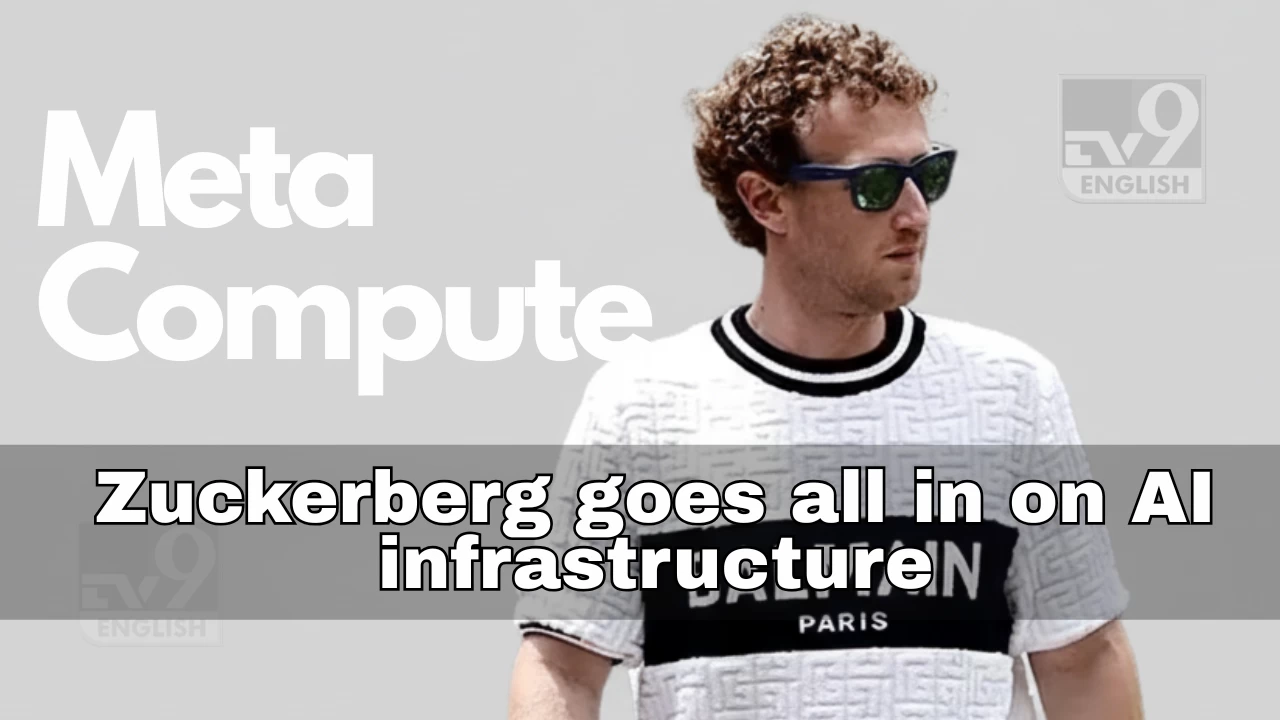
New Delhi: Meta has made its biggest infrastructure move yet in the AI race. On January 12, CEO Mark Zuckerberg announced a new top level initiative called Meta Compute, aimed at building massive computing capacity to support the company’s long term artificial intelligence goals, including what he has described as personal superintelligence.
The announcement signals a clear shift in how Meta wants to compete. This is not just about better AI models or new features on Facebook or Instagram. It is about owning the physical backbone behind AI, from data centres to power supply, at a scale that could rival small cities and even countries.
What is Meta Compute and why it matters
Meta Compute is a new division that will oversee Meta’s global data centre fleet, AI infrastructure, and supplier partnerships. Zuckerberg said the way Meta builds and partners for this infrastructure will become a strategic advantage for the company.
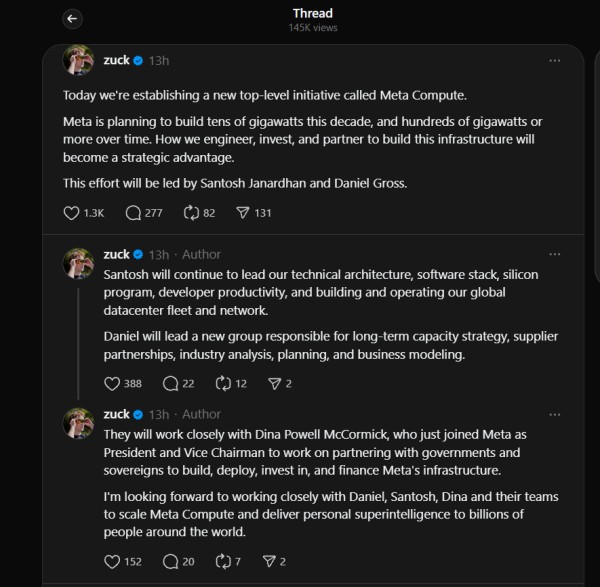
In a post, he said, “Meta is planning to build tens of gigawatts this decade, and hundreds of gigawatts or more over time.” That scale is hard to visualise. Tens of gigawatts is the kind of electricity demand usually linked to entire regions.
Meta has struggled to gain momentum after its Llama 4 model failed to impress developers and researchers. This move shows Meta is betting that raw compute and energy access will decide the next phase of the AI race.
Who is leading the Meta Compute push
The initiative will be co led by Santosh Janardhan, Meta’s head of global infrastructure, and Daniel Gross. Janardhan will continue running Meta’s technical architecture, software systems, silicon efforts, and data centre operations.
Gross will lead a new group focused on long term capacity planning, supplier partnerships, industry analysis, and business modelling. Gross previously co founded Safe Superintelligence with former OpenAI chief scientist Ilya Sutskever before joining Meta.
The two will work closely with Dina Powell McCormick, who recently joined Meta as president and vice chairman. Zuckerberg said she will help engage with governments and sovereign partners to build, deploy, invest in, and finance Meta’s infrastructure.
He wrote, “I’m looking forward to working closely with Daniel, Santosh, Dina and their teams to scale Meta Compute and deliver personal superintelligence to billions of people around the world.”
Power, data centres, and nuclear deals
Building AI at this scale needs energy. Meta has already signed long term power agreements linked to nuclear projects that could support up to 6.6 gigawatts of electricity capacity in the United States by 2035.
These include extended operations at existing nuclear plants, development of advanced reactors, and power purchase agreements with companies like Vistra. Meta has also backed nuclear developers TerraPower and Oklo.
The company says the power will flow into regional grids that support its data centres, including its Prometheus AI supercluster in New Albany, Ohio. Meta added that it pays the full cost of energy used by its facilities.
The bigger picture for AI
Big Tech is racing to lock in power and compute as AI demand pushes electricity usage higher for the first time in decades. Meta committed up to $72 billion in capital spending in 2025 and has warned that costs will rise further in 2026.