Sign In
By signing in or creating an account, you agree with Associated Broadcasting Company's Terms & Conditions and Privacy Policy.
By signing in or creating an account, you agree with Associated Broadcasting Company's Terms & Conditions and Privacy Policy.

Google is now officially riding the rising wave of vibe-coding, launching its new AI-powered app creator, Opal. The tool, under testing in the U.S. using Google Labs, enables teams to make simple apps on the web by typing text prompts. This release is another one by Google into the AI development domain, where Google hopes to gain its customers that are keen to develop applications without having to do any complex programming.
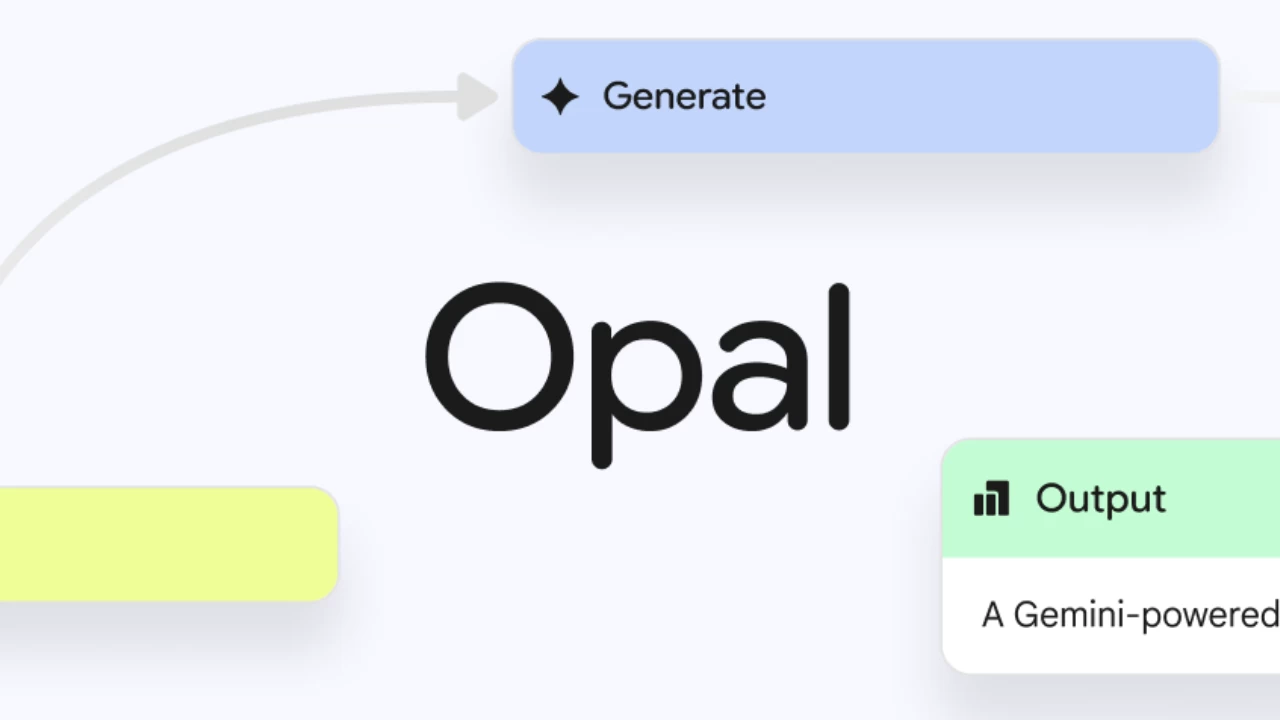
Opal is one of the development platforms, unlike the traditional development platforms, where the process of development is made simple as a result of the visual workflow interface that is provided. Customers present the application that they desire, and the models of Google create a working prototype. The tool will be and is to be accessible and attractive not only to programmers but also to the users who would like to experiment to create an app.
After the generating of the app, the user can get the full structure in terms of having the visual editor panel. On this interface, inputs, outputs, and several steps to the creation of the app are available. A user is able to make modifications to prompts right in the workflow and even include more steps with the help of a convenient toolbar.
Sharing and remixing is also supported by Opal. Once an app is done, it can be released online, where there is an option to send links to other people to test using their Google accounts. Moreover, there is an existing app gallery that can be remixed and customised further to promote creativity and collective work.
By introducing Opal, Google is placing itself among the competitors, such as Canva, Figma, and Replit, which also aim to simplify development for non-coders. Most of the development on Google AI Studio was already text-prompt-based, but Opal is unique in that it is highly visual and intuitive in terms of app design.
Opal is an indication of how Google is trying to democratise technology and allow more people to develop apps. With the increased demand for no-code and low-code tools, the introduction of Google in vibe-coding marks the bigger movement of inclusive innovation in the field of technology.