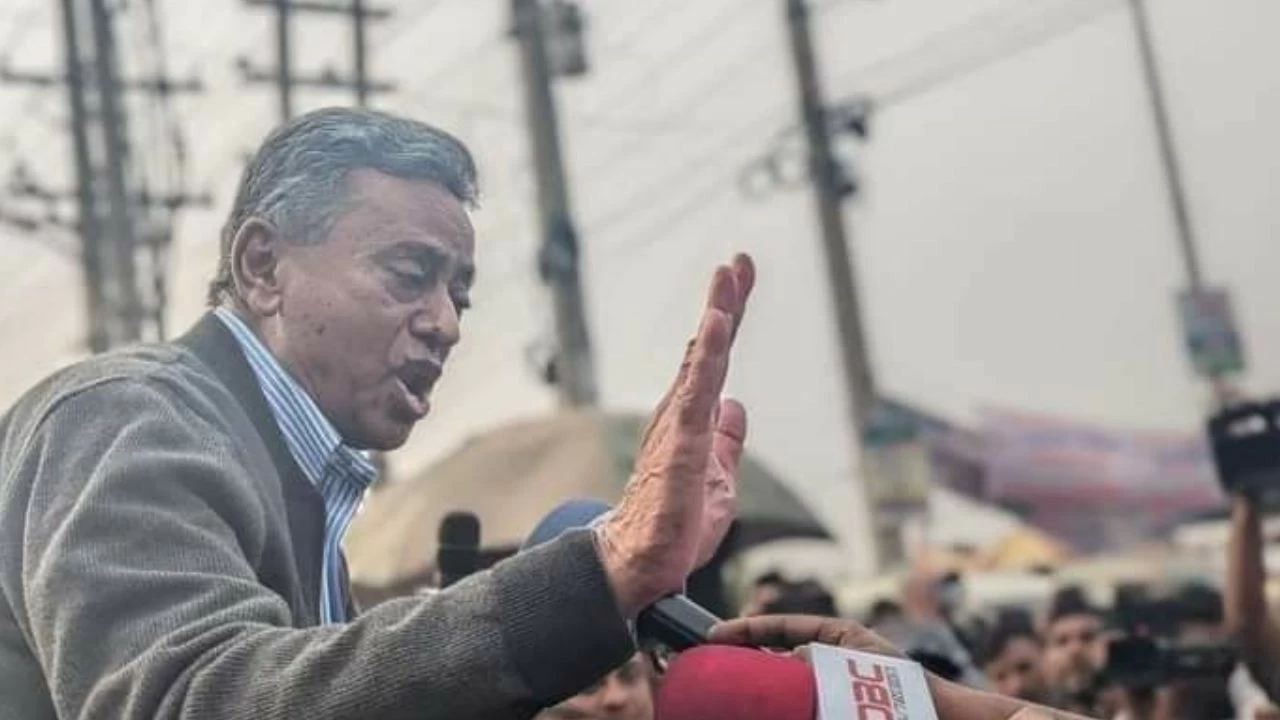
New Delhi: Amid surging political tensions across Bangladesh, the former commerce minister and a senior leader of Bangladesh Nationalist Party, Amir Khasru Mahmud Chowdhury labelled its government as practising mobocracy. His statements come at a time, the Islamic country is witnessing massive protests, and incidents of communal violence disrupting daily life.
In an interview with News 18, Chowdhury stated that Zia is slowly recovering from her illness and will soon announce the candidate nomination from her party. He also mentioned that Zia would clarify the BNP's prime ministerial candidate.
'Repeated violence creates an international impact'
The BNP member accused the Yunus-led government of orchestrating organised mob and described its leadership as a "failure." He alleged that such developments are eroding state authority and create a situation of concern, domestically and internationally. Chowdhury alleged that when street violence are engineered to cater diplomatic missions, it sends a menacing signal beyond national borders.
Referring to the Chittagong incident, Chaudhary alleged that such events are not spontaneous but planned to systematically disrupt the country's democratic and electoral stability.
'People will exercise their voting rights after a decade'
According to Chowdhury, even after a prolonged period of political instability, people remain eager to cast their voter to exercise their democratic rights.“ Candidates are operating from their constituencies. They waited for almost a decade to use their voting rights. In the last 3-4 elections, they were not able to exercise it. There is a clear sense of ownership among the people," he said. “Yet instead of ensuring stability and bringing order, the interim government is presiding over disorder," Chowdhury added.
The ex-commerce minister alleged that such repeated failures to maintain law and order would destroy public confidence and threaten democratic institutions. According to him, mob violence and unchecked protests are being used as ‘tools to hinder electoral process’ and delay a return to an elected government.
Stressing that he did not wish to engage in any “inflammatory” or controversial discussion on student political forums, Chowdhury placed responsibility squarely on the government. “This is not democracy. This is mobocracy,” he said.