Sign In
By signing in or creating an account, you agree with Associated Broadcasting Company's Terms & Conditions and Privacy Policy.
By signing in or creating an account, you agree with Associated Broadcasting Company's Terms & Conditions and Privacy Policy.
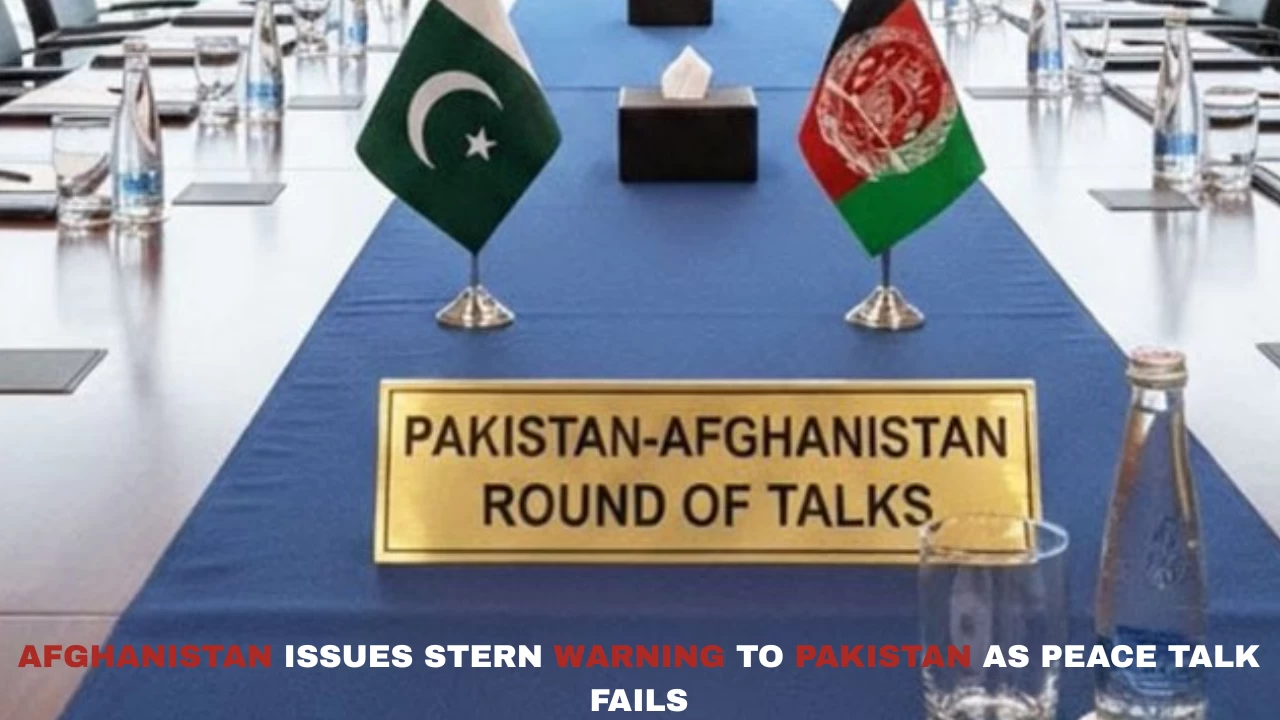

'Don’t test our patience': Afghans warn Pakistan as peace talks fail
New Delhi: The third round of Pakistan-Afghanistan peace talks in Istanbul ended without a conclusion, as discussions once again revealed Islamabad’s repeated attempts to place all the blame on Kabul. The Afghan administration accused Pakistan of acting irresponsibly despite multiple mediation efforts by Turkey and Qatar.
The Taliban administration clarified on Saturday that it appreciated Turkey and Qatar’s efforts to facilitate the mediation process. Zabihullah Mujahid, spokesperson for the Islamic Emirate of Afghanistan, said that Afghan representatives attended the discussions “in good faith and with appropriate authority” on November 6 and 7, expecting Pakistan to finally approach the issue “seriously and constructively.”
Zabihullah further accused Pakistan of once again displaying an “irresponsible and non-cooperative attitude,” placing all responsibility for border security on Afghanistan while showing “no willingness to assume responsibility for either Afghanistan’s security or its own.” The Taliban delegation claimed that it had initiated the talks to reach a “fundamental solution,” but Pakistan’s response rendered the discussion unproductive.
Despite reaffirming fraternal ties with the “Muslim people of Pakistan,” the Taliban emphasized that it would only cooperate “within the limits of its responsibilities and capabilities.” The statement reflected deep frustration at Pakistan’s persistent attempts to externalize internal security issues and its reluctance to commit to genuine regional stability.
Pakistan’s Defence Minister Khawaja Asif acknowledged that the third round of negotiations had “reached an uncertain stage with no results” and confirmed there were “no plans yet for a fourth round.” In response, Afghanistan’s Minister for Tribes, Borders, and Tribal Affairs, Noorullah Noori, warned Pakistani officials “not to test the patience of Afghans.” He cautioned Asif “not to be overly confident in his country’s technology,” declaring that if war breaks out, “both the elders and youth of Afghanistan will rise to fight.”
The Istanbul talks, aimed at easing ongoing border tensions, have instead highlighted Pakistan’s duplicity and deepening mistrust. The situation threatens to push the Af-Pak relationship closer to open confrontation. Although a ceasefire remains in place along the border, Afghanistan suspects Pakistan may once again launch unprovoked attacks, including drone strikes targeting civilian areas.