Sign In
By signing in or creating an account, you agree with Associated Broadcasting Company's Terms & Conditions and Privacy Policy.
By signing in or creating an account, you agree with Associated Broadcasting Company's Terms & Conditions and Privacy Policy.
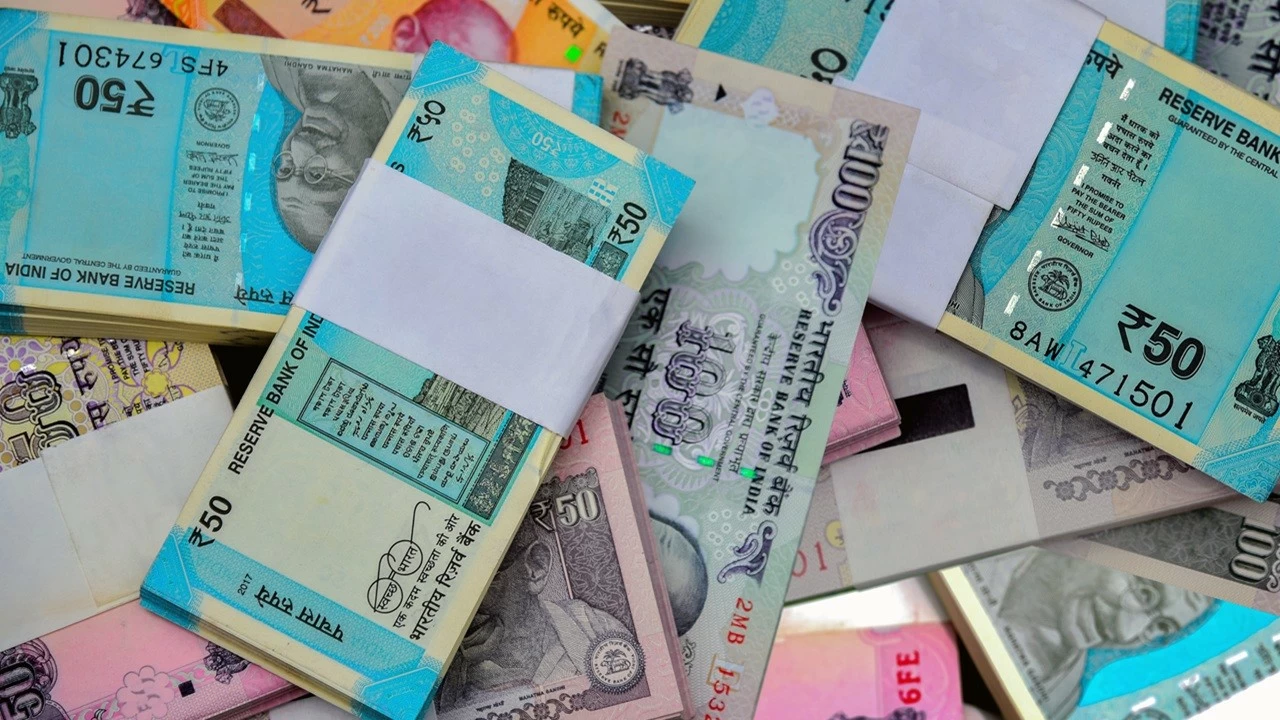


New Delhi: In the latest move, Nepal has eased restrictions on carrying high-denomination Indian currency to the country. This ends a decade-long ban of high value Indian currency being carried to Nepal. After the changes, individuals would now be able to hold Indian banknotes of Rs 200 and Rs 500 up to a maximum limit of INR 25,000 per person.
Under the revised provision, both Nepali and Indian citizens may bring the higher denomination bank notes into Nepal from India or carry them from Nepal to India. The Cabinet decision from Nepal came on Monday and follows amendments by the Reserve Bank of India to the Foreign Exchange Management (Export and Import of Currency) Regulations, 2015.
According to Nepal Rastra Bank (NRB) spokesperson Guru Prasad Paudel, once the government decision is published in Nepal gazette, NRB will issue a circular to this effect that would legalise the use of higher denomination Indian bank notes by individuals travelling to Nepal from India or from Nepal to India.
This will allow both tourists and businessmen from both countries to engage better with each other. Paudel said to the news publication Kathmandu Post that they for some time had requested Indian authorities to allow for this move, which has now finally been accepted. The amendment permits not just Indian and Nepali but also Bhutanese nationals to carry higher-denomination Indian currency in Nepal.
The restriction put by Nepal dates back to when India underwent a system of demonetisation in 2016 demonetisation, withdrawing old ₹500 and ₹1,000 notes overnight. Instead of the older denominations, new notes such as ₹200, ₹500 and importantly ₹2,000 were introduced.
Nepal has always used Indian currency widely, but the sudden changes in India reportedly were not immediately notify under its foreign exchange rules and this uncertainty forced the Nepal Rastra Bank (NRB) to nullify the use of high-value Indian notes. Eventually this led to a blanket ban of any Indian currency over INR 100 in Nepal.
The move, apart from the uncertainty, was also seen to be enforced due to security reasons. Allowing large volumes of foreign cash without clear rules could be used for counterfeiting, smuggling and untracked cash flows across the porous India–Nepal border.
The system, while introduced at the uncertain time of demonetisation in India, then led to problems for Nepal. A large number of Nepalis travel to India, mainly for work, and they often transfer large parts of their earnings to their home. The currency restrictions were making it difficult for the large Nepali migrant workforce working in India to send their earnings to Nepal.
The migrant workers being forced to bring home their earnings in low-denomination notes was cumbersome, and the fact that this made it more to theft and pickpocketing only compounded the problem.
Another problem was for the Nepali tourist industry which sees a large number of Indian tourists. Without the ability to carry higher-value notes, Indian tourists could not spend freely, something that was seen to be hurting the Nepali tourist economy in a major way. The timings for lifting the ban are thus ideal and much-needed.