Sign In
By signing in or creating an account, you agree with Associated Broadcasting Company's Terms & Conditions and Privacy Policy.
By signing in or creating an account, you agree with Associated Broadcasting Company's Terms & Conditions and Privacy Policy.
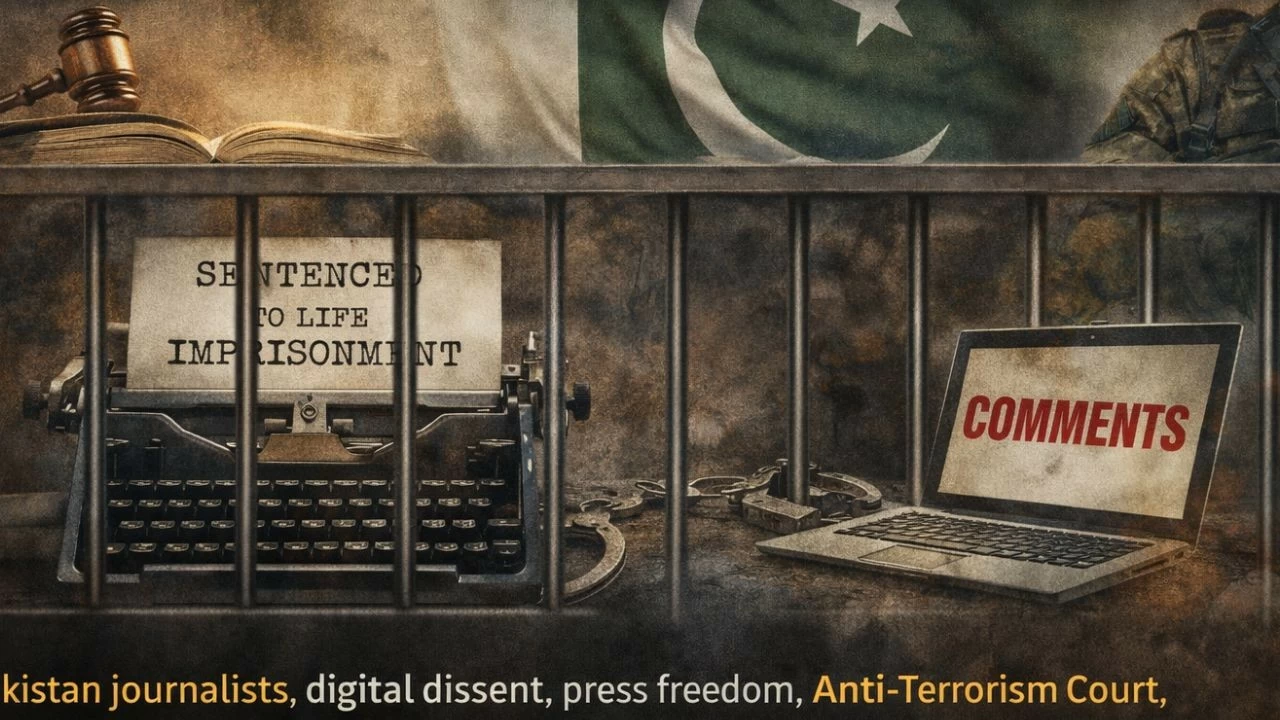


New Delhi: In a shocking development, seven prominent journalists have been sentenced to life imprisonment by a Pakistani Anti-Terrorism Court (ATC), triggering alarm internationally and raising serious questions over press freedom in the country. The sentences were handed down on Saturday to Adil Raja, Wajahat S Khan, Sabir Shakir, Shaheen Sehbai, Moeed Pirzada, Haider Mehdi, and Akbar Hussain. The journalists were convicted on charges of harbouring “digital terrorism” and allegedly engineering war against the nation.
The court proceedings were conducted in absentia, as all seven journalists are currently living in exile. The ruling has drawn attention to the ATC’s asserted authority to pass judgments against critics beyond Pakistan’s territorial jurisdiction.
The case traces its origins to the arrest of former Prime Minister Imran Khan on May 9, 2023, which sparked nationwide unrest. Prosecutors argued that the journalists used digital platforms to amplify the violence and unrest, contending that online political commentary constituted an active terror threat. The court reportedly held that digital opinions critical of the establishment amounted to terrorism, invoking provisions of the Anti-Terrorism Act and the Pakistan Penal Code. According to CNN-News18, the judgment reflects the government’s crackdown on online narratives and attempts to curb voices abroad that could influence public opinion and the military establishment.
Several experts have criticised the ATC, alleging that it functions as a tool of the military establishment rather than as an independent judicial body. Intelligence analysts claim the court operates under the influence of Pakistan Army Chief General Asim Munir, serving as a mechanism to suppress dissent. They cited past controversies involving the ATC, including its handling of the Mumbai terror attack case and the release of Zaki-ur-Rehman Lakhvi in 2015.
Observers note that all those named in the latest verdict have a history of critical reporting on the army and the military establishment, reinforcing concerns of a “kangaroo court” process.
The judgment has intensified concerns among international human rights organisations over press freedom in Pakistan. Analysts warn that the ruling sets a dangerous precedent, demonstrating how critics can be criminalised for expressing political views. Some have urged global bodies to consider blacklisting Pakistan’s ATC system, arguing that it represents a compromised judicial process designed to serve military interests while undermining free speech and independent journalism.