Sign In
By signing in or creating an account, you agree with Associated Broadcasting Company's Terms & Conditions and Privacy Policy.
By signing in or creating an account, you agree with Associated Broadcasting Company's Terms & Conditions and Privacy Policy.
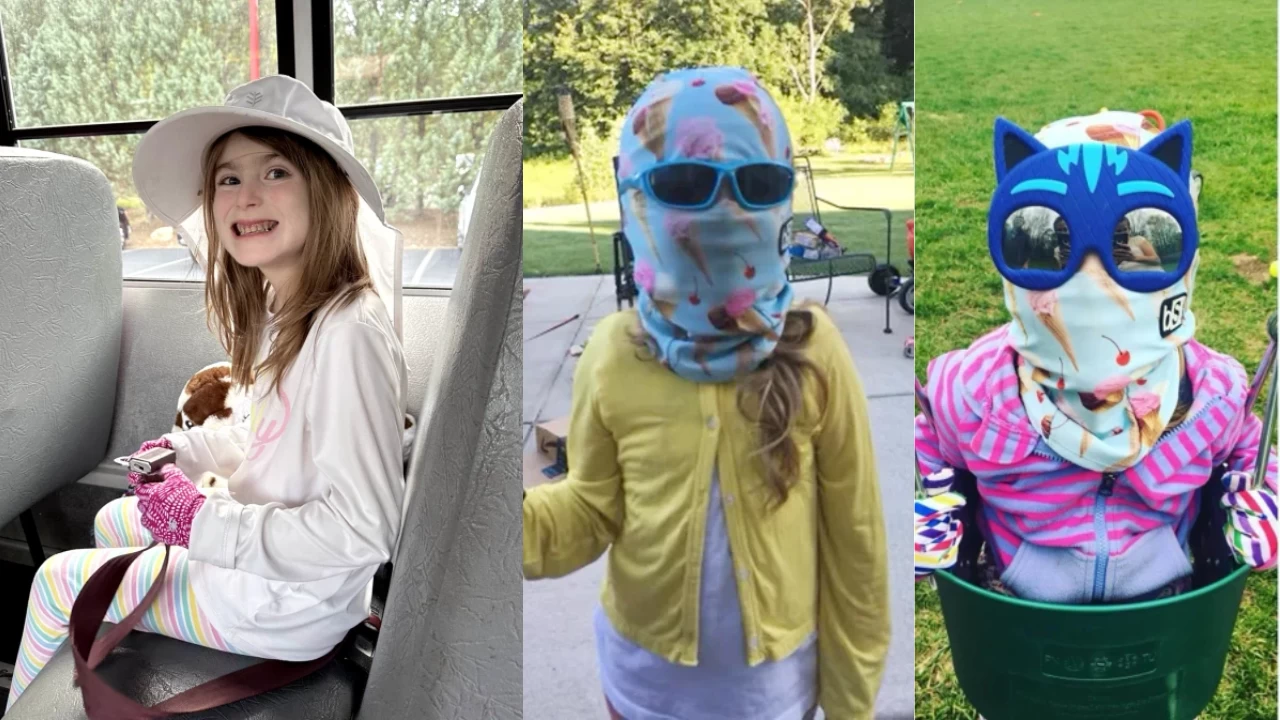

Wisconsin: For Adeline Tonhaeuser, stepping outside during the day is dangerous. The little girl from Hartford, Wisconsin, has a severe form of porphyria, a rare blood disorder that makes her skin extremely sensitive to UV light.
Even a short exposure to sunlight causes painful blisters, putting her at risk of infection and scarring. To stay safe, Adeline must wear protective clothing at all times, including a hat, gloves, long sleeves and trousers. When she goes outside briefly, she has to wear a full-face mask.
At home, her parents have tinted windows and installed special UV-blocking film in their car. Her school has made similar accommodations and she spends recess indoors.
Adeline was diagnosed at 18 months old with congenital erythropoietic porphyria (CEP), a disorder affecting only 200 people worldwide, according to the National Organization for Rare Disorders.
Her parents, Kurt Tonhaeuser and Megan Dunn, were devastated by the diagnosis. Doctors initially misdiagnosed her but a dermatologist recognised the symptoms — reddish urine, nail loss and persistent blisters.
Adeline's condition is genetic, caused by a gene mutation inherited from both parents, Today.com reported. It leads to a buildup of chemicals called porphyrins, which react to sunlight and damage the skin.
Adeline longs for a normal childhood. She watches her siblings play outside but can only join them at night. Daytime sports, beach trips and school field trips are off-limits.
Adeline attended Sun Escape, a camp for photosensitive children, in May last year. Hosted by Victory Junction, the event featured indoor activities and night-time adventures like zip-lining and horseback riding.
Doctors say Adeline will be fine if she stays protected. She must take vitamin D supplements and undergo regular health checks. A bone marrow transplant might help in the future, but for now, her family focuses on keeping her safe.