Sign In
By signing in or creating an account, you agree with Associated Broadcasting Company's Terms & Conditions and Privacy Policy.
By signing in or creating an account, you agree with Associated Broadcasting Company's Terms & Conditions and Privacy Policy.
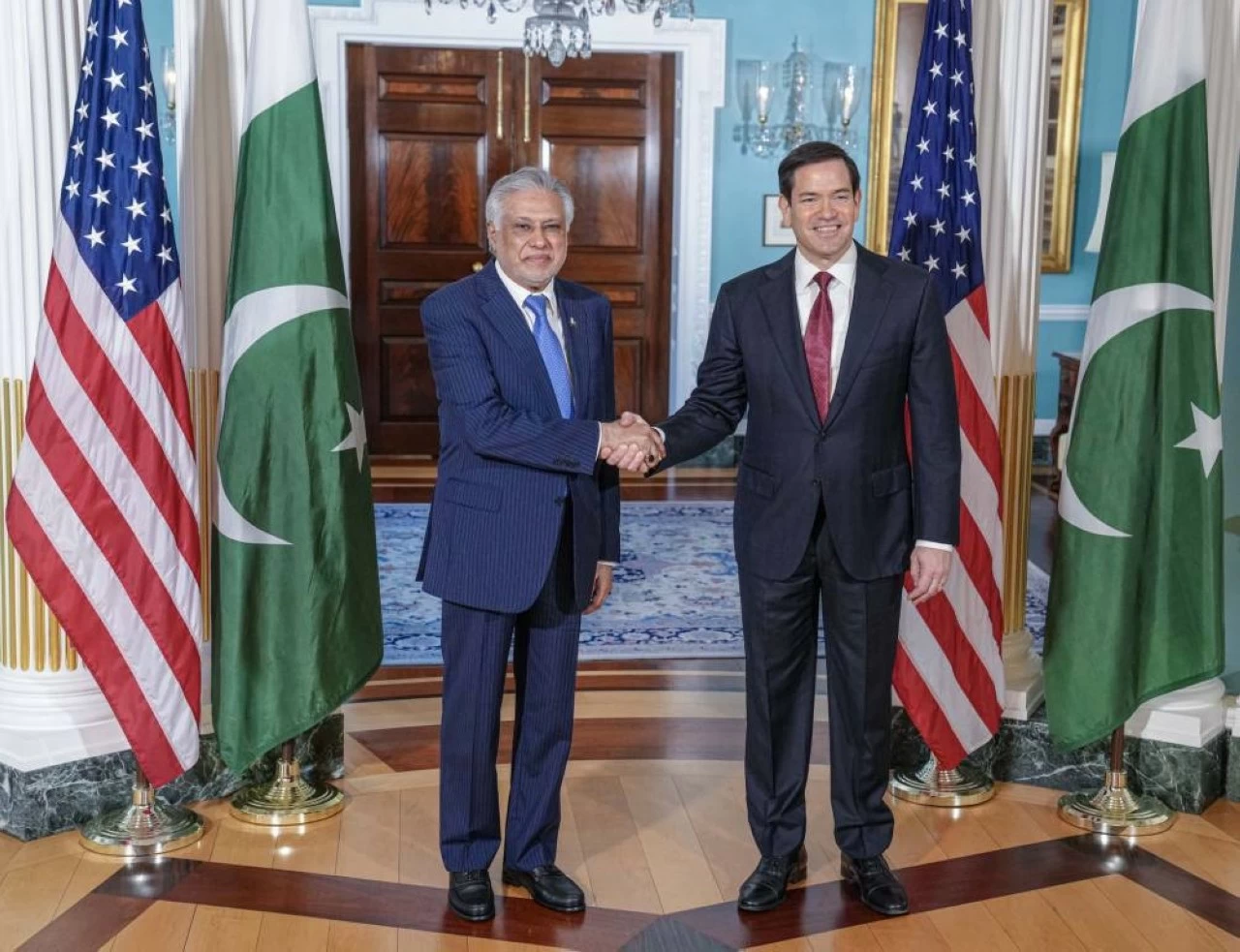


In a major diplomatic engagement between the United States and Pakistan, US Secretary of State Marco Rubio met with Pakistan's Deputy Prime Minister and Foreign Minister Ishaq Dar in Washington.
The discussions centered on bilateral ties, with Rubio specifically thanking Dar for "Pakistan’s partnership in countering terrorism and preserving regional stability." This praise comes just days after the US officially designated The Resistance Front (TRF), a group identified as a front for Pakistan-based Lashkar-e-Taiba (LeT), as both a Foreign Terrorist Organisation (FTO) and Specially Designated Global Terrorist (SDGT).
The TRF had claimed responsibility for the deadly April 22 terror attack in Jammu and Kashmir's Pahalgam, which claimed the lives of 26 civilians.
Beyond counter-terrorism, the two leaders explored avenues for expanding bilateral trade and strengthening cooperation in the critical minerals sector. The meeting's agenda also included a discussion on Pakistan-India relations, a topic highlighted by Islamabad prior to Dar's visit.
However, the US's acknowledgement of Pakistan's counter-terrorism efforts appeared juxtaposed with Pakistan's defence of its stance on the TRF. Shortly after the US designation, Foreign Minister Dar, while in Washington, defended Islamabad's position. He stated that while Pakistan had "no issue" with the US designation of the TRF. “It is obviously a sovereign decision of the United States to designate the TRF. We have no issue. And we welcome, if they have any evidence, that they are involved,” said Dar at an event in Washington DC.
Dar reiterated Pakistan's claim that LeT had been dismantled years ago, with its actors prosecuted and jailed. This assertion contrasts sharply with India's consistent accusations of Pakistani government and military involvement in cross-border terrorism.
Prime Minister Narendra Modi, in the wake of the Pahalgam attack and India's retaliatory "Operation Sindoor," had pointedly stated, "While India believes in tourism, Pakistan considers terrorism as tourism, which is very dangerous for the world."
Prime Minister Narendra Modi, in the wake of the Pahalgam attack and India's retaliatory "Operation Sindoor," had pointedly stated, "While India believes in tourism, Pakistan considers terrorism as tourism, which is very dangerous for the world." He further challenged Pakistan's progress, contrasting it with India's position as the world's fourth-largest economy. The US, meanwhile, has previously claimed credit for brokering a ceasefire between India and Pakistan, a claim acknowledged by Islamabad but repeatedly denied by New Delhi.