
Sign In
By signing in or creating an account, you agree with Associated Broadcasting Company's Terms & Conditions and Privacy Policy.
By signing in or creating an account, you agree with Associated Broadcasting Company's Terms & Conditions and Privacy Policy.
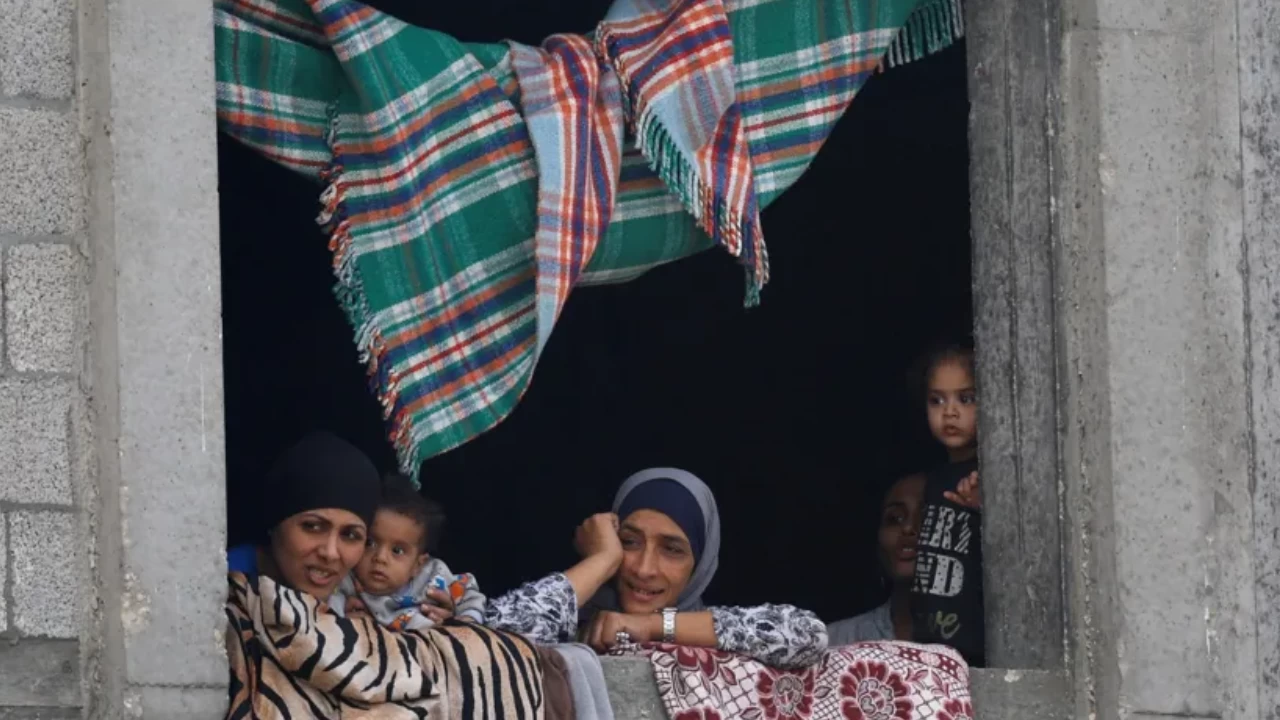


New Delhi: After two years of relentless war that has devastated the Gaza Strip and claimed thousands of lives, a potential breakthrough in the Israeli-Palestinian conflict is emerging. On Thursday, Israel approved the first part of a US-brokered peace plan aimed at ending hostilities in Gaza. US President Donald Trump announced that he plans to travel to Egypt for an official signing ceremony of the ceasefire agreement between Israel and Hamas. He stated that the release of hostages held in Gaza is expected to begin "on Monday or Tuesday."
The ceasefire agreement is part of a broader 20-point peace initiative proposed by Trump, which includes provisions for humanitarian aid, long-term reconstruction of Gaza, and the eventual disarmament of Hamas. However, significant uncertainty remains over how the plan addresses Gaza’s political future, particularly whether Hamas will fully relinquish control and how governance will be restructured.Palestinian Authority President Mahmoud Abbas welcomed the deal, praising “the great efforts made by President Trump and all mediators to reach this historic agreement.”
If the treaty is formally signed, the first step will involve Israeli Prime Minister Benjamin Netanyahu securing approval from Israel’s security cabinet and Parliament. Within 24 hours of ratification, Israeli forces will begin withdrawing from areas previously annexed during the conflict—territories that reportedly account for nearly 53 per cent of the Gaza Strip.
In return, Hamas is obligated to release all living hostages, expected to number over 30, in the early days of the truce. Israel will release 250 Palestinian prisoners and approximately 1,700 administrative detainees. Additionally, 28 deceased Israeli hostages will be returned. For each Israeli body, 15 deceased Palestinians will be exchanged. The precise timeline for this exchange remains to be finalized.
The next phase of the plan will focus on infrastructure rebuilding, international aid deployment, and long-term security guarantees.
Previously, Hamas had refused to lay down its weapons, claiming that it would do so only after the establishment of the Palestinian state. Another significant issue is the extent of Israeli troop withdrawal. Israel says its first withdrawal will see it retaining control of around 53 per cent of Gaza. The White House plan indicates further withdrawals to around 40 per cent, then 15 per cent.
Hamas has also said it expects to have some future role in Gaza as part of "a unified Palestinian movement". That final stage would be a "security perimeter" that would "remain until Gaza is properly secure from any resurgent terror threat". Several points in the peace treaty somewhat lack clarity, stating no specific timeline of Israeli withdrawal, which is very significant for Gaza at this time.