
Sign In
By signing in or creating an account, you agree with Associated Broadcasting Company's Terms & Conditions and Privacy Policy.
By signing in or creating an account, you agree with Associated Broadcasting Company's Terms & Conditions and Privacy Policy.
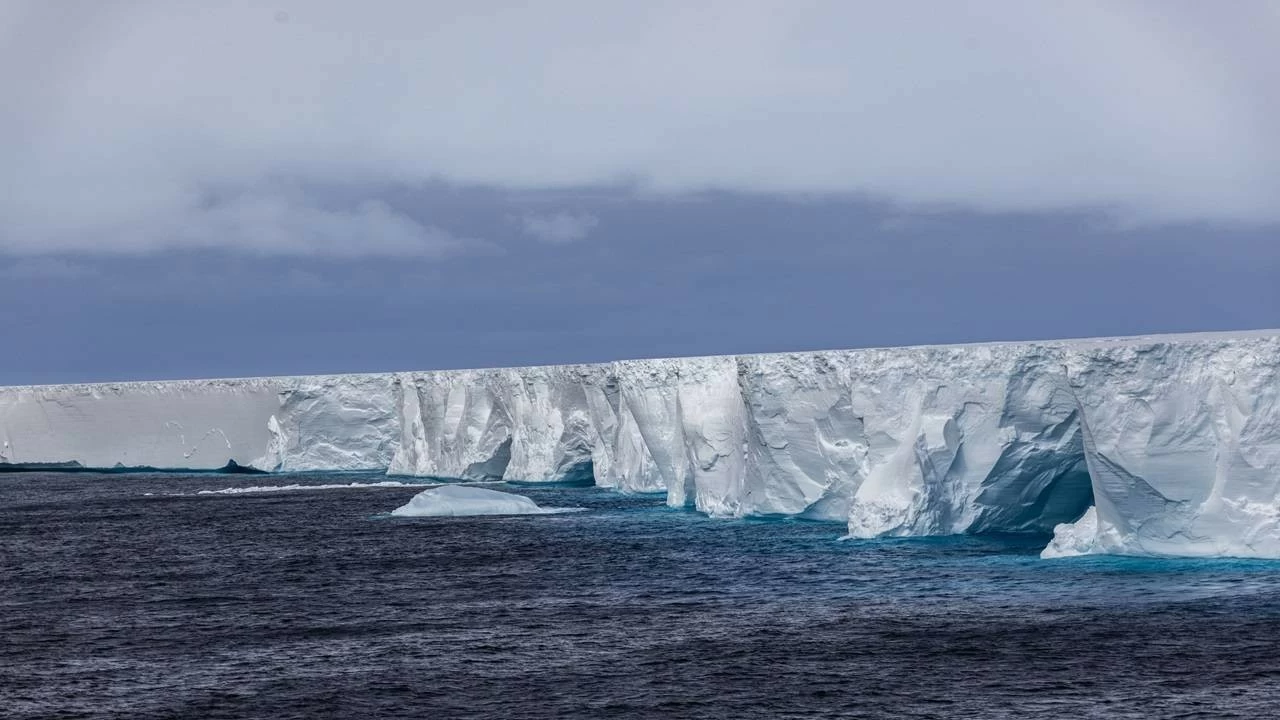


New Delhi: It's a giant wall of ice but is crumbling and will vanish soon. A23a -- still the world’s largest iceberg -- is rapidly breaking up into several very huge chunks. Scientists have warned that the disintegration means the iceberg could disappear within weeks.
The iceberg once weighed almost a trillion metric tonnes (1.1 trillion tons) and covered 3,672 square kilometers. It has been under close scientific observation since it broke away from Antarctica’s Filchner-Ronne Ice Shelf in 1986. Since the 1980s, A23a has consistently held the title of the “world’s largest iceberg”. It has occasionally been overtaken by bigger but shorter-lived competitors like A68 in 2017 and A76 in 2021. The disintegration of A23a will make D15a -- measuring around 3,000 sq km -- as the world's largest iceberg.
The iceberg is breaking apart quickly, giving away huge pieces that the US National Ice Center classifies as large icebergs in their own right. The size of some of the broken off chunks is 400sq km. The “megaberg” has now shrunk to around 1,700 square kilometers — about the size of Greater London.
Scientists from the British Antarctic Survey (BAS) said that the iceberg, once as large as Rhode Island, has shed about 80% of its mass since May. This giant iceberg split from Antarctica’s Filchner-Ronne Ice Shelf in 1986 and stayed grounded on the seabed of the Weddell Sea for over 30 years.
Andrew Meijers of the British Antarctic Survey said: "I'd say it's very much on its way out...it's basically rotting underneath. The water is too warm for it to maintain. It's constantly melting."
A23a remained stuck to the bottom of Antarctica’s Weddell Sea for over 30 years, until it likely got small enough to float free. In 2020, it started drifting, likely because the ice holding it to the seabed had melted. It again became stuck in a Taylor column — the name given to a spinning vortex of water caused by ocean currents hitting an underwater mountain. The iceberg freed itself in December 2024. In March this year, it got stuck on a continental shelf but broke free and floated away again in May.
As A23a drifted northwards, it was caught by the strong Southern Antarctic Circumpolar Current Front (SACCF), which is now causing it to break up rapidly.
Since ice shelves already float, their melting doesn’t directly raise sea levels. But, when ice shelves shrink, they no longer block land-based glaciers, allowing them to flow into the ocean — and that’s what can push sea levels up by several feet (meters).
Andrew Meijers, an oceanographer at BAS, was quoted as saying to CNN: "...Ice shelves have lost trillions of tons of ice through increased iceberg formation and melting over the past few decades, much of which is due to warming ocean water and changes in ocean currents."
The breaking apart of A23a will have a significant impact on seabed organisms and marine life in the surrounding waters. It will also cause shifting of salinity levels and disturb the fragile balance of thermohaline circulation. This disruption could also influence weather patterns across continents.
Scientists have sounded a stark warning that the continued melting of Antarctic ice could have widespread impacts. It can disrupt global ocean currents and damage ecosystems. A23a originated in the West Antarctic Ice Sheet, which is showing signs of instability.