Sign In
By signing in or creating an account, you agree with Associated Broadcasting Company's Terms & Conditions and Privacy Policy.
By signing in or creating an account, you agree with Associated Broadcasting Company's Terms & Conditions and Privacy Policy.
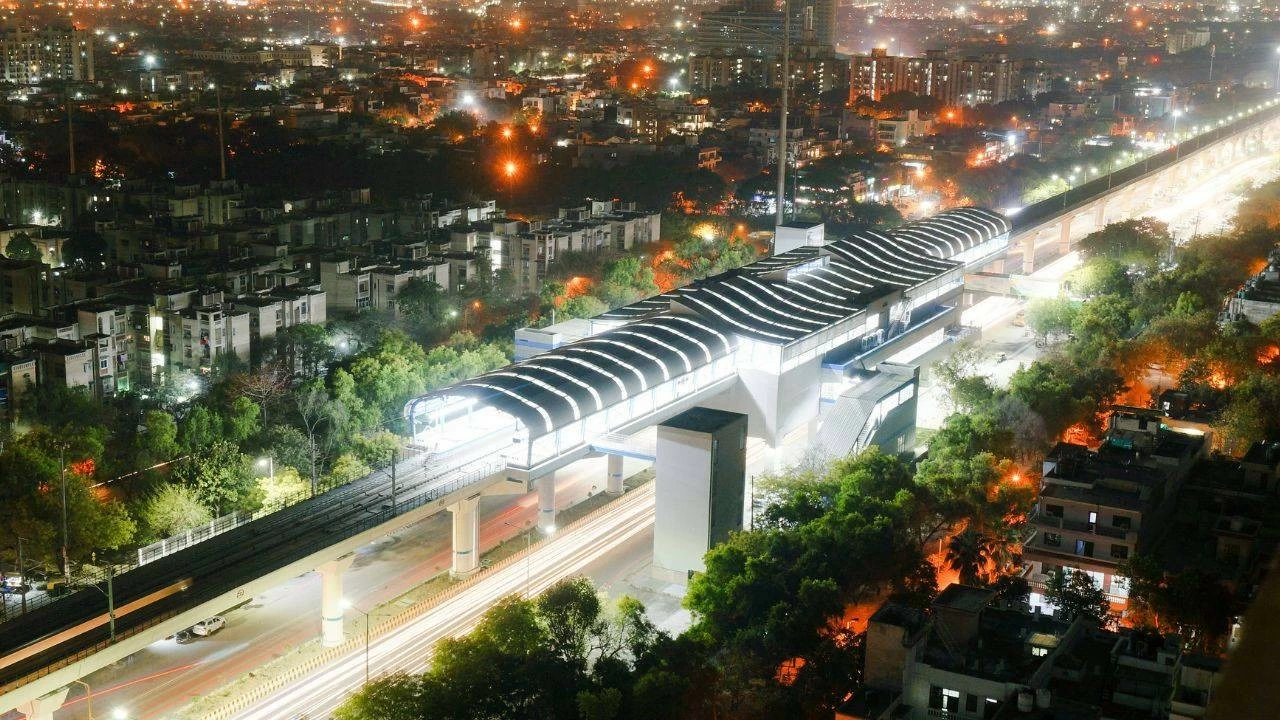


Bengaluru: Traffic is one of the biggest and most controversial problems in the IT capital of India. The large number of privately owned vehicles, especially those heading to offices during peak hours, makes travel increasingly difficult. This necessitates the need for greater use of public transportation, such as the Metro. Compared to Delhi's metro system, Bengaluru's Metro is still in its initial stages of development. Given the state of traffic, the city urgently requires a more extensive metro system.
Currently, the Bengaluru Metro has operational lines (Purple and Green) with a total length of 76.95 km and 69 stations making it the second longest operational metro network in India, just behind Delhi.
The Purple Line which is 43.49 km long connects Challaghatta and Whitefield and has 37 stations. The Green Line from Madavara to Silk Institute is 33.46 km long and has 32 stations. These lines were constructed under Phase I of the Bengaluru Metro and were expanded in later phases. However, a large portion of the city remains disconnected from Metro.
The BMRCL is currently working on extending the metro system to other parts of the city. This includes construction of multiple new corridors and expansion of existing corridors. Three new corridors: Yellow, Pink and Blue are currently under construction. Apart from these, plans for construction of three other corridors: Orange, Grey and Red have been approved.
The phase two of Bengaluru Metro includes the extension of the existing Purple and Green Lines and the construction of three new lines.
The Yellow Line lies between Rashtriya Vidyalaya Road and Bommasandra. Its length is 18.82 kilometres and it has 16 stations. The line runs along ORR and Hosur Road in an elevated structure. It intersects with the upcoming Pink Line at Jayadeva Hospital Station and with the Blue Line at its terminating station, Central Silk Board. The line connects the Electronic City with the Bommasandra industrial area. The operations in the line have been facing several delays due to difficulty in procuring Metro trains for it.
The Pink Line connects the south and north of the city from Kalena Agrahara (south) to Nagawara (north). The total distance covered by it is 21.25 km and has 18 stations. The line will intersect the Yellow Line at Jayadeva Hospital and the Purple Line at Mahatma Gandhi Road. The line is expected to get completed in 2025-26.
The total length of the line will be 58.19 km with 32 stations. The line will be constructed in two parts of Phase II. Under Phase 2A, it will be developed from the Central Silk Board to Krishnarajapura and in Phase 2B, it will be built from Krishnarajapura to the KIA airport. The line is expected to open in June 2026.
Apart from three under-constructed lines, BMRCL has also planned three lines for further extension of the Namma Metro. These include Orange, Grey and Red Line.
The Orange Line of the Namma Metro, also named ORR-West Line, has been planned to serve primarily the industrial areas, educational institutions, and manufacturing units. Its total length will be around 42 km, with around 22 stations in corridor I and 11 in corridor II. The route would connect the southern parts of Bengaluru. The line was approved by the Central Government in August 2024 and is slated to be completed by 2029.
The Grey Line is the seventh corridor in Bengaluru Metro, which will have a 12.5 km route connecting Hoshalli to Kadabagere. The route planned under Phase 3 of the Bengaluru Metro will connect the western parts of the city. The corridor will run along Magadi Road connecting Hosahalli to Kadabagere with 9 stations. The construction of the two planned lines, Orange and Grey, is expected to cost around Rs 156.1 billion.
The Red Line of the Namma Metro connecting Hebbal with Sarjapura is proposed to be built in the 3A of the Bengaluru Metro. The total length of the line is supposed to be around 37 km with 28 stations. The corridor has been approved by the Karnataka Government; however, it is yet to be approved by the Central government as it holds a 50 per cent stake in the network. The project is estimated to cost around Rs 16,543 crore.