Sign In
By signing in or creating an account, you agree with Associated Broadcasting Company's Terms & Conditions and Privacy Policy.
By signing in or creating an account, you agree with Associated Broadcasting Company's Terms & Conditions and Privacy Policy.



New Delhi: Establishing a medical college in India requires strict compliance with regulatory norms and standards. The aim is to ensure that medical education meets national standards along with skilled doctors. The process involves multiple approvals, inspections and adherence to guidelines laid down by the National Medical Commission (NMC) which regulates medical education in India.
In recent years, several new medical colleges have been set up across the country. However, the process is highly structured to maintain quality and prevent institutions from compromising on infrastructure, faculty or clinical training.


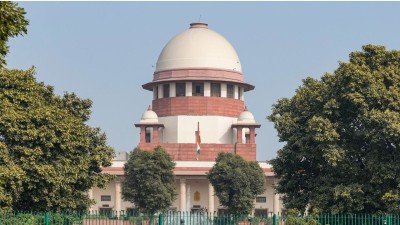
The National Medical Commission (NMC) is the apex body that regulates medical education and practice in India. It replaced the Medical Council of India (MCI) in 2020. The NMC ensures that all medical colleges meet minimum standards for infrastructure, faculty, patient exposure and academic curriculum.
Any institution planning to offer Bachelor of Medicine and Bachelor of Surgery (MBBS), Doctor of Medicine (MD) or other medical courses need to obtain recognition from the NMC before it can admit students. This recognition ensures that the college’s degrees are valid and recognised across India.
Establishing a medical college begins with forming a trust, society or company under the relevant state laws. The institution must acquire adequate land, build academic blocks, hostels, laboratories and hospital facilities. The NMC has strict norms regarding land area, hospital bed strength, lecture halls, library and other facilities.
The institution also needs a teaching hospital attached to it. This hospital provides students with practical experience and ensures sufficient patient exposure which is crucial for clinical training.
The next step involves submitting a detailed proposal to the NMC which includes-
The NMC reviews the proposal and may seek clarifications or modifications before granting a Letter of Permission (LoP) to start the medical college.
After the proposal is approved, the NMC conducts physical inspections of the college and hospital. Inspectors verify compliance with infrastructure, faculty strength, hospital bed occupancy, laboratories and clinical material.
Only after satisfactory inspections can the college start admissions for the MBBS course. The NMC may grant permission for a specific number of seats, which can increase in subsequent years if standards are maintained.
Medical colleges must be affiliated with a recognised university to award degrees. Affiliation ensures that the curriculum, exams and academic standards align with national norms. After affiliation and inspection, the NMC grants recognition, confirming that degrees awarded by the college are valid.
The college must undergo periodic inspections to retain recognition. Any deviation from NMC norms can result in withdrawal of approval.