

Sign In
By signing in or creating an account, you agree with Associated Broadcasting Company's Terms & Conditions and Privacy Policy.
By signing in or creating an account, you agree with Associated Broadcasting Company's Terms & Conditions and Privacy Policy.
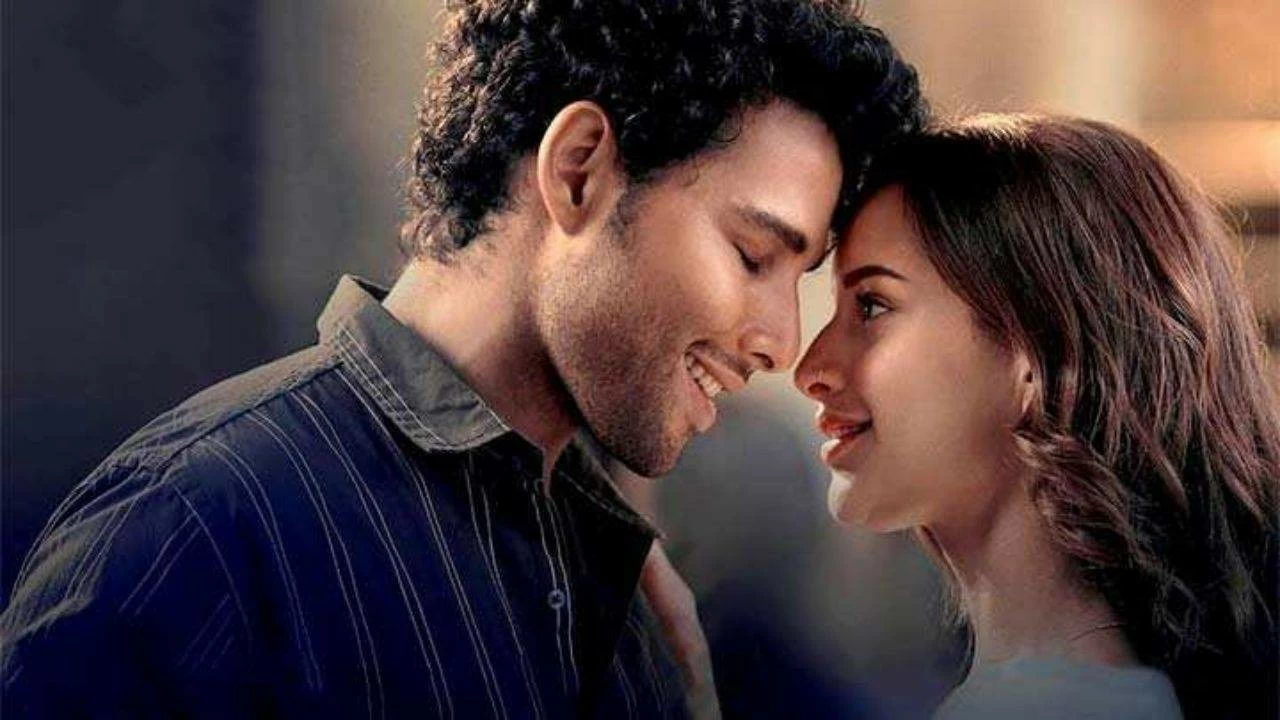

New Delhi: Triptii Dimrii and Siddhant Chaturvedi’s romantic drama, Dhadak 2, is scheduled to release on August 1. Ahead of the film’s grand release, Triptii Dimri and Siddhant Chaturvedi spoke to TV9 English Digital exclusively about Dhadak 2, the caste, the process and unsolicited advice people give them.
Q. How important is this subject in today’s time?
Triptii: I think it’s very important. There’s a line in the trailer where you see my character saying, “I used to think this only happened years ago, in some village.” What we don’t realise is that it’s still happening. A major section of society still practices things like this. And it’s not fair. You can still understand it, maybe, if someone comes from an unprivileged background or hasn’t had access to education. But when someone is educated, living in cities like Mumbai or Delhi, surrounded by evolved, aware people—and they still believe in these things—that’s when you really start to question: Why is this still happening? It’s not always in big, dramatic actions. It shows up in the smallest of things—like giving someone a separate cup to drink from. And that’s where the problem lies.
Q. Yes, that happens even today. Especially in villages.
Siddhant: It’s become a part of culture.
Triptii: But it’s wrong. We grew up seeing these things, but we didn’t have the awareness to question them. We thought it was the normal thing to do. But now, we’ve studied, we’ve observed, and we’ve realised it’s wrong. Now is the time to talk about it.I’m glad a film like this is coming out. At the very least, it creates awareness. Even if people are doing these things without thinking—without realising the consequences, it’s still wrong on so many levels.
Q. And Siddhant? What do you have to say?
Siddhant: You know, there’s a line in the trailer where my mother says, “We have fallen to a level where we’ve forgotten how to rise again.” I think this subject has always been both prevalent and relevant. It’s not the first time a film is being made on it—and I don’t want this to be the last one either. Films like this should serve as gentle reminders to the audience. We tend to think that because we saw such films in the 50s, 60s, 70s, or even in the 90s, these issues must have been resolved by now.
Q. Yes, a lot of social cinema was made back then.
Siddhant: And today, it feels like not enough of that kind of cinema is being made. We assume that because we don’t see these things on screen, they no longer happen. But this film acts as a quiet reminder. A film can be a love story, it can be entertaining and musical—but it should also say something meaningful that stays with the audience. It shouldn’t be that you just watch cinema for the sake of it. It should feel wholesome. There should be a story, a world, built honestly by the creators and actors—that deserves to be seen. I think that’s very important, not just now, but in the times to come as well. Films like this should continue to be made. And as for discrimination—we see it every day. Whether it’s about caste, religion, language, clothing, or gender—these are ongoing issues. We can’t expect cinema to fix society. That’s not what it’s for. But what we can do is create an impact, spark a thought, maybe cause a ripple that lasts for some time. I’m not even saying, “Come and educate yourself,” because that’s not our job.
Q. You’re trying to tell a story.
Siddhant: Yes. We are telling a story—one that may touch you or inspire you. Maybe it will speak to you in a way that stays with you. For me, it’s not about expecting people to get educated by it. I’m just saying—come, watch the film, be entertained, and try to feel the story and what we’re trying to say through it.
Is there any experience you want to share where something like this has happened?
Triptii: I think we’ve all grown up hearing such stories.
Siddhant: When you come from a middle-class family, this isn’t something you can avoid. Both of us come from smaller cities, and this kind of thing happens a lot there.
Triptii: I used to hear things like—some cousin is getting married, but the family isn’t going because they oppose it. The poor cousin ends up alone at her own wedding. She may have wanted to invite everyone, but no one is willing to come. They use the excuse that our name will get spoiled if we attend. And then, five years later, the same family is at her house—eating, drinking, celebrating.
Triptii: Yes, time changes things. But her most important day was ruined, right? If the family has to accept it eventually, then why not accept it then? I think we’ve seen this more in the smaller things than the big ones—like the example I gave earlier, about giving someone a different cup. Or restricting them from going into certain rooms. Or not allowing them to speak freely. These are things we’ve heard about since childhood—especially if you visit villages, where it’s even more prevalent. Yes, times are changing. But even now, the change hasn’t fully come. People are still stuck in old ways. And I hope that people who still believe in such things, when they watch this film, take something meaningful back with them. That they understand—on some level—what it feels like to not be treated as a human being. What the other person might be going through.If that happens, then I feel we’ve achieved something through this film.
Q. Have you experienced something like this close to home—in friends or family?
Triptii: Friends, yes. I’ve heard such stories from friends. Like the example I gave about the wedding the family wasn’t attending. And as a kid, you don’t question it. You know it’s happening, but you don’t ask why. What’s the problem? I think no one talks about it, and if you try to bring it up, people don’t really have any answers.Bharti: It’s conditioning that happens over time.
Triptii: Yes, it’s conditioning.
Q. To play this character, what was your process?
Triptii: I think the process is different for every film. For this one, we really tried to stay as real as possible to the character.
Q. Was there a reference for this character?
Triptii: We didn’t take any specific reference, but our director made sure we had enough workshops. For the first couple of weeks, the entire cast was involved in them. In the beginning, there were a lot of games—so we could get to know each other. Because when you watch the film, you’ll see that we really do feel like a family on screen, and that wouldn’t have been possible without building that rapport. If we had been awkward with each other, we wouldn’t have been able to achieve that realism. So I think the first step was eliminating that awkwardness. And the workshops had some brilliant acting exercises that really helped us get closer to our characters.
Q. How much did you understand Siddhant?
Triptii: Siddhant? Quite a lot. Whatever inhibitions we had with each other vanished within the first few days. We became friends very quickly. And when you play those games and do acting exercises together, it helps you open up. Then it just feels like two friends working together—and that’s exactly how the workshops went. By the time we were on set, the atmosphere had completely changed. No one was pretending. Everyone was laughing and joking around between takes—even while we were shooting some extremely heavy and serious scenes. I think we were able to retain our energy till the very end of the shoot because of that. If we had to perform intense scenes without that kind of environment, I don’t think we would’ve made it through the project the way we did. But we were surrounded by people who were jolly and warm. Honestly, I don’t think I’ve laughed as much during any shoot in my life. That really helped us decompress after performing those intense scenes. We were able to tell a very important story while also staying light and having fun.
Q. And Siddhant, you? How much do you think you’ve understood?
Siddhant: I’m still understanding! But there was already a sense of familiarity. We both come from the same socio-economic background. Our journeys have been quite similar—no one really launched us. It’s the audience that made both of us. That so-called “overnight success” happened for us in a similar way. But we both had done work before that one breakthrough film. So we found common ground there. We come from smaller cities, we have a similar sense of humour, similar tastes—even in food! And then, of course, through the workshops we got to know each other better. I realised everything with Tripti was very chill—it was going to be great fun working together. I was really looking forward to going to Bhopal, and I just knew it would be fun. And it was. Even when we had to shoot intense scenes, we were pulled right out of that energy with all the laughter that was constantly there on set.
Q. That must have taken time. Because the kind of character you played was quite intense. How did you detox or come out of it?
Siddhant: It did take time. I stayed away for about three months. The character, and the region whose story I was embodying—I had spent a lot of time understanding both. So, naturally, it stayed with me for a while. I didn’t want to just drop it immediately. I wanted to really feel everything I was going through, so that when I finally performed on screen, it would come from a place of integrity and honesty. I stayed in that zone for as long as I could.
Q. Did the character weigh on you a lot?
Siddhant: Oh yes, it did. You’ll see that when you watch the film. The trailer is just ten percent. We’ll talk more after you’ve seen it—but yes, it did weigh on me. And honestly, that’s what makes it fun and challenging for me—to do something that isn’t easy. Anyone can do what’s normal. But if I want to stand out, if I want to feel like my craft is growing, then I can’t keep choosing what’s easy. Yes, I will do commercial films. I’ve grown up watching them—I’m a huge fan of Govinda, Salman, and Shah Rukh. I love that kind of cinema, and I will keep doing it. I’m doing some of that now, with films alongside Jaya Bachchan and Wamiqa. Those films are fun, they’re entertaining. But in between, I also feel the need to do something that says something. I feel a sense of responsibility—as an actor, and in the choices I make. I always feel this urge to push myself. Because how else will you stand out? How else will you go to bed at night feeling like, Yes, I’m a good actor? That feeling won’t come if you keep doing the same thing over and over. When I talk to myself, that’s not something I want to hear—that I played it safe. I want to keep pushing myself, even into the dark, uncertain spaces where I don’t know how I’ll manage—but I’ll find a way to see it through.
What about you?
Triptii: A hundred percent. I think every actor should constantly challenge themselves—otherwise, there’s no growth. I’ve had this conversation with many directors too: whenever you go on set, you carry a certain stillness with you. Whatever you do, you have to do it from scratch, and I think that’s what keeps it fresh. That’s when new ideas come in. If you keep doing the same kind of work, at some point you’ll enter a comfort zone. Your work might still be good—but it becomes boring over time. And where boredom enters, things start ending. When you read a scene, it should make you nervous—even a little scared. I think that’s important. That fear of how you’re going to achieve it. The moment you start feeling like, “Oh, this is easy,” that’s actually when you should be worried. So the constant effort is: whichever story or character you read, it should feel exciting—and a little scary. You should feel like, performing this is going to be fun, but also a challenge. Going to set every day and playing with that character, interacting with your co-actors—I look at it like play. Every day, the rules are different. And that’s what makes it fun. You end up learning so much—about yourself, your co-actors, the scenes, the world of the story, even your own emotions. You grow. You really learn a lot.
Q. I remember watching your interview where you mentioned that you would straigthen your hair and go for auditions as people that heroes with curly hair don’t work?
Siddhant: That kind of thing keeps happening. What’s in fashion at the time—that’s what people want. Back then, when people were casting, they used to be very particular and say, this is the kind of actor we want, mostly based on how you look. Probably because other successful actors at the time looked a certain way. It becomes a trend.
Q. But has that changed?
Siddhant: You still have to fight for your identity. You are who you are, and you should accept that and say it out loud. No, I don’t think it has changed. A friend of mine—he’s a casting director, and we’ve known each other since our theatre days—he told me something recently. He got a call from his senior asking for a new face, but similar to two specific actors. So it became confusing—are you looking for a new face, or just another version of someone who already exists? That kind of limited imagination is a real issue. And the irony is, this entire industry is built on imagination. But sometimes, you can’t find any. It’s strange that an industry rooted in creativity can still lack imagination in certain places. So yes—you have to fight for your own identity. I used to feel conscious because I had curly hair. And back then, the superstars all had straight hair. So I would straighten mine. My mom always told me I looked beautiful just the way I was—which is something every mother says—but I wouldn’t listen. I’d tell her, “I want hair like Shah Rukh.” Later, when I was in college, I wanted Ranbir Kapoor’s haircut. Then Ranveer Singh came along, and I wanted hair like his. But my hair just wasn’t going to be like theirs—because it was curly. And slowly, I realised… what I already have is good.In my first film, I barely had any hair—they were cut really short. Over time, I’ve spent a lot of energy trying to find my identity. And it does take time.
Have you finally found yourself?
Siddhant: I keep finding myself—and then, consciously and purposely, I start losing myself after every film. I let go. Because that’s part of the process: learning and unlearning. The day I define myself—say, “Siddhant Chaturvedi is an actor with curly hair”—that’s the day I stop growing. That’s the day the actor in me dies. So I keep searching for myself to sustain that spirit… and then, before every new film, I let go again. What kind of person or form I take next depends on the character. What kind of character is it? What are their features, their clothes, hair, body language? To find that, and then lose it—that’s the duality. And I think that duality should always remain.
Q. Triptii, what kind of unsolicited advice have you received from people?
Triptii: I’ve received a lot of unsolicited advice. Not so much on my looks, but definitely when it comes to films. I remember when I got the script for Bulbbul, a lot of people told me not to do it. At the time, OTT was still very new—Bulbbul was one of the first eight films to release on OTT. People questioned my decision because I had already had a theatrical release with Laila Majnu. They couldn’t understand why I would shift to OTT so soon. They said things like, “Don’t put all your eggs in one basket,” or “This might not be good for your image. “Some even questioned why I’d wear a saree and play a character that looked older than I was. They said it would stereotype me—that once people saw me like that, they’d never be able to see me in any other way. And yes, these things can be distracting. I remember going for the look test, wearing the saree and jewellery—and for thirty seconds, even I questioned myself. Am I doing the right thing? But when I met the director and heard the story, I knew I wanted to be a part of it. This was a story I wanted to tell—regardless of what I gained from it. Even if it didn’t do anything for my career, I knew the experience itself would be worth it. And honestly, I think we, as actors, work for that experience. Everything else—fame, money—all of that will fade someday. But the memories, the experience, that’s the real wealth. Fifty years from now, I might not have this fame. People might not queue up to interview me. But the memories will still be mine. And I think that’s what we really work for.
[Interview by Bharati K Dubey]