Sign In
By signing in or creating an account, you agree with Associated Broadcasting Company's Terms & Conditions and Privacy Policy.
By signing in or creating an account, you agree with Associated Broadcasting Company's Terms & Conditions and Privacy Policy.


New Delhi: Modern Indian history is filled with powerful political movements that have shaped the nation’s democracy, challenged authority, and transformed public consciousness. These movements were not just events—they were mass mobilisations driven by ideology, injustice, or the demand for systemic change. While there are many such movements, here are five of the most influential ones that left a deep impact on Indian politics and society.
Also known as the Total Revolution, this movement led by veteran socialist Jayaprakash Narayan (JP) marked one of the strongest civil uprisings against a sitting government in independent India. Sparked by corruption and unemployment under Indira Gandhi’s Congress regime, the protests began with student unrest in Bihar and Gujarat and quickly evolved into a nationwide anti-Congress campaign. The movement brought together opposition parties and civil society against authoritarianism, culminating in the declaration of the Emergency in 1975. Many future political leaders, including Lalu Prasad Yadav, Nitish Kumar, and Narendra Modi, were shaped during this period. The movement laid the groundwork for the defeat of the Congress in the 1977 general elections and the formation of India’s first non-Congress central government.
The implementation of the Mandal Commission recommendations by Prime Minister V.P. Singh in 1990 sparked one of the most polarising movements in India’s post-independence history. The decision to extend 27% reservations to OBCs (Other Backward Classes) in central government jobs and educational institutions triggered mass protests, especially from upper-caste students in North India. The movement witnessed dramatic acts of self-immolation and violent clashes, reflecting the deep caste tensions within Indian society. While the protests were aimed at reversing the reservations, they unintentionally catalysed the rise of OBC-based regional parties like the Samajwadi Party and RJD, reshaping the political map of North India for decades.
In 2011, social activist Anna Hazare led a mass protest demanding the establishment of a Jan Lokpal (independent anti-corruption ombudsman). Sparked by public anger against major corruption scandals like the 2G spectrum and Commonwealth Games scams under the UPA government, the movement drew lakhs of people, especially urban youth, to the streets of Delhi and beyond. It was heavily broadcast and supported by mainstream and social media. While the Lokpal Bill was eventually passed in a diluted form, the movement’s bigger impact was political: it led to the creation of the Aam Aadmi Party (AAP) and catapulted Arvind Kejriwal to power in Delhi. It also signalled a new era of citizen-led protests in the digital age.
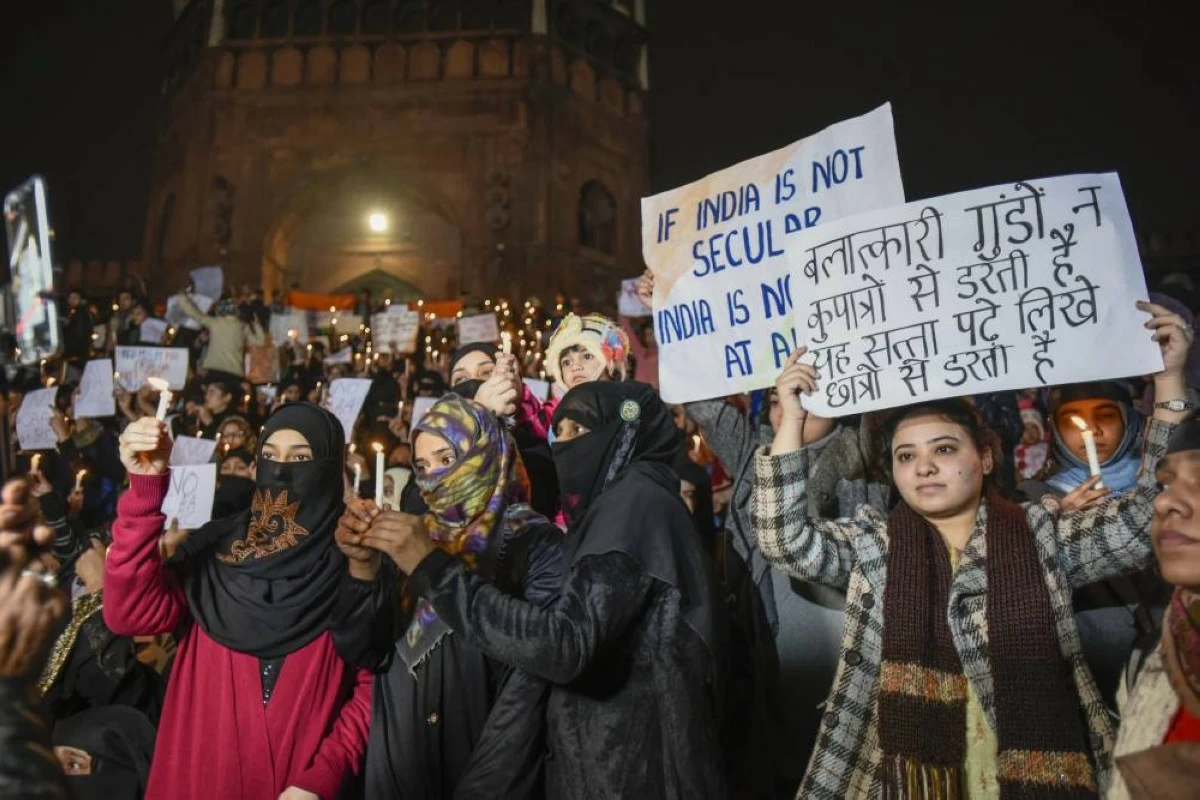
The passage of the Citizenship Amendment Act (CAA) in December 2019 triggered nationwide protests, especially among students, civil society groups, and Indian Muslims who feared it could be used in conjunction with the NRC (National Register of Citizens) to strip them of citizenship. The movement saw unprecedented participation by Muslim women, most notably at Shaheen Bagh in Delhi, where a peaceful sit-in protest became a national symbol of resistance. Universities like Jamia Millia Islamia and Aligarh Muslim University also became centres of protest. Though the COVID-19 pandemic halted the protests, the movement marked a critical moment in the defence of secularism and constitutional values in India.
The Farmers’ Protest (2020–2021) was a historic movement against three farm laws passed by the government in September 2020. Farmers, mainly from Punjab, Haryana, and Uttar Pradesh, argued the laws favoured corporations and threatened their livelihoods by weakening price protections. Thousands camped at Delhi’s borders, like Singhu and Tikri, for over a year, facing harsh weather and police resistance. Led by groups like the Samyukta Kisan Morcha, the protests included tractor rallies and nationwide strikes. The movement gained global attention and forced the government to repeal the laws in November 2021. It demonstrated the power of organised farmers and their role in shaping policy, reinforcing India’s agrarian identity.