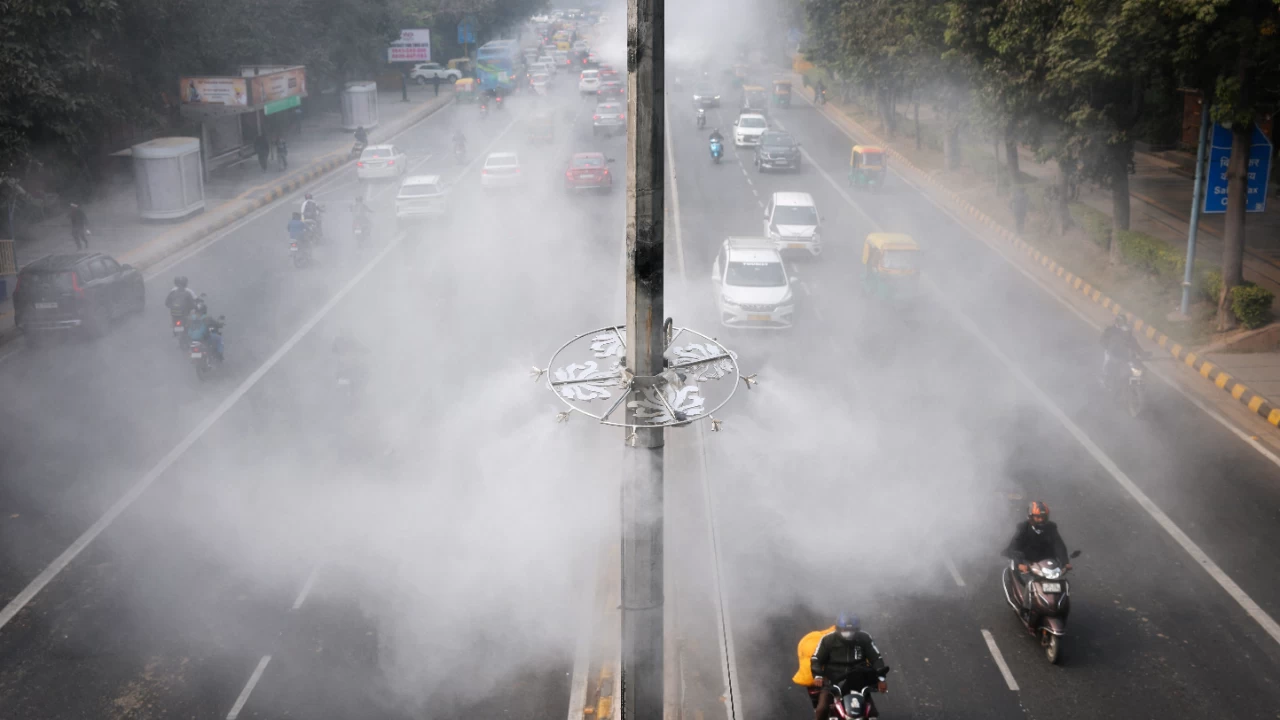
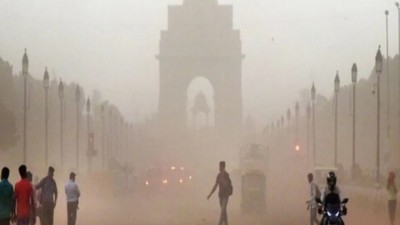
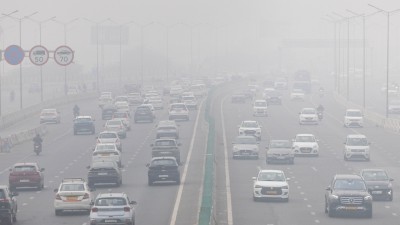
New Delhi: The Supreme Court on Tuesday heard the Delhi air pollution case and took note of the report submitted by the amicus curiae on long-term solutions. CJI Surya Kant said that the amicus curiae's report has suggested permanent measures to tackle pollution.
'Court will be platform for experts to present views'
ASG Aishwarya Bhati suggested that the matter be heard issue-wise. The CJI clarified that the court does not want to assume the role of a “super expert” but will instead be a platform for experts to present their views and adopt the best solution.
Supreme Court raps CAQM
The Supreme Court on Tuesday slammed the Commission for Air Quality Management (CAQM) for adopting what the court described as an “unserious” approach to the Delhi-NCR region's air pollution.
A bench of Chief Justice of India (CJI) Surya Kant and Justice Joymalya Bagchi directed the Commission of Air Quality Management (CAQM) to convene a meeting of experts in two weeks and submit a report on major causes of the worsening pollution.
Failure to identify causes of pollution
The bench observed, "Have you been able to identify the causes of pollution? During all these days, a lot of material is coming into the public domain, experts are writing articles, people are having opinions, and they keep sending it to us via mail. Heavy vehicles are contributing a large part, so the first question is, how do we address that? By holding a meeting on January 2 and telling us that we will come after two months, that is not acceptable to us. The CAQM is failing in its duty."