Sign In
By signing in or creating an account, you agree with Associated Broadcasting Company's Terms & Conditions and Privacy Policy.
By signing in or creating an account, you agree with Associated Broadcasting Company's Terms & Conditions and Privacy Policy.
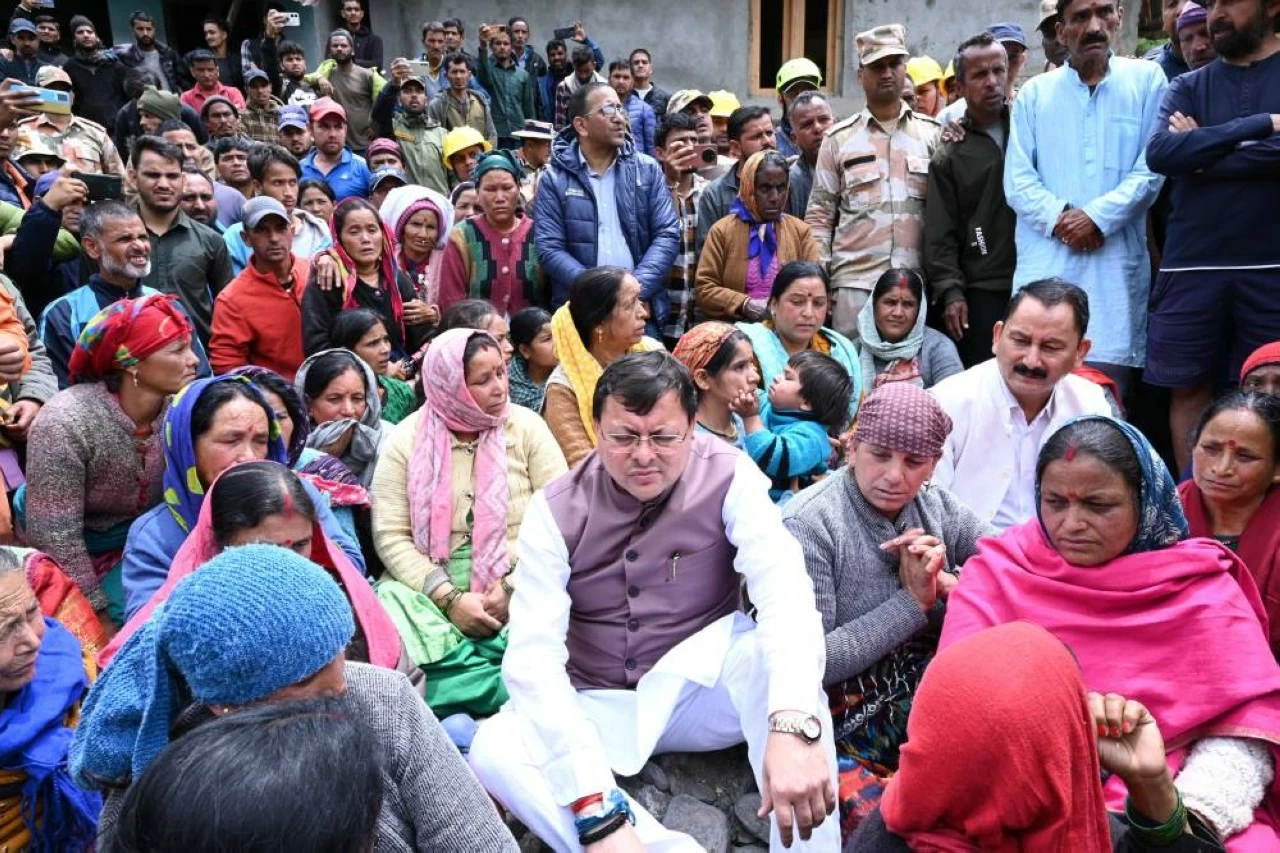


Dehradun: The powerful flash flood that struck Dharali village in Uttarkashi district last week has drastically altered the course of the Bhagirathi River, satellite images from the Indian Space Research Organisation (ISRO) reveal.
The disaster eroded a massive debris fan on Kheer Gad—a tributary of the Bhagirathi—forcing it back to its ancient path and pushing the main river’s flow toward its right bank.

ISRO satellite images revealed the change in course
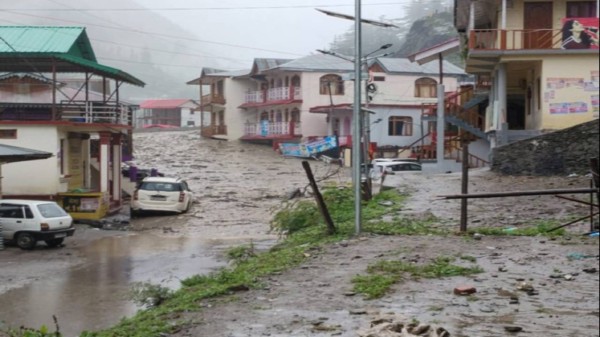
ISRO’s Cartosat-2S satellite captured images on August 7 that show sweeping geomorphic changes compared to pre-disaster visuals from June 2024. A fan-shaped deposit, roughly 20 hectares in size, now sits at the confluence of Kheer Gad and Bhagirathi. The debris has buried buildings, reshaped channels, and transformed the local terrain.
Dharali flood reshapes Bhagirathi River
Senior geologist Piyoosh Rautela, formerly with the Uttarakhand State Disaster Management Authority, explained that the triangular debris fan on Kheer Gad’s left bank had formed during a previous downslope movement. “Traditionally, such deposits were used for agriculture, with homes built on higher, stable ground. But recent tourism and commercial growth led to settlements on unstable terrain,” he said. “The flash flood removed the entire fan, allowing Kheer Gad to return to its old path. This debris has temporarily shifted Bhagirathi’s flow, but the river will eventually erode it.”
This channel shift can wreak havoc downstream
Hydrologists warn that such sudden channel shifts can accelerate water flow, alter sediment transport, and destabilize riverbanks far downstream. These changes threaten bridges, reshape floodplains, and create new erosion-prone zones, forcing riverside communities to adapt quickly.
Dr Jagdish Krishnaswamy, Dean at the School of Environment and Sustainability, Indian Institute for Human Settlements, said the Himalayas’ dynamic geology makes them especially vulnerable. “These are the world’s youngest mountains—tectonically active and sediment-rich. Glacier retreat, intensified by warming, releases vast debris that intense rainfall can mobilise into avalanches and mudslides,” he said. “Embankments may offer an illusion of safety. Infrastructure planning must account for the region’s instability.”
A temporary lake formed in the Bhagirathi river
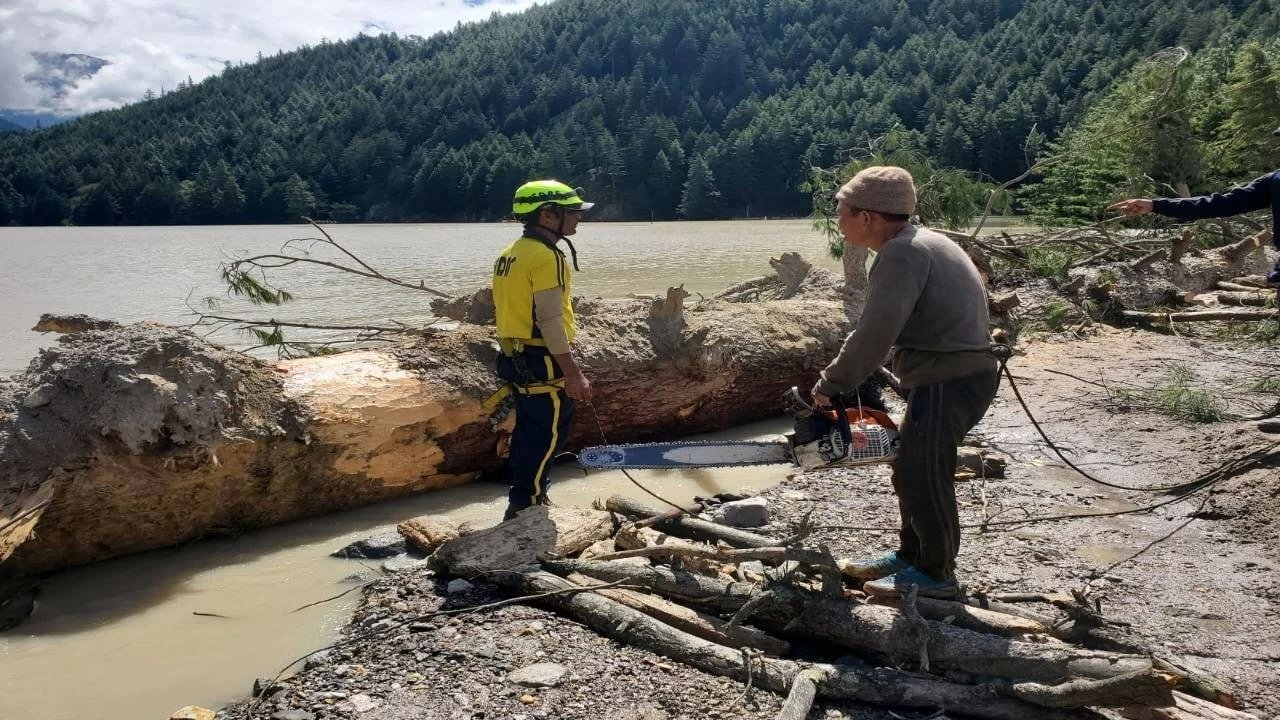
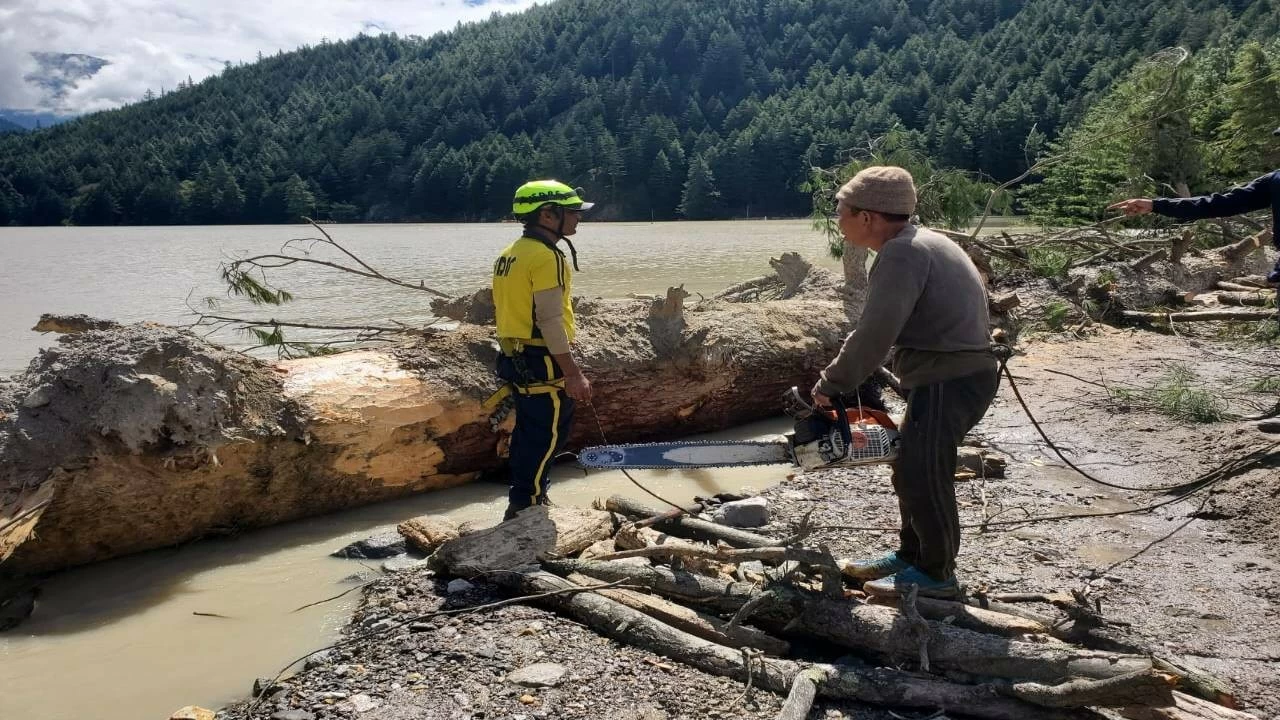
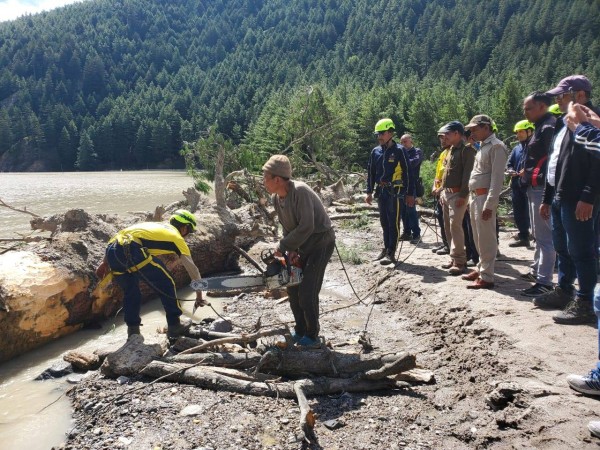
In Harshil, debris from Telgad Ghat has formed a temporary lake in the Bhagirathi river, raising fresh concerns. The Wadia Institute of Geology is studying satellite images to assess the disaster’s causes and the extent of geomorphic change. “Preliminary data shows no major change in flow, but on-site inspection is needed to confirm how much the debris has altered the river’s shape,” said Dr Amit Kumar, a scientist at the institute.
NDMA flagged the lake as a potential hazard
The National Disaster Management Authority has flagged the lake as a potential hazard. Irrigation department head Subhash Kumar confirmed that a cunette—a narrow drainage channel—will be constructed to safely release the water. “Four Pokelin machines have been arranged. They’ll begin work once road access is restored,” he said. Currently, water is leaking from the lake, but officials fear blockage due to uprooted trees.
Water is being drained continuously
Uttarkashi district magistrate Prashant Arya visited Dharali and Harshil to oversee rescue and relief operations. He directed officials to relocate residents living near the river and ensure timely distribution of aid. Arya also inspected the partial lake and instructed agencies to remove debris and trees obstructing drainage. “Water is being drained continuously, but we must act fast to prevent further risk,” he said.
As Uttarkashi grapples with the aftermath, scientists and administrators are racing against time to stabilise the terrain, protect lives, and understand the deeper forces reshaping the Himalayan landscape.