


Sign In
By signing in or creating an account, you agree with Associated Broadcasting Company's Terms & Conditions and Privacy Policy.
By signing in or creating an account, you agree with Associated Broadcasting Company's Terms & Conditions and Privacy Policy.
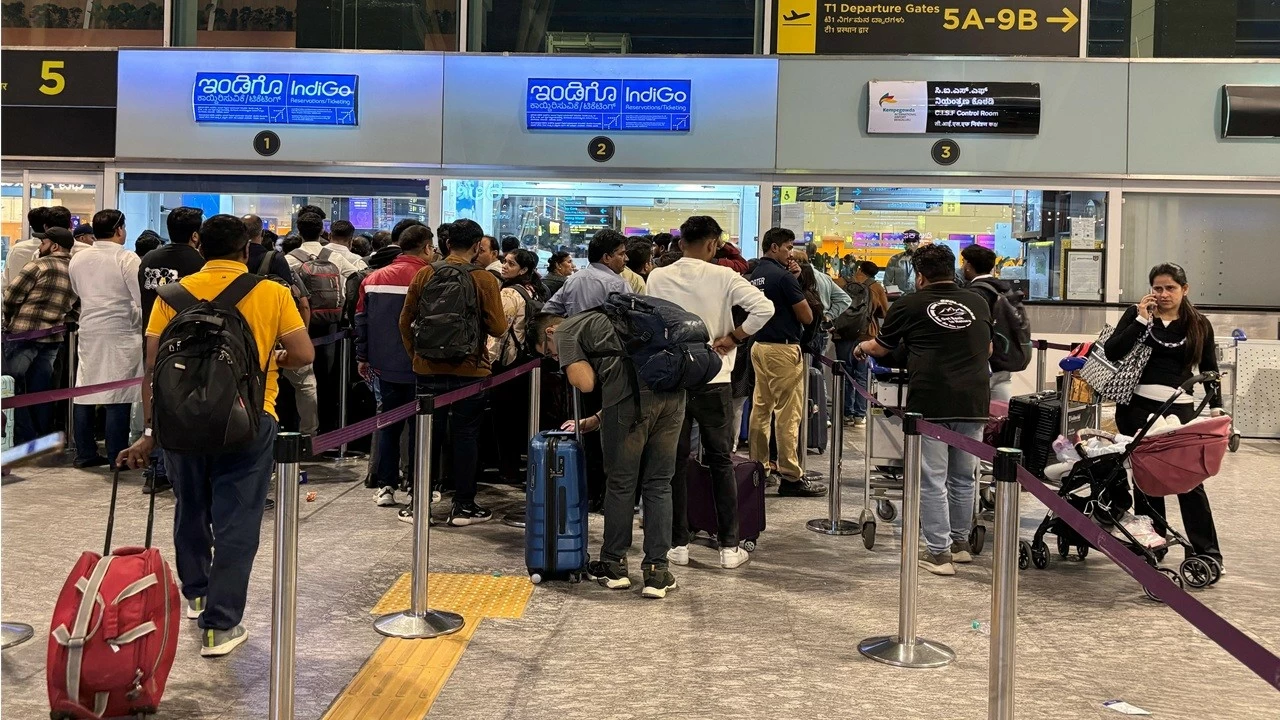


New Delhi: Struck by a massive operational crisis, IndiGo counters at several airports across the country have been scrambling to contain chaotic scenes for the past two days, with passengers expressing their frustration and engaging in scuffle (at some places) over multiple flight cancellations and delays. On Thursday, over 270 IndiGo flights were cancelled at Mumbai, Delhi, Bengaluru and Hyderabad airports, leaving passengers stranded for hours.
The India's largest airline is facing operational problems, mainly due to a shortage of pilots. IndiGo has attributed the operational challenges to "minor technology glitches, schedule changes linked to the winter season, adverse weather conditions, increased congestion in the aviation system and the implementation of updated crew rostering rules (Flight Duty Time Limitations).



While the other reasons cited by the airline are not unusual, the new roster rules, implemented by the Directorate General of Civil Aviation (DGCA) recently, have become a topic of debate. Let's dive into the new norms that are at the centre of the crisis.
What new pilot rest and duty-hour norms say
The airline blamed the new pilot duty norms for the crisis but pilots' body -- the Federation of Indian Pilots -- alleged that "the current disruption is the direct consequence of IndiGo's prolonged and unorthodox lean manpower strategy across departments, particularly in-flight operations". According to IndiGo sources, DGCA's new duty norms, which kicked in on November 1 to combat fatigue and boost rest periods for pilots, have complicated roster management.
Under the latest FDTL regulations, weekly rest periods for flight crew have been extended from 36 hours to 48 hours, night duty window has been extended by an hour, and the number of night landings has been reduced from 6 to 2 per week. Besides, the new rules also capped the maximum flight duty periods and extended the rest hours for pilots after night duty. This means, pilots are supposed to rest for 12 hours rather than 10 hours earlier, after night shifts.
Why new rules hit IndiGo the hardest
The new rostering rules have impacted IndiGo flight operations the most. But why? The scale of its operations could be one of the factors.
IndiGo, which has a domestic market share of more than 60 per cent, operates over 2,200 flights daily and has been steadily expanding internationally. The number of flights the private airline operates in a day is double that of Air India operates daily.
The airline's low-cost policy could also be one of the factors. IndiGo has traditionally relied on high-frequency overnight operations, focusing mainly on increasing flight hours and cutting downtime. All of these are not in tune with the DGCA's new regulations, causing disruptions and chaos

