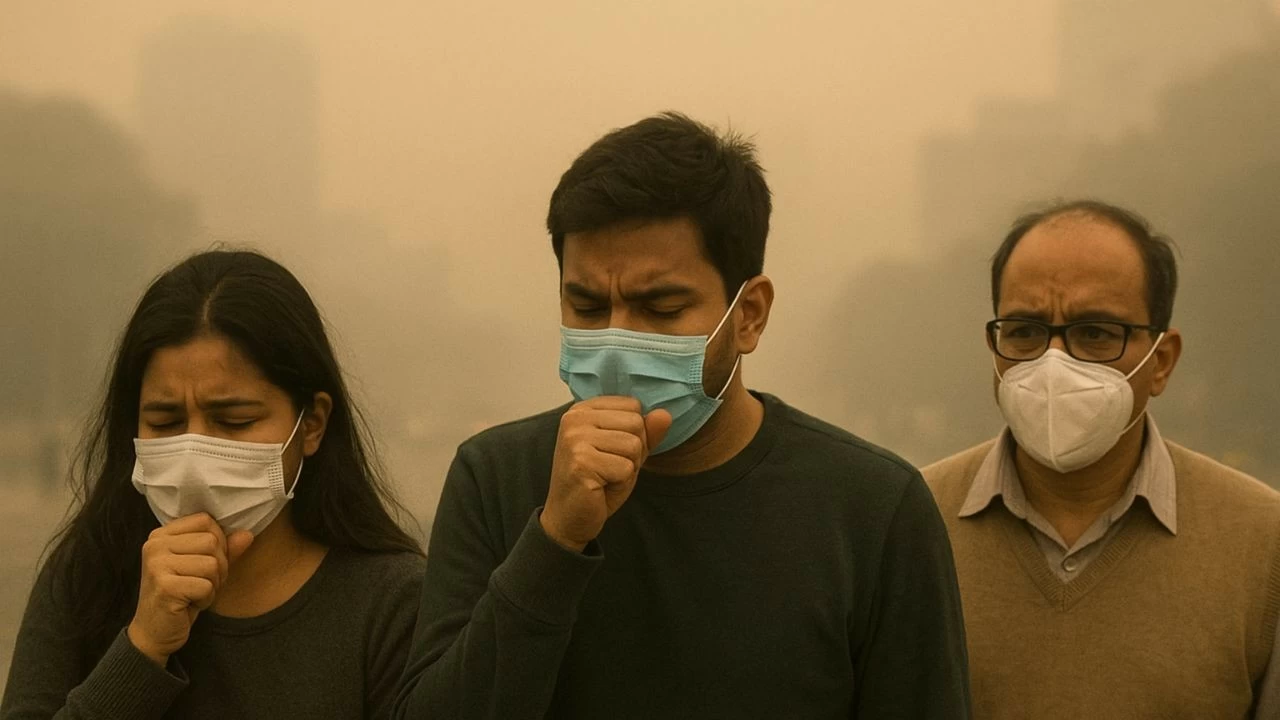
New Delhi: Delhi is currently recognised as one of the most polluted cities in the world. Toxic air, accompanied by a thick layer of smog blanketing large parts of the city, has become a common sight for residents of Delhi and its suburbs. This year, however, the deterioration in air quality has drawn global attention. On Monday, the United Kingdom, Singapore, and Canada issued travel advisories for their citizens travelling to northern India.
The city’s
Air Quality Index (AQI), often recorded in the “severe” category, measures fine particulate matter (PM2.5) at levels nearly 30 times higher than the limit recommended by the World Health Organization. The continuous worsening of air quality has prompted several countries to take precautionary measures for their citizens.
Travelers cautioned in several countries
The Singapore High Commission in Delhi issued an advisory urging travelers to closely monitor their flight status due to frequent cancellations. In a post on X, the commission said, “In light of the Indian Central Pollution Control Board invoking Stage IV of the Graded Response Action Plan, the Singapore High Commission has issued the following advisory for Singapore nationals in the Delhi NCR,” the post added.
Earlier, the UK issued a travel advisory stating that pregnant women and people with heart conditions should consult a doctor before visiting India. It also noted that northern Indian states experience “severe” air quality, particularly between October and February. Children, the elderly, and individuals with pre-existing medical conditions are likely to be most affected, the advisory said.
Canada also issued a similar advisory, advising travellers to regularly check air quality levels before visiting India. It noted that the Indian capital experiences its worst air pollution during the winter season and emphasised the importance of monitoring pollution levels, especially for those with a history of respiratory illnesses.
Chilling temperatures and smog worsen conditions
On Monday morning, Akshardham recorded an AQI of 493, Dwarka plunged to 469, and Barapullah registered 433 — all categorised as “severe.” Visibility has deteriorated rapidly, making travel difficult and discouraging residents from stepping outdoors. The situation has been further aggravated by the cold, with the national capital recording a minimum temperature of 9 degrees Celsius.
According to the weather department, the maximum temperature across
Delhi-NCR today is expected to hover around 23 degrees Celsius, while the minimum temperature is likely to range between 8 and 10 degrees Celsius.