Sign In
By signing in or creating an account, you agree with Associated Broadcasting Company's Terms & Conditions and Privacy Policy.
By signing in or creating an account, you agree with Associated Broadcasting Company's Terms & Conditions and Privacy Policy.
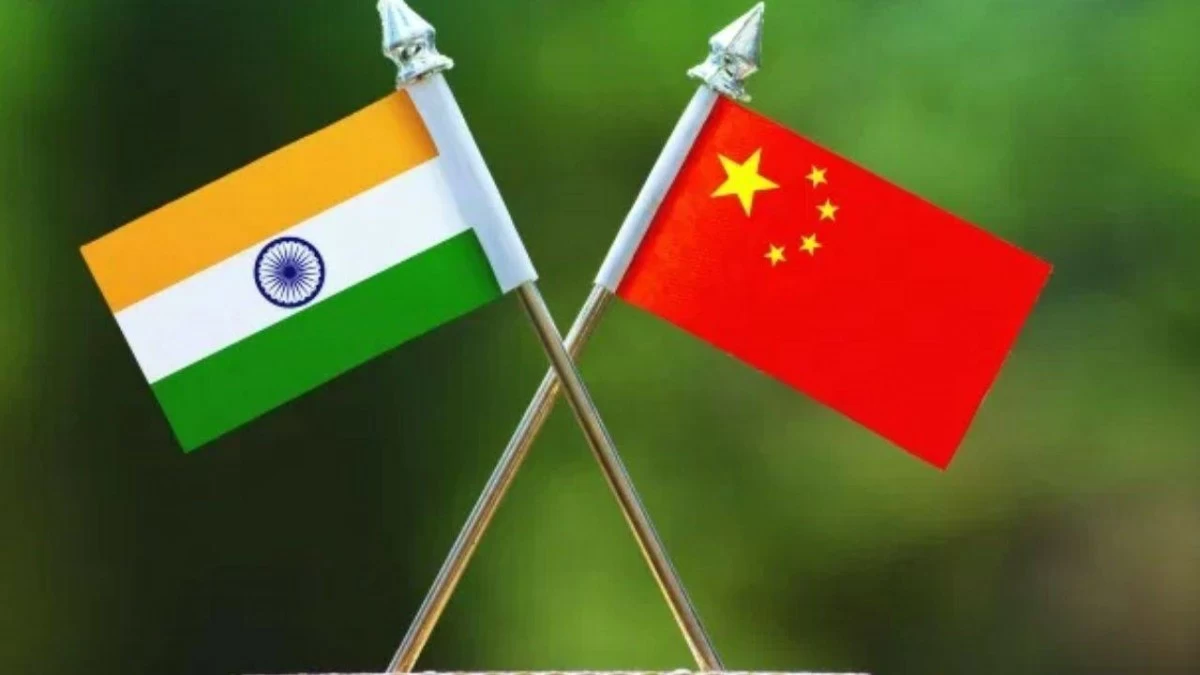


New Delhi: The India-China border dispute is a multifaceted issue which involves historical claims, strategic interests, and geopolitical rivalries. While both Asian giants and economic powerhouses have avoided full-scale war since 1962, skirmishes have been frequent along the Line of Actual Control (LAC), with overlapping claims.
The border dispute has been a complex issue that has shaped both the diplomatic and military relations between the two heavyweights. The decades-long territorial conflict has seen a war, skirmishes, and diplomatic negotiations. The dispute remains a challenge for both the nations as well as for their strategic partners.


The origins of the border dispute can be traced back to the colonial era. The 3,488-kilometre-long LAC that serves as the de facto boundary remains contested with overlapping territorial claims. The dispute primarily involves two regions: Aksai Chin and Arunachal Pradesh, both these territories are claimed by China, while they are inalienable parts of India. China has occupied Aksai Chin for over seven decades and also wants to take over Arunachal Pradesh, which it says is part of south Tibet, of course without any proof.
Post-independence, India inherited its territorial claims from British-era agreements, while China rejected these historical demarcations. The conflict and simmering tensions directly contributed to the 1962 Sino-Indian War. China won the war fair and square and was the first to ceasefire.
One of the most severe confrontations occurred in 2020 in the Galwan Valley, where a violent clash resulted in casualties on both sides. This incident led to an increased military presence in the region. Even after several rounds of diplomacy and military action, the situation remains fragile. Meanwhile, a breakthrough between the countries was achieved after much deliberation.
Following the Galwan incident, China increased its military infrastructure along the LAC, constructing roads, bunkers, and bridges. In response, India also tried to match its adversary and expedited its border infrastructure projects. These infrastructures included the construction of strategic roads, tunnels, and air bases along the LAC.
The conflict influenced both country’s foreign policy, alliances with global powers, and the strategic balance in Asia. It should not be merely seen as a bilateral issue.
In response to China’s assertiveness, India strengthened its ties with the United States, Japan, and Australia under the Quadrilateral Security Dialogue or Quad. The grouping aims to counterbalance China's growing influence and assertiveness in the Indo-Pacific.
China’s Belt and Road Initiative (BRI) has intensified the rivalry, with India opposing the China-Pakistan Economic Corridor (CPEC), which passes through Pakistan occupied Kashmir.
Both India and China are in the process of rapidly modernising their armed forces. India has increased its defence budget, enhanced its missile capabilities, and inducted advanced fighter jets, while China continues to strengthen its military presence through modern warfare technologies, artificial intelligence, and cyber capabilities.
Despite the tensions, China remains India’s largest trading partner. In 2022-23, bilateral trade between the two countries reached a record high of over $135 billion. However, anti-China sentiments in India have led to calls for reducing economic dependency on Chinese goods. This has prompted India to promote self-reliance through the ‘Atmanirbhar Bharat’ initiative. But with a change in power dynamics, especially a combative Donald Trump at the helm of the US, both countries need to enhance the trade which is heavily tilted in China's favour.
The Union government has imposed restrictions on Chinese investments, banned several Chinese apps, and increased scrutiny of Chinese companies. However, complete economic decoupling is very difficult as the country is heavily dependent on China for key raw materials.
There have been major diplomatic initiatives between the countries amid the thaw in the ties, with recent development showing a willingness to work together.
Several agreements, such as the 1993 and 1996 border agreements, aimed at maintaining peace and tranquillity along the LAC. However, their effectiveness has been questioned after recent clashes.
Leaders of both countries, including Prime Minister Narendra Modi and Chinese President Xi Jinping, have held informal summits in Wuhan (2018) and Mamallapuram (2019) to improve bilateral ties.
Both nations are members of international platforms such as BRICS, the Shanghai Cooperation Organisation (SCO), and the G20, where they engage in diplomatic dialogues.