Sign In
By signing in or creating an account, you agree with Associated Broadcasting Company's Terms & Conditions and Privacy Policy.
By signing in or creating an account, you agree with Associated Broadcasting Company's Terms & Conditions and Privacy Policy.
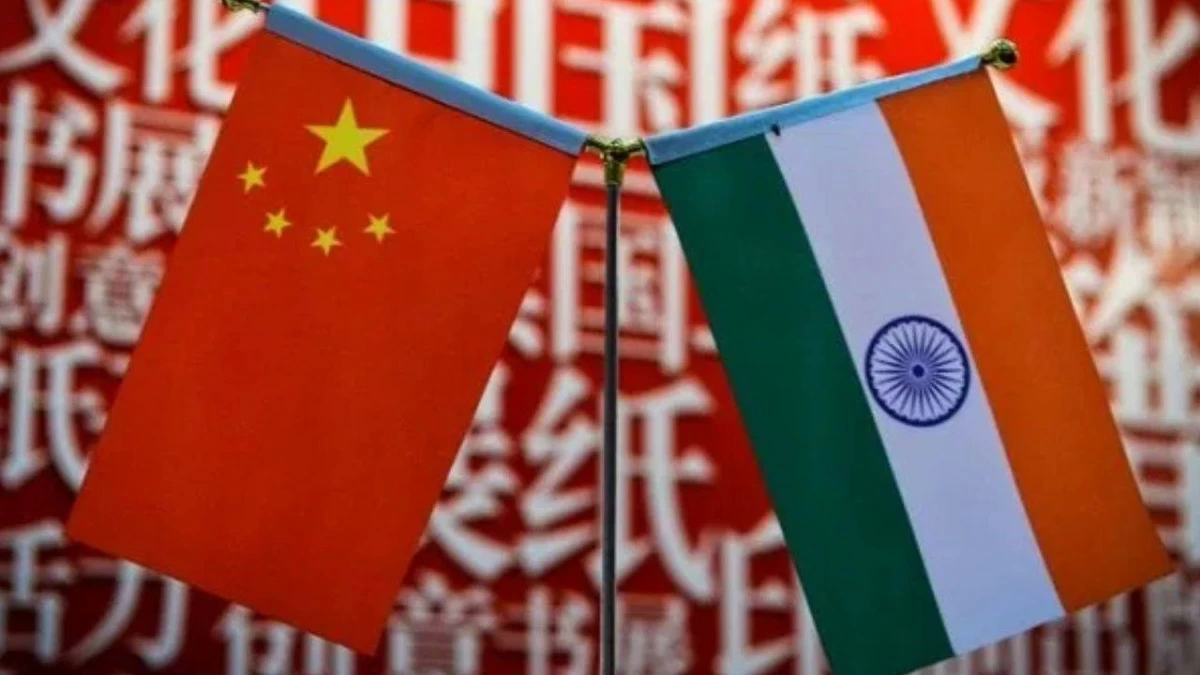


New Delhi: The 1962 India-China War remains a significant chapter in history which permanently shaped India's defence policies and diplomatic stance. Stemming from border disputes and geopolitical strategies, the conflict ended in a Chinese victory. Though brief, it was intense and exposed deep-rooted tensions between the two Asian powers.
According to experts, territorial disputes over Aksai Chin in the western sector and Arunachal Pradesh (then the North-East Frontier Agency) in the eastern sector were the primary triggers of the war. While China claimed both territories as its own, India considered them as inalienable parts of its territory.


McMahon Line dispute: The McMahon Line, drawn in 1914 during the Shimla Convention between British India and Tibet, marked the eastern boundary of India. China never recognised this agreement, considering Tibet a part of its territory and rejecting British-drawn borders.
Aksai Chin issue: In the western sector, China built a road connecting Tibet and Xinjiang through Aksai Chin, an area India considered part of Ladakh. When India discovered this road in the 1950s, tensions escalated.
In addition to these territorial disputes, diplomatic tensions arose due to India's asylum to the Dalai Lama in 1959 following the Tibetan uprising. It was seen as provocative by China that further strained the relations.
Throughout the late 1950s and early 1960s, border skirmishes and patrol clashes intensified. In response, Prime Minister Jawaharlal Nehru adopted the "Forward Policy", establishing military outposts along the disputed border. The move intended to assert India's territorial claims was perceived as an aggressive act by China.
By mid-1962, Chinese forces began preparing for a large-scale military operation, citing incursions as justification. Despite warnings, Indian intelligence and military leadership underestimated China's willingness to go to war. They believed that diplomatic talks would resolve the situation.
On October 20, 1962, Chinese troops launched a simultaneous attack along both the eastern and western sectors of the disputed border.
Eastern sector (Arunachal Pradesh)
Chinese forces advanced rapidly in the eastern front, overwhelming Indian defences and capturing key locations such as Tawang. The Indian Army was unprepared for the high-altitude warfare and lacked adequate supplies. They struggled to mount a defence. Within weeks, Chinese troops were on the outskirts of Tezpur in Assam.
Western sector (Ladakh)
In Ladakh, the Chinese launched multiple offensives. They outflanked Indian positions and seized critical posts in Aksai Chin.
On November 21, 1962, China declared a unilateral ceasefire and withdrew to pre-war positions in the eastern sector while retaining control over Aksai Chin. While this decision surprised many, experts say that it was influenced by several factors.
China had achieved its objective of demonstrating military superiority. The onset of winter made further military operations difficult. Diplomatic pressures, particularly from the Soviet Union, played a role in ending hostilities.
For India, the war was humiliating. It exposed weaknesses in military preparedness and intelligence. Prime Minister Nehru faced intense criticism, leading to a shift in defence policies.
Military reforms: India increased defence spending, modernised its armed forces, and established new military bases.
Creation of the Indo-Tibetan Border Police (ITBP): A specialised force was raised to guard the Himalayan border.
Shift in foreign policy: India moved closer to the Soviet Union for military and strategic support.
1965 and 1971 wars: Lessons from the 1962 war influenced India's approach to conflicts with Pakistan in subsequent years.