


Sign In
By signing in or creating an account, you agree with Associated Broadcasting Company's Terms & Conditions and Privacy Policy.
By signing in or creating an account, you agree with Associated Broadcasting Company's Terms & Conditions and Privacy Policy.
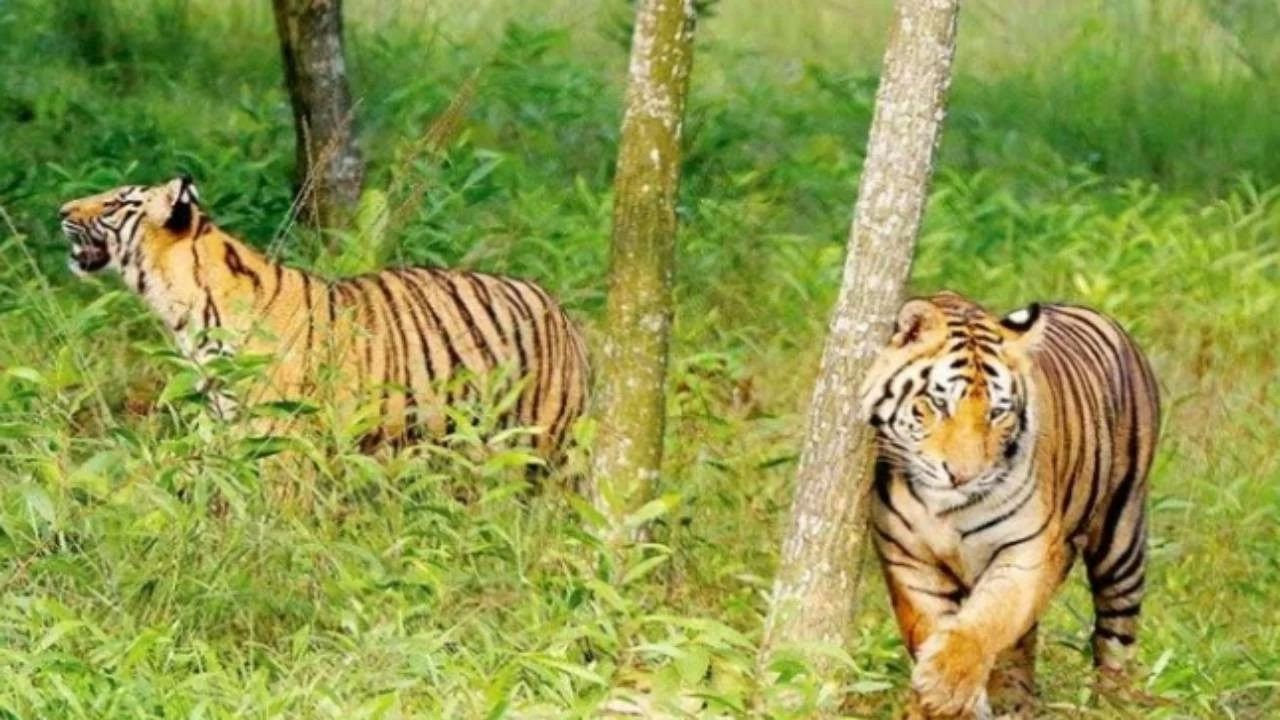


Dehradun: With tiger populations on the rise and protected habitats nearing saturation, Uttarakhand is preparing for a new round of scientific tiger assessment beginning this October.
The Wildlife Institute of India (WII), in collaboration with the Forest Department, will lead the three-phase survey to gauge tiger presence, prey base, and ecological health across the state’s reserves.



Corbett and Rajaji Tiger Reserves are nearing their carrying capacity
The urgency is palpable. Corbett and Rajaji Tiger Reserves—home to an estimated 260 and 54 tigers respectively—are nearing their ecological carrying capacity. As a result, tigers are increasingly venturing into buffer zones and human settlements, triggering a spike in conflict. So far in 2025, tigers have caused more human fatalities than leopards, reversing previous trends.

Corbett Tiger Reserve Director Saket Badola confirmed that preparations for the assessment have intensified. “We’ve already held a regional meeting with directors of northern tiger reserves at WII. Information about camera traps and training modules was shared during the workshop,” he said.
Rising numbers are a logistical challenge
However, rising numbers are not just a conservation success—they’re a logistical challenge. A preliminary WII report suggests Corbett can support 20 tigers per 100 sq km, eastern Rajaji 14, and western Rajaji just eight. With these thresholds being tested, tigers are spilling into non-protected areas, increasing the risk of encounters.
“Habitat saturation is real. Without expanding corridors or restoring degraded reserves, we’re looking at more frequent and dangerous interactions,” said a senior forest official.
NTCA flagged habitat saturation and lack of buffer space
The National Tiger Conservation Authority has flagged habitat saturation and lack of buffer space as emerging risks in high-density states like Uttarakhand, Madhya Pradesh, and Karnataka. Experts warn that rewilding degraded reserves takes 8–10 years, and delays could make the situation unmanageable.
In response, the Forest Department is ramping up training for frontline staff and deploying rapid response teams in conflict-prone zones. SDRF units have also been stationed near vulnerable riverbanks and forest edges.
Conservationists hope the data will guide smarter habitat management
As the scientific survey begins this October, conservationists hope the data will guide smarter habitat management and policy decisions. But for villagers living on the edge of tiger territory, the stakes are immediate. “We want tigers to thrive, but not at the cost of human lives,” said a resident of a village near Rajaji, where recent sightings have sparked fear and disrupted daily routines.
50% of India’s tiger reserves are operating below their capacity
Nearly 50% of India’s tiger reserves are operating below their ecological capacity, raising alarms ahead of International Tiger Day. In contrast, Uttarakhand’s Corbett and Rajaji reserves are nearing saturation, pushing tigers into human-dominated areas and intensifying conflict risks.

