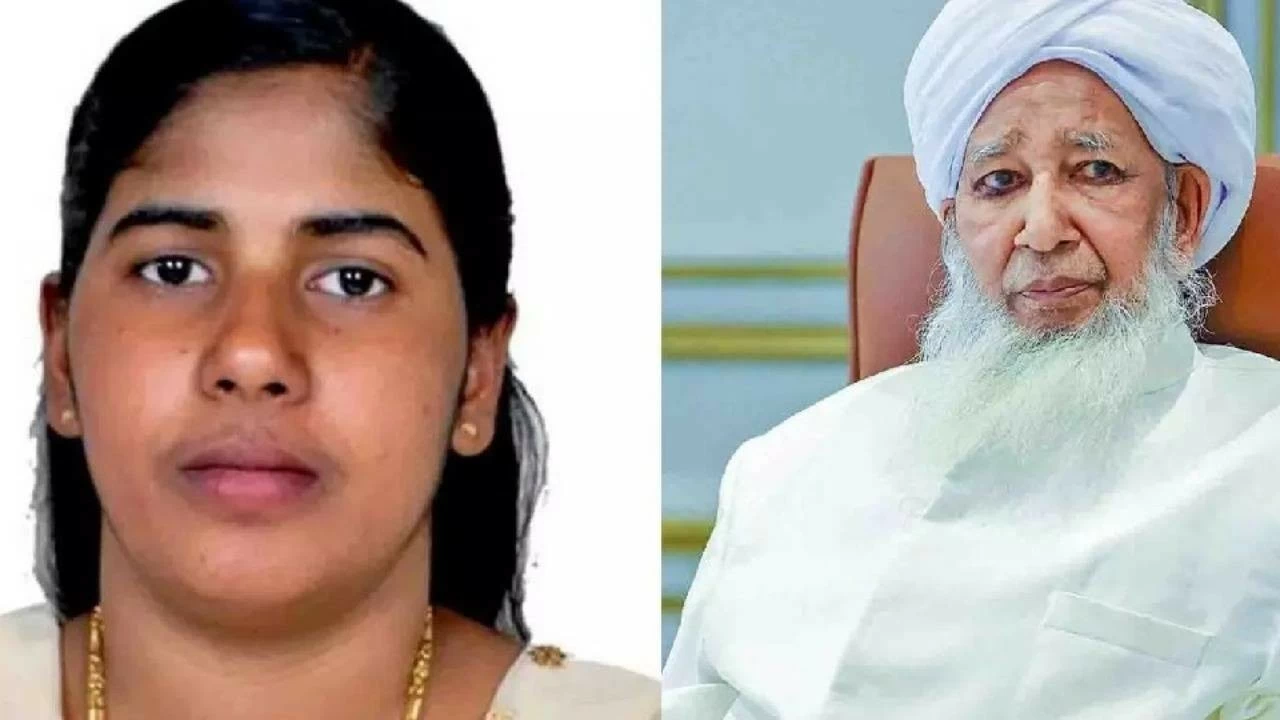
Kozhikode: In a major development that comes as a huge relief for Nimisha Priya, family and her well wishers back home, the office of the Indian Grand Mufti, Kanthapuram A. P. Aboobakr Musliyar, has announced that the death sentence of Nimisha Priya—an Indian national imprisoned in Yemen—has been cancelled.
According to the statement, the sentence, which had earlier been temporarily postponed, has now been officially revoked following a high-level meeting in Sanaa. However, the Union Ministry of External Affairs has yet to confirm the development.
The decision was reportedly taken during mediation talks involving a delegation of Yemeni scholars appointed by Sheikh Umar Hafiz Thangal at the request of the Indian Grand Mufti, along with the rulers of Northern Yemen and international diplomatic representatives.
The meeting reportedly included mediation efforts by a delegation of Yemeni scholars appointed by Sheikh Umar Hafiz Thangal, at the request of the Grand Mufti. The talks were also attended by authorities from northern Yemen and representatives of international diplomatic missions, as per Malayalam news channel reports.
The Grand Mufti’s office added that negotiations will continue with the family of the deceased Yemeni national, Talal, whose murder led to Nimisha Priya’s sentencing. These discussions are expected to play a key role in reaching a full and final resolution.
The case brings to light the concept of blood money
Nimisha Priya’s case has cast fresh light on the practice of diyah, or blood money, a provision under Islamic law that allows victims’ families to pardon the accused in exchange for monetary compensation. While not recognised under Indian law, diyah is legally entrenched in several Muslim-majority countries, including Yemen, where Priya is imprisoned. The system allows for private settlements to replace capital punishment in cases of murder, provided the victim’s family agrees.
The concept, rooted in ancient Arab tribal customs, evolved as a legal mechanism to prevent cycles of violence by promoting reconciliation over revenge. It is particularly significant in countries like Saudi Arabia, Pakistan, Iran, and the UAE, where Sharia courts often mediate the process.
The Indian government has previously navigated such settlements. In 2006, Kerala driver Abdul Rahim was sentenced to death in Saudi Arabia for the accidental death of a paralyzed child. After a sustained fundraising campaign, including public donations, nearly Rs 34 crore in diyah was paid in 2024, securing his pardon—though Rahim was still required to complete a 20-year prison term. .